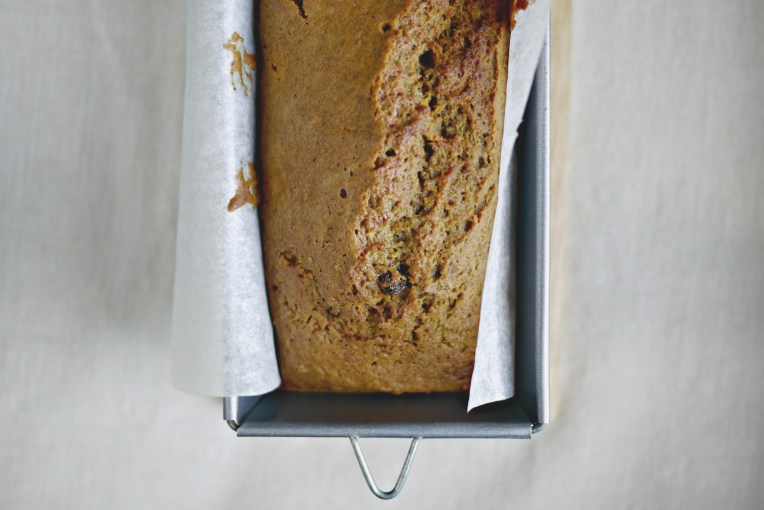
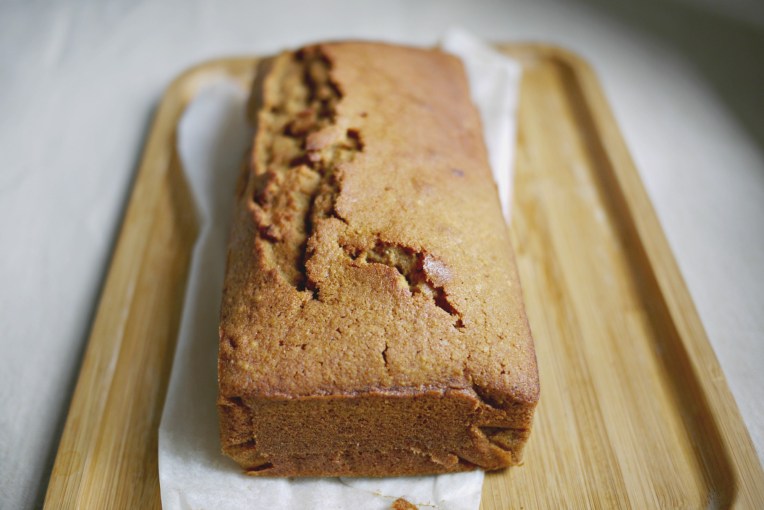
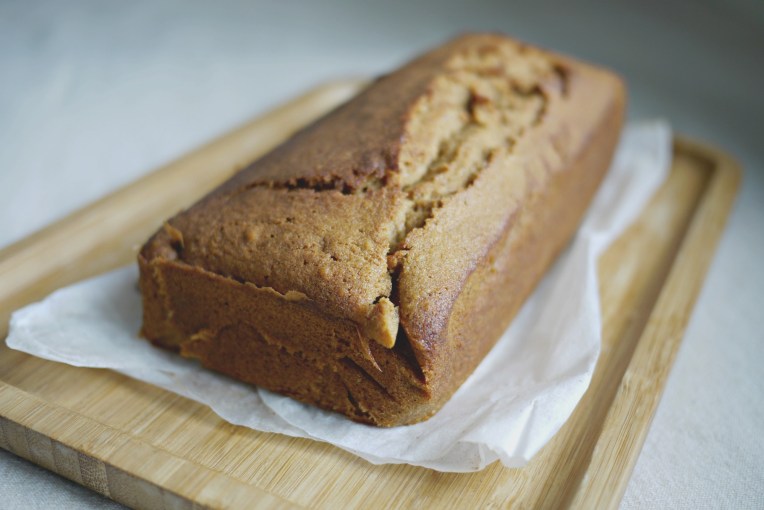
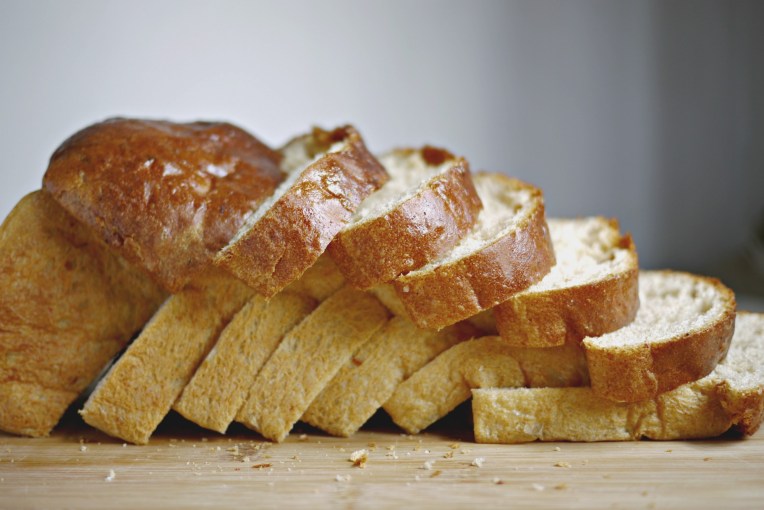
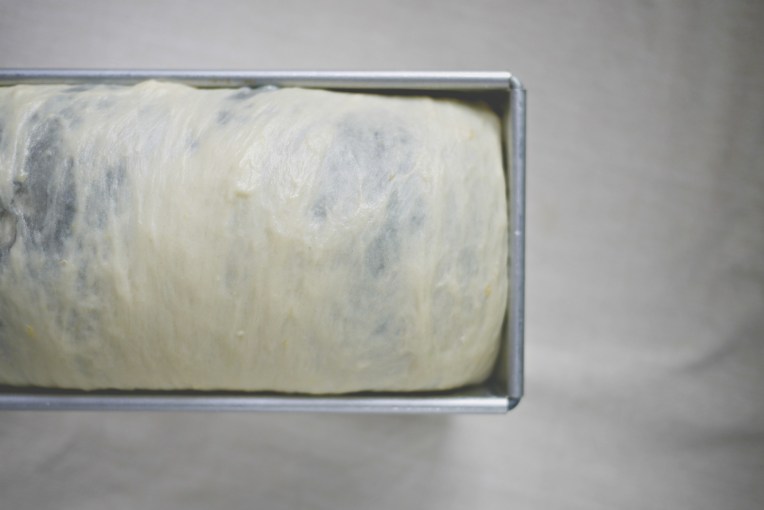
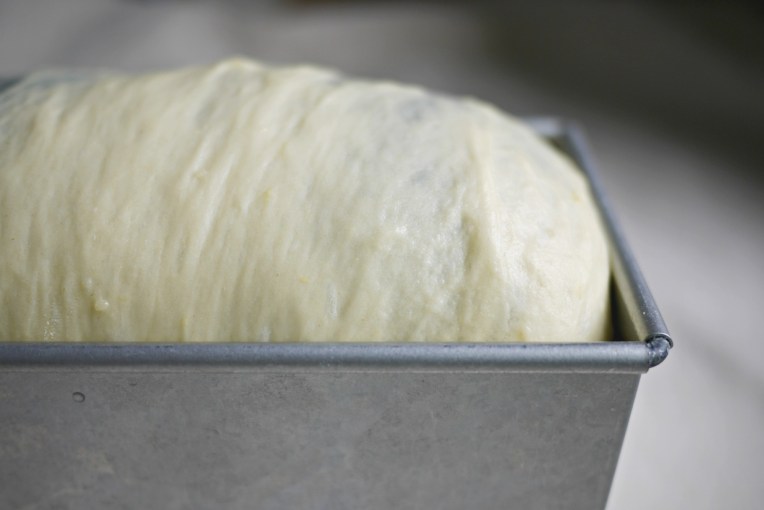
Simple Small Batch Carrot Cake Loaf

Simple Small Batch Carrot Cake Loaf // Mono +Co

You will like this recipe if you prefer small batch baking.

Simple Small Batch Carrot Cake Loaf // Mono +Co

I am sometimes surprised by the amount of cream cheese frosting I ended up with when I tried out some carrot cake recipes.  Too much. Too sweet.

Actually, I like carrot cakes for the cake, not a big fan of frostings.  Most recipes bake the carrot cake into two layers, with more frostings in between cakes upon assembly.  This lead to a guessing game of how long to cook the cake in the oven if I bake the recipe as one whole cake.  So I ended up halving most recipes and bake them into a loaf, increase the baking time by another 10-15 minutes if required after checking with a test skewer.

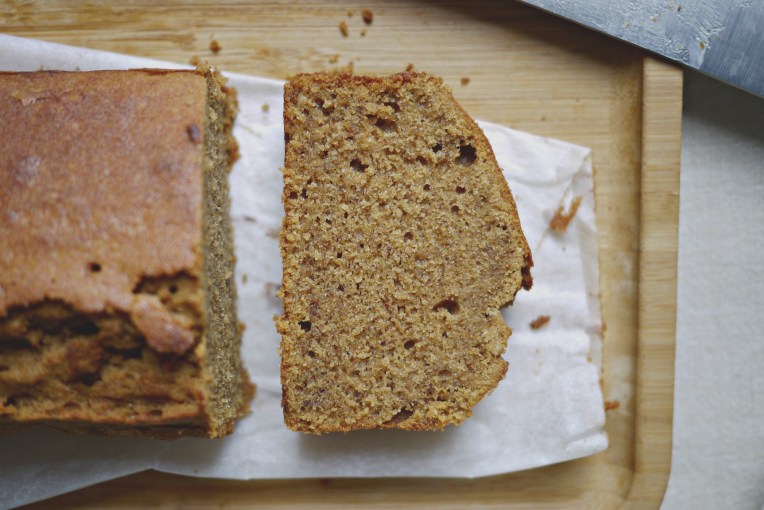
I like how this recipe , according to the author, “is good enough to eat on its own”.  The cake is moist and imparts just a nice level of sweetness from cinnamon and raisins.  I will gladly save my calories from the frosting for a bigger slice of this carrot cake.  I also like that the recipe uses wholemeal flour.

As usual, I halved the recipe and at the same time opted out the grated nutmeg, orange zest, pecans, but kept the amount of ground cinnamon intact.  I also substituted melted butter with coconut oil . You may use melted butter or any neutral flavor cooking oil if you don’t have coconut oil.

Simple Small Batch Carrot Cake Loaf // Mono +Co Simple Small Batch Carrot Cake Loaf // Mono +Co Simple Small Batch Carrot Cake Loaf // Mono +Co

Is it a must for your carrot cake to be frosted with cream cheese frosting?  If not, care to share your plain carrot cake recipe with me?


SIMPLE SMALL BATCH CARROT CAKE LOAF

adapted from here

75g melted coconut oil
75g raw sugar
2 small eggs**
100g wholemeal flour
1/2 teaspoon baking soda
1/4 teaspoon salt
1 teaspoon ground cinnamon
100g grated carrots
50g raisins

** I used eggs that weigh 60g each with shell.

In a mixer bowl, combine coconut oil, raw sugar and eggs, and whisk on high speed (KA 8) for 3 minutes.

In a separate bowl, mix wholemeal flour, baking soda, salt, and cinnamon together to form a uniform mixture of flour.

Add the flour mixture to the batter in the mixer bowl and stir to mix well with a hand whisk.

Stir in grated carrots, then raisins.

Pour batter into a small loaf pan (mine’s around 19cmx9cmx6cm) and bake in a preheated oven at 180C for 40 minutes, or until a test skewer inserted comes out clean.

When done, cool the carrot cake in the pan on a rack before slicing and serving.

Save

Save

Save

Save

A Very Versatile Recipe : Cocoa Brownies

A Very Versatile Recipe : Cocoa Brownies // Mono + Co A Very Versatile Recipe : Cocoa Brownies // Mono + Co

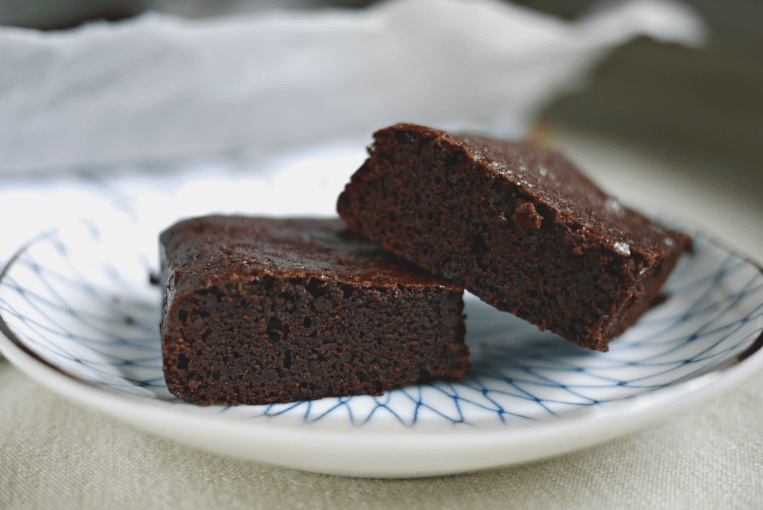
I have been baking brownies with Alice Medrich’s recipe for the longest time.  I love fast and simple recipes, so this one that requires just cocoa powder means that I don’t have to stock up on baking chocolate AND cocoa powder to satisfy that sudden urge for homebaked chewy brownies.  I bake more at home with cocoa powder anyway.
A Very Versatile Recipe : Cocoa Brownies // Mono + Co

Most brownie recipes are very versatile.  Versatile in the sense that I can alter the ingredients slightly, and the brownie will still come out pretty, maybe a little bit less chewy, more spongy etc, but always edible.  If you have tried adjusting a cake recipe, you will understand why I appreciate a versatile recipe.

I have halved the sugar in the recipe and it still works, albeit producing a less moist and thus a less luxurious texture for me.  The sweet spot so far is 190g for me.

I have also topped this brownie with marshmallows, walnuts, almond slices, M&Ms, salt flakes but they are just as enjoyable when baked plain.

I have stirred in a shot of espresso, and tasted not much difference.

I have also tried with 80g eggs and 55g eggs, depending on which egg seller I buy from, the end result is a difference in how high the brownie gets leavened.  A more spongy cake-like brownie is achieved with a wetter batter, i.e. bigger eggs.

In other words, this recipe has never failed me.

A Very Versatile Recipe : Cocoa Brownies // Mono + Co

What will I try next?  Peanut butter, Nutella spread, Speculoos, toasted coconut, white chocolate buttons, cherry liquor…  I am surprised that I have not bake more variations over the years.  To me having it plain is the best way for a satisfying chocolate fix, that is why this is often touted as the best cocoa brownies to bake.

After baking this for years, I have adapted the original recipe and threw in a few tricks to shorten the preparation time required or vary the ingredients to use what I have at home.  Check them out, annotated with asterisks.  I hope they help!  Have fun baking and eating!

Have fun baking and eating!


ALICE MEDRICH’S BROWNIES

adapted from here and here

140G unsalted butter, softened ** (1)
190g raw sugar
65g unsweetened cocoa powder ** (2)
1/4 teaspoon fine sea salt
1/2 teaspoon pure vanilla extract
2 cold eggs ** (3)
65g cake flour ** (4)

** Tip 1 : Soften the butter beforehand to save time on melting the butter over steaming water.  1 hour prior to start baking, I will weigh the butter, then leave it to soften in a 16cm saucepan that I always use to mix this brownie batter.  The long handle makes it easier for me to mix the batter “vigorously”,  which I am often required to do so according to the original recipe.

** Tip 2 : Natural or Dutch processed cocoa powder are both fine to be used according to the recipe, but I have been baking with dutch processed version from Van Houten.  Use what you normally keep at home to bake with.

** Tip 3 : Original recipe asked for large eggs.  I used relatively small eggs that weigh about 55g with shells for this bake.  The brownie did not rise as much compared to brownies that I baked with 70-80g eggs, which could rise so much that the surface crack, the brownie would then sink back slightly after cooling down, but the difference in the thickness of the brownie is pretty obvious with the choice of egg size.

**Tip 4 : The original recipe stated all purpose flour, I have also used cake flour and top flour which produced finer texture brownies with former being my favorite if I have it at home.  Use what you have at home.

To prep, line 8×8 in baking pan with parchment paper and preheat oven to 160C.

In a sauce pan/ heatproof mixer bowl, place softened butter, raw sugar, cocoa powder and sea salt, and place this over a pot/ wide skillet with barely simmering water (** Tip 5 : use boiled water from electric pot to save time) on lowest fire to melt the butter.  Make sure the base of the saucepan / mixer bowl does not touch the water in the pot/skillet.

Stir with a wooden spoon to mix the ingredients until the mixture is smooth and warm enough to melt the sugar, and dipping finger without scalding it (be careful!).

Set the mixture aside to cool it down enough before adding vanilla extract and the eggs, one by one, stirring vigorously with the wooden spoon after each addition.

Add in the flour, and stir until you no longer see any white specks flour.  Then beat vigorously with the spoon for at least 40 strokes.

Pour the batter into the lined pan and level the surface with the back of the spoon.  Bake in a preheated oven for 25-28 minutes at 160C.

Cool completely before cutting it into 16 pieces.  Serve immediately or store in an airtight container.

BSave

Save

Save

Save

Soft Taro White Loaf

Soft Taro White Bread // Mono + Co

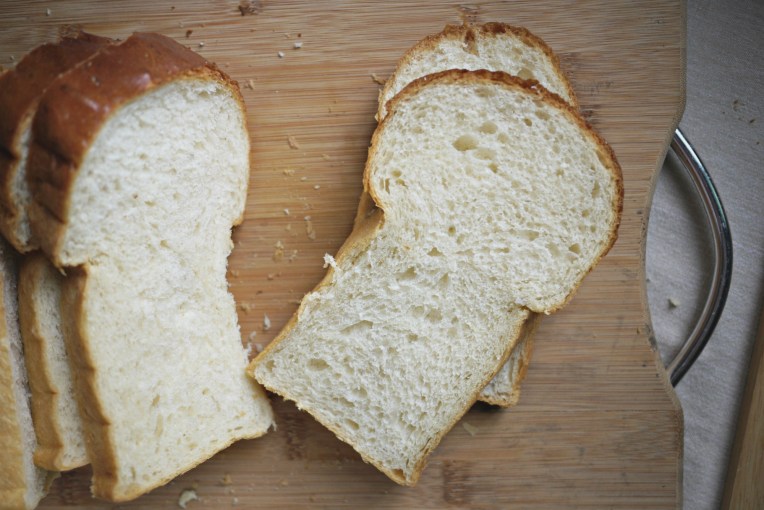
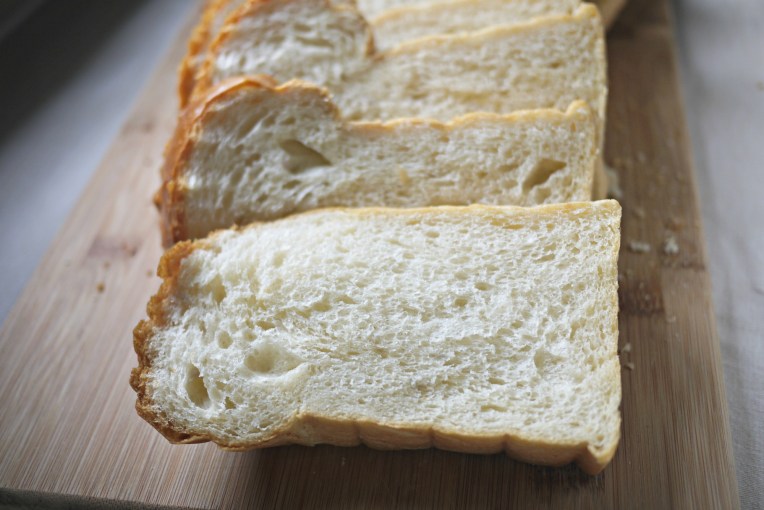
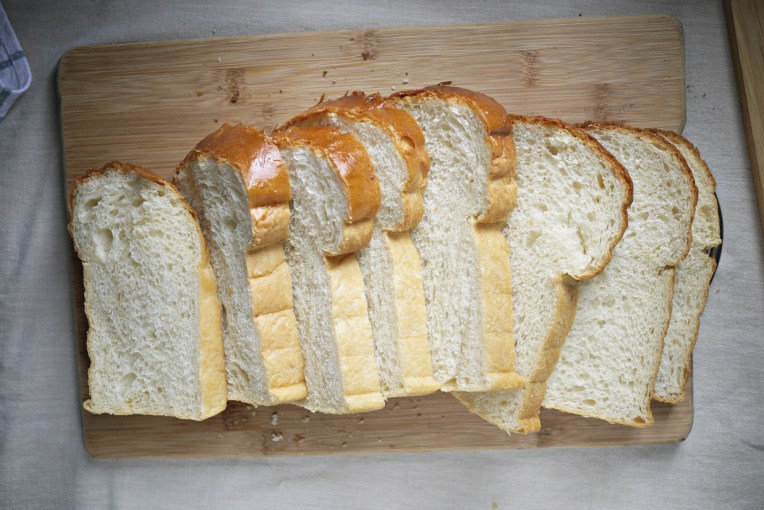
I like adding taro to bread recipes as it gives the bread a milky white shade.  I add quite a bit of butter (20-40g depending) to my bread doughs, so the end bake usually ends up with a slight tinge of yellow.  But not bread with taro added.  The texture will also appear more cottony soft because of its white crumbs.  The bread is definitely soft, of course, like all other bread baked with root vegetables added.  I had to cool the bread on its side which has the largest surface area, as the bread was collapsing under its own weight.  By the time it completely cools down, I realised that rack marks have been made on its side!

Soft Taro White Bread // Mono + Co

To buy a whole taro for my small family will be too much.  Only a 100g is needed for this recipe, so I usually ask the grocer to sell me a third or half of a big taro, that’s why I love buying my supplies from the wet markets, everything is negotiable! I will then steam the whole thing, use 100g of it to bake bread, chop the remaining into large chunks so that they fit into my  airtight container and keep in the fridge, to be used up within a week.

Soft Taro White Bread // Mono + Co Soft Taro White Bread // Mono + Co

I adapted from this taro bun recipe that is baked in an 8-inch round pan.  My Pullman tin is smaller, so I used 200g of bread flour instead of 230g.


Soft Taro White Loaf

200g bread flour
1/2 tablespoon instant dry yeast
1/4 teaspoon sea salt
2 tablespoons raw sugar
100g steamed taro, mashed
1 large egg **
30g water
30g cold butter, cubed

** I use a large egg weighing 70g.

In mixer bowl, combine bread flour, yeast, salt, and sugar well with a hand whisk.  After the dry ingredients are mixed, add cooled mashed taro, beaten egg and half of the water.  Start the mixer and knead on its lowest speed (KA 1) .  If the ingredients do not come together into a ball, slowly add more water, spoon by spoon, once a ball dough starts to form, stop.  Let the dough sit for 15 minutes.  If your kitchen is windy, cover the bowl with a clean tea towel.

After 15 minutes, start the mixer again and knead for 1 minute before adding cubed butter, one by one.  Knead this until the dough reaches window pane stage; when the dough becomes very smooth and elastic.  Remove bowl from mixer and bulk rise this for 1 hour.  It will rise to double its original volume.

Punch the dough down and transfer it to a clean work top.  Flatten dough with a rolling pin to push out gas inside the dough.  Shape the loaf and place in greased bread tin, seams side facing downwards.  Let it rise in a draft-free place for 50-60 mins.

Bake in a preheated oven at 170C for 30 minutes.  Once done, invert pan carefully and remove bread from the pan and let it cool completely on a rack.

Store in an airtight container.

Save

Save

Save

Save
Walnut Palm Sugar Butter Cake

walnut-butter-cake-003

I like to experiment with a variety of sugar for cooking and baking, so a stash of sugar starts to build up inside my fridge.  Today, I decided to clear remaining 75g of granulated palm sugar, something I bought to add to my morning coffee, but I switched to Ceylon tea lately, and honey is a better sweetener for it.

walnut-butter-cake-001

The original recipe from here bakes in a 6 inch round pan, but I used a loaf pan measuring 8″ x 3.5″ x 3″.  I also altered the sugar type (from white sugar to palm sugar), milk (to soy milk), and  amount of walnuts as I have only 50g left at home, instead of the 60g in the recipe and omitted another 30g as topping.

walnut-butter-cake-002  walnut-butter-cake-004 walnut-butter-cake-005


WALNUT PALM SUGAR BUTTER CAKE

adapted from here

125g salted butter, softened
75g granulated palm sugar
1 teaspoon vanilla extract
2 large eggs (approx 80g ea)
110g cake flour
1 teaspoon baking powder
2 tablespoon soy milk
50g walnuts

To prep : process walnuts in a processor till fine and set aside.  Line a cake pan with parchment paper. Combine cake flour and baking powder, sift this mixture once.

In a mixer bowl, cream softened butter, granulated palm sugar and vanilla extract till fluffy with a paddle attachment.  I alternate between KA speed 2 and 4, stopping the mixer once or twice to scrape down mixture from the side to the center of the bowl to make sure the mixture gets beaten evenly.  Palm sugar are dark brown in color, so it is kind of tricky to know if the butter has been beaten properly to “pale color”.  The original recipe stated 4 minutes at speed 2 with a hand mixer, I followed closely to this time, and observed that the color of the batter has turned slightly to a lighter shade.

Next, add in the eggs, one at a time, making sure that the egg gets incorporated into the mixture before the next egg is added.  The mixture will appear curdled at this point, fold in the flour and baking powder mixture, soy milk, and ground walnuts.

Pour batter into lined cake pan, and bake at 170C for 35 – 40 minutes.  When done, cool on a rack before serving.

Save

Save

Save

Save
Vegan Tuna Sashimi

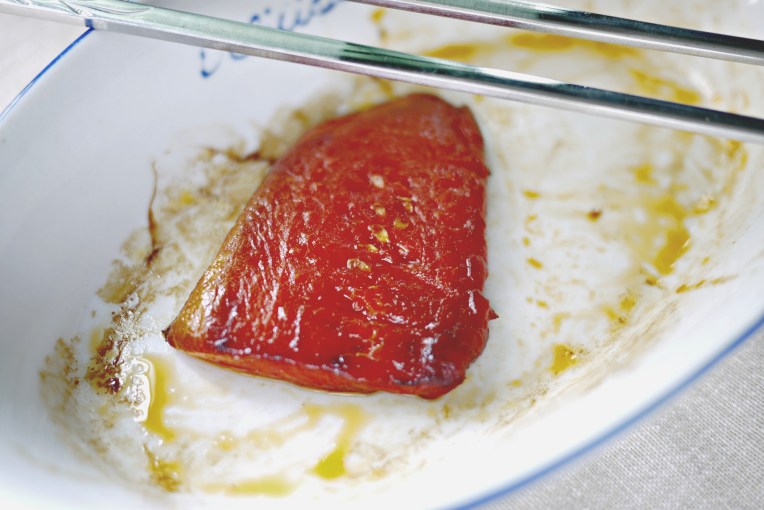
Vegan Tuna Sashimi // Mono + Co

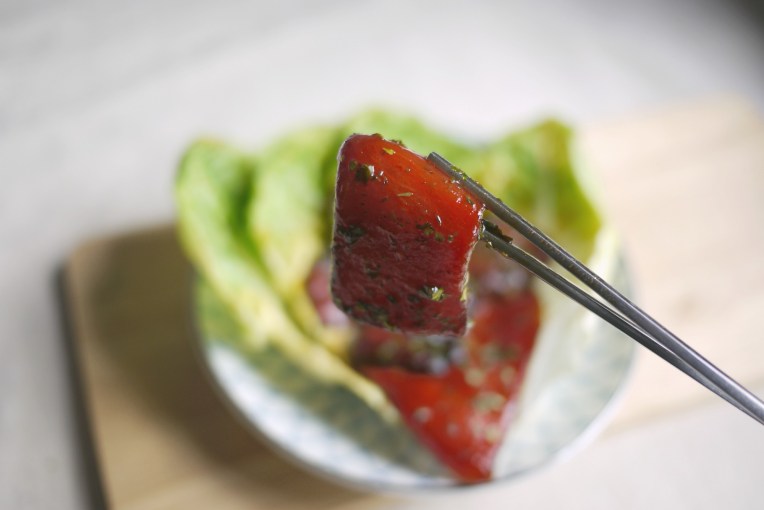
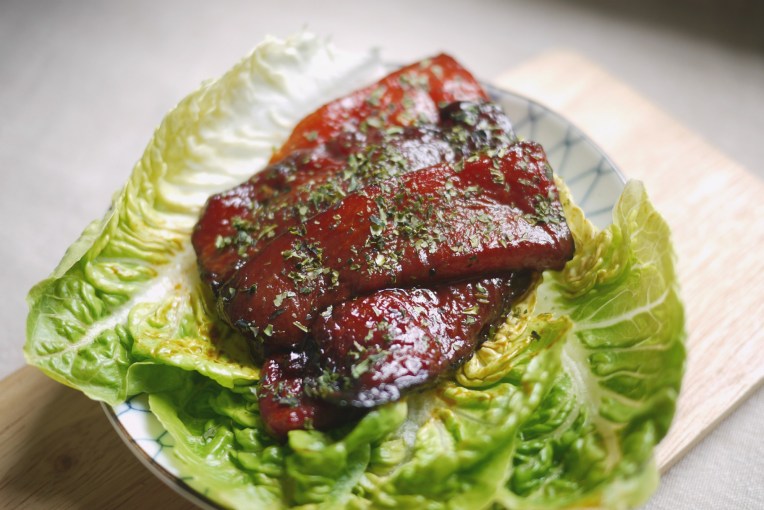
This tuna sashimi is meatless, vegan, but can you guess what it is made of?  I was surprised myself when I heard that this common fruit can be turned into vegan tuna sashimi.

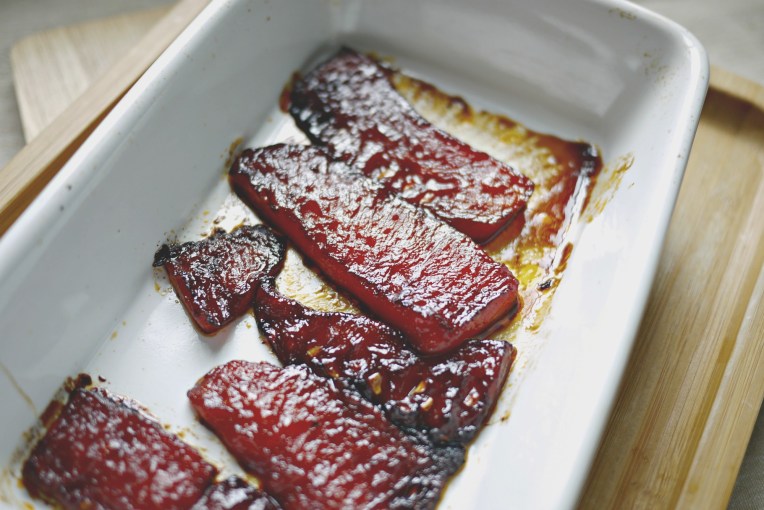
Vegan Tuna Sashimi // Mono + Co

Doesn’t it look fresh, succulent and fatty?  Even the grains look so real, like those on fish steaks.  Still got no clue?

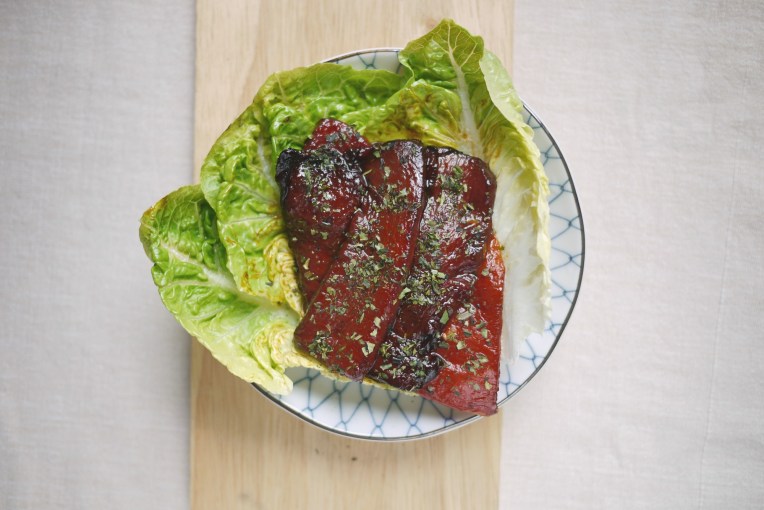
Vegan Tuna Sashimi // Mono + Co

Hint : spot the tiny seeds?
Answer : I made vegan tuna sashimi out of …. watermelon!

Vegan Tuna Sashimi // Mono + CoVegan Tuna Sashimi // Mono + Co

The texture is very close to the real thing.  The key is to bake it for  a long time to cook the watermelon so that it turns pliable.

But I need to work on the marinating sauce.  The recipe I followed added rice vinegar, tamari sauce, and oil, so I ended up with a salty slab.  I would try with nori sheet or nori seasoning next time to see if I can add another dimension to the vegan sashimi.

Vegan Tuna Sashimi // Mono + Co

I won’t put up the recipe here since I have not tweak it to the taste I prefer, but I am listing the links that inspired my attempt if you like to try :

+ this served in taco

+ this lady made them look so good on sushi rice

+ after I perfect the marinate, I want to make vegan ahi poke!

+ another watermelon tuna poke bowl here!

Save

Purple Sweet Potato Dumpling Balls

2016-10-19003 purple-sweet-potato-dumpling-balls-001

Do you know how it feels like when you somehow have all the ingredients at home to cook an impromptu recipe despite not shopping for 1 week?  Granted, this dumpling balls dessert doesn’t really require a lot of stuff, in fact, most of the items are your everyday pantry stocks.  Glutinous rice flour, pandan leaves, sugar.  Checked, checked, and checked.

I always tell my friends that I like to go without grocery shopping for a stretch,  cook/eat based on what is left in the kitchen, and see how long I can last until a visit to the market is finally required.  I cook with simple recipes anyway, so it is not that hard to do a snack or a meal with the basic items in my kitchen.  It’s a great test of cooking creativity (nevermind my barely there culinary skills) and it’s really healthy to get rid of dated ingredients before starting cooking with fresh ones.  Not to mention saving some money along the way by not throwing forgotten and expired stuff.

The purple sweet potato used in the last minute glutinous rice dumpling balls was meant to be baked into bread.  After some delays, I decided to abort plans to bake and turn to making a dessert instead.  There is no details on the ingredient amount, I never weigh anything, but you’ll know that you are getting there when the ingredients come together to form a really soft dough that doesn’t stick to hands.

purple-sweet-potato-dumpling-balls-002

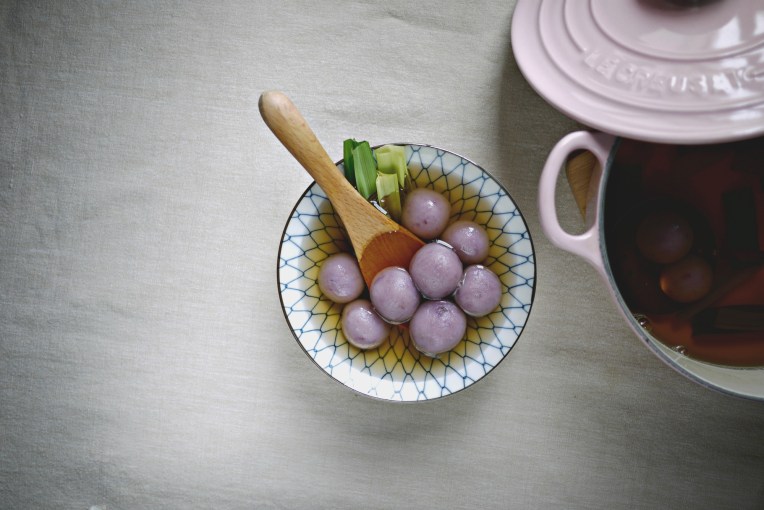
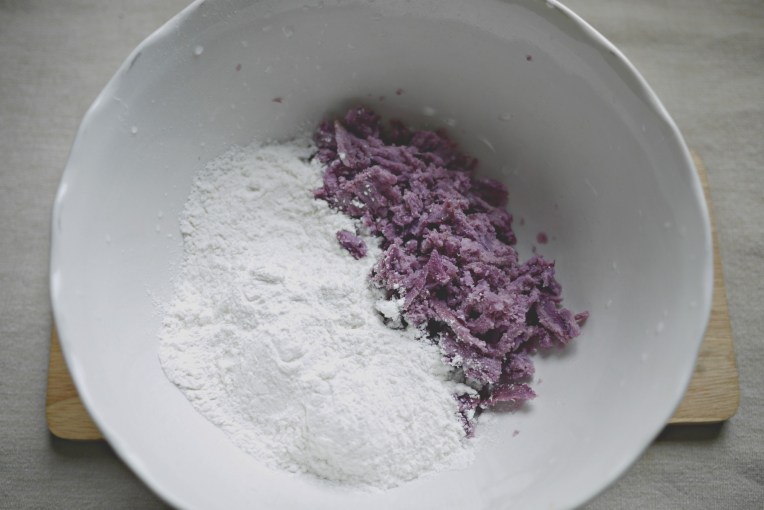
Put mashed steamed sweet potato and glutinous rice flour in a large bowl, you can use any sweet potato here, the purple ones happen to be in season now.

purple-sweet-potato-dumpling-balls-003

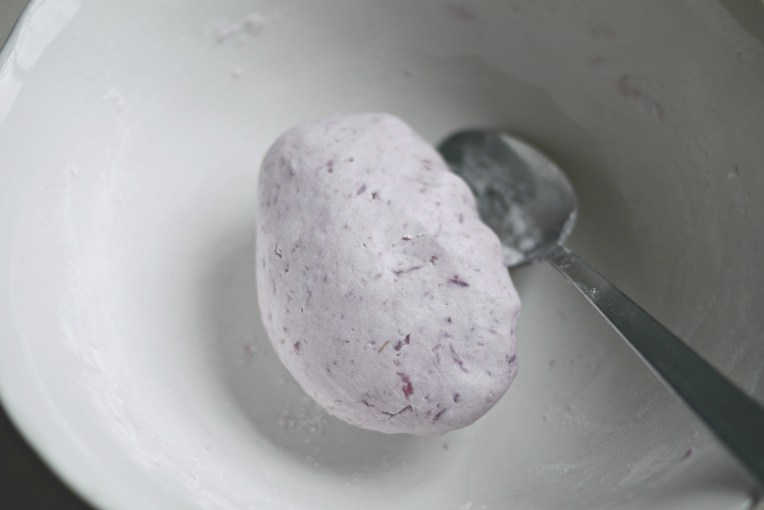
Slowly add water and stir with a spoon till the ingredients come together into a ball.  At this juncture, I like to use my clean hand to knead-mix the dough to make sure that the sweet potato gets to every part of the dough. I also feel the dough with my hands to judge if  it needs more water.  The wetter the dough, the softer the rice balls will be after boiling.  I don’t fancy hard ones, so I will add more water bit by bit to reach the threshold, just before the dough can’t hold its shape anymore or start making a mess in your hands one more drop of water is added.

purple-sweet-potato-dumpling-balls-004

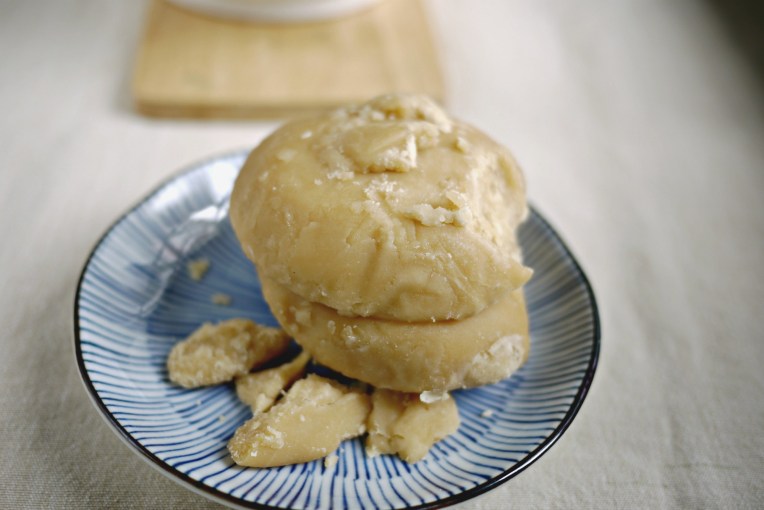
I filled the dumpling balls with Thai palm sugar.  They are sold in round cakes like these in the above photo.  They are actually quite soft to be chopped into pieces for storage, I like that they crumble easily when you pinch a piece off, and yet firm enough to be shaped like a dough.

purple-sweet-potato-dumpling-balls-005

And that is my simple dumpling filling, just a small pinch of the Thai palm sugar.

purple-sweet-potato-dumpling-balls-006

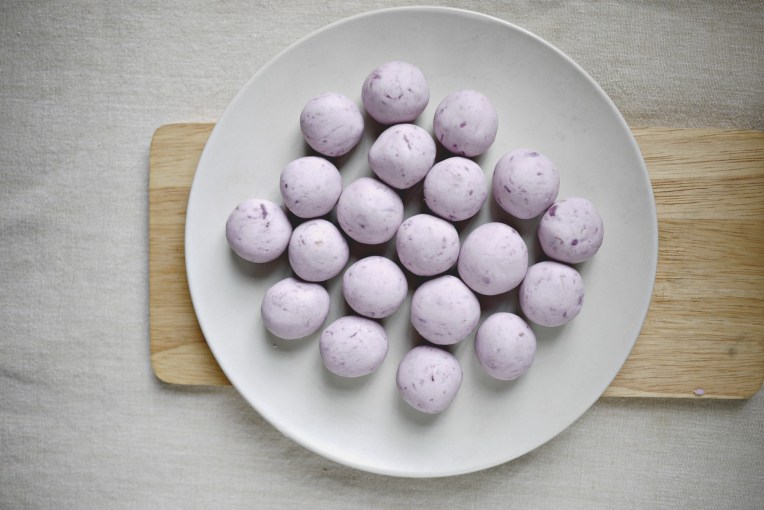
Shape them into balls of uniform size and cook them in boiling water until they float.

purple-sweet-potato-dumpling-balls-007

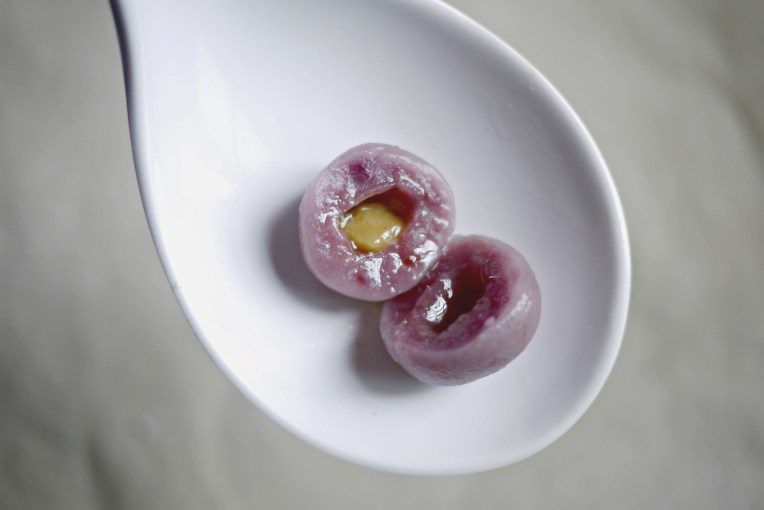
Serve them hot in a sweet soup made by boiling pandan leaves in water and sweeten with more palm sugar to taste.

*Note: The Thai palm sugar gets melted inside the rice balls after cooking, but will return to its solid form when the rice balls cool down.  I prefer slightly runny filling so I must serve these rice balls hot.  If not eaten immediately, I suggest keeping the shaped rice balls in an airtight container and only boil them before eating.  The dumplings get cooked really fast anyway, less than 5 minutes.

Save

Waste-Free Kitchen : DIY Lemonade

Waste-Free Kitchen : DIY Lemonade

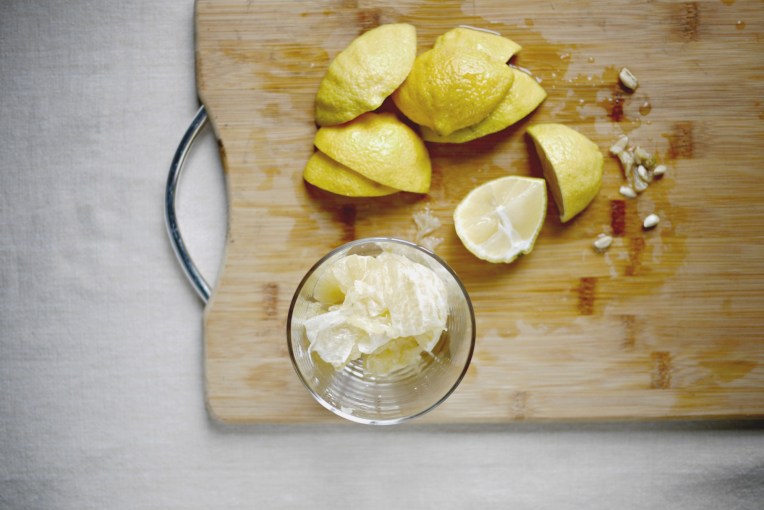
Thirst quencher can be something as easy as turning on the tap here in Singapore.  I am really thankful for that.  But sometimes, I need something more delicious than plain water, it also has to be simple to make.  I read about how lemonade can be made in a blender, just throw in the entire fruit, skin and all.  As I don’t get organic lemons, I made it with just the pulp after removing the bitter pith.  I also prefer to use my immersion blender since there is no hard skins involved, plus I always choose to wash and dry just one stick than a huge blender jar.

Here’s how I make my version of blender lemonade:

Waste-Free Kitchen : DIY Lemonade

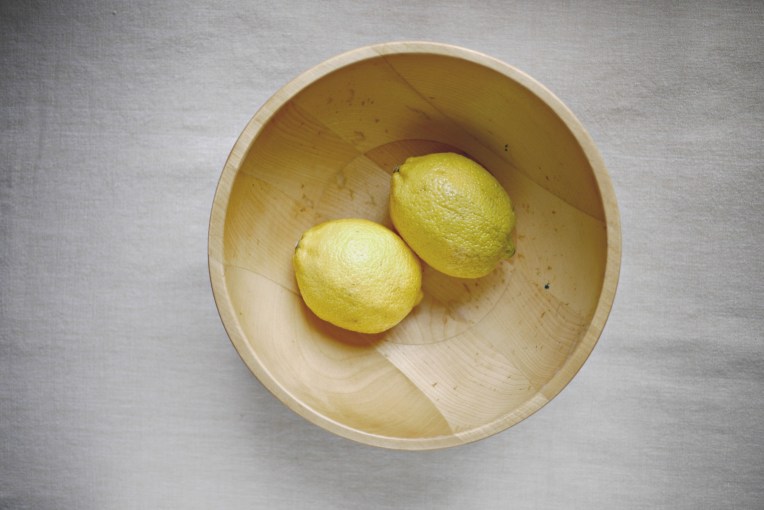
I used 2 lemons, enough to make about 4 glasses of lemonade.

Quarter the fruits and remove the skin, pith and seeds.  Place the pulp in a large cup or a glass flask and top with ice water.  Do not add too much water, in case it gets too diluted.  You can always top up with more ice water later if it is too sour to your liking.

Waste-Free Kitchen : DIY Lemonade

Instead of topping up with water, I added honey.  In a separate cup, prepare the honey syrup by dissolving your favorite honey in water.  I added 2 tablespoons of honey.  Again, you can adjust to taste after combining the 2 liquids together. Stir well, and serve chilled with more ice cubes.  Taken best on a hot afternoon.

Enjoy!

Waste-Free Kitchen : DIY Lemonade

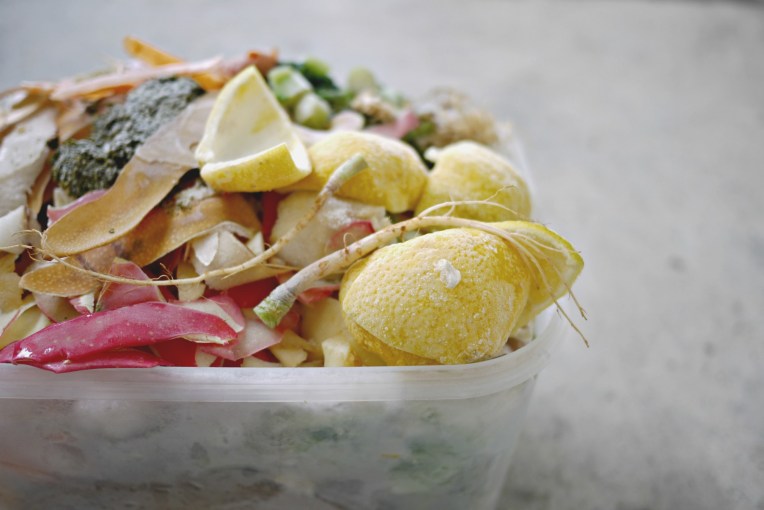
*The skin, pith, and seeds are frozen with the rest of my vegetable scraps that I sent off to a composting site when the container gets filled up.  If you buy organic lemons, you can blend the skin with the flesh after scrubbing the surface clean.

Waste-Free Kitchen : DIY Lemonade

Save

Save

Save

Save

Save
Save
Wholemeal Potato Bread

Wholemeal Potato Bread // Mono+Co

Simple half wholemeal half white flour recipe  to make when white bread is too plain and fruits or nuts are not available.

My other half is crazy over a store-bought sprouted grains bread that is just as pillowy soft as the white ones.  The potato bread I baked is just as soft, but not as sweet as the commercial ones.  Thinking of tweaking the next bake with honey or date syrup to sweeten it without adding more sugar.

Wholemeal Potato Bread // Mono+Co Wholemeal Potato Bread // Mono+Co Wholemeal Potato Bread // Mono+Co Wholemeal Potato Bread // Mono+Co


Wholemeal Potato Bread Loaf

100g bread flour
100g wholemeal flour
1/2 tablespoon (3g) instant yeast
1/4 teaspoon sea salt
2 tablespoon raw sugar
1 large egg
105g mashed potato
30g water
30g cold unsalted butter, cubed

In a mixer bowl, place bread flour, wholemeal flour, instant yeast, sea salt and raw sugar, and mix well with a hand whisk.  Next, add beaten egg, mashed potatoes, and water, attach the bowl and dough hook to the mixer and start kneading at the lowest speed (KA 1) till all the ingredients form a ball.  Stop the mixer and leave this aside for 15 minutes.

Turn the mixer to speed 1 again, and knead for 1 minute, before adding butter cubes into the bowl one by one to be combined with the dough.  Keep knead till dough reaches window pane stage, when it is smooth and elastic.  Remove bowl from mixer and let the dough rise in a draft-free place for 1 hour.

The dough should rise to double its volume.  Punch the dough down, and transfer to a clean work top.  Shape the loaf and place in greased bread tin, seams side facing downwards.  Let it rise in a draft free place for 50-60 mins.

Bake in a preheated oven at 170C for 30 minutes.  Remove bread from tin immediately when baking is done, and let it cool completely on a rack before slicing.

If not consume immediately, store in an air-tight container.

Save

Save

Save
Save

Black N White Bread Loaf

Black N White Potato Bread Loaf // Mono+Co Black N White Potato Bread Loaf // Mono+Co

I haven’t forgotten about the bamboo charcoal powder.  It is sitting on the table next to my hot water flask, creating an eyesore, just to remind me to use it.  I almost wanted to put a tablespoon of it into my banana smoothie after stumbling upon this idea here.  Then I realized bamboo charcoal might not be activated charcoal.  I will only do this on the last day of its expiry out of desperation if there is still any left.

To do something different this time, I baked a 2 color bread by adding the charcoal powder to half of the dough, that’s why you don’t see an all black loaf here.

Black N White Potato Bread Loaf // Mono+Co

I divided the dough into 4 portions and layered them in alternating colors, here’s how the loaf look after slicing.  Pretty huh?

Black N White Potato Bread Loaf // Mono+Co

I also did something different with the potatoes, I steamed them instead of boiling it in water.  The potatoes were not overly wet compared to the boiling method but surprisingly, I added less water.

As a general rule to adding water to bread dough, never pour the water level stated in the recipes all at once (yes, including mine.)  In fact, the water required vary slightly with each occasion I bake. This difference could due to the water content of the potatoes, the brand of flour, or even the size of the egg.  I’ll even blame the weather!  Too hot, too cold, too wet …..

Therefore, always pour half the liquid amount stated first, then with the mixer running, add the balance bit by bit, giving the ingredients a few moment in between to absorb the water properly. Only if the dough doesn’t gather into one ball, then add a bit more liquid.  Once a dough ball is formed, stop adding.

Black N White Potato Bread Loaf // Mono+Co Black N White Potato Bread Loaf // Mono+Co Black N White Potato Bread Loaf // Mono+Co

The texture of the bread with steamed potatoes remains soft, as with other bread loaves that I have been baking with root vegetables.

Two more things to note.  Firstly, store homemade bread in an airtight container if you are not finishing it immediately.  Otherwise, the bread will harden.  I noticed a layer of crust forming on my sliced bread after leaving them overnight on the counter in a paper bag.  Not that nice, as I am the kind who like to sink my teeth into pillowy bread.  If that sort of thing unfortunately happened, simply heat them up in a toaster for a few minutes; warm toast with butter is my next favorite way to eat bread.  And secondly, consume them within 2 days, or else keep in the freezer.  I realize that homemade bread do not keep well, especially recipes with potatoes, maybe due to it’s higher moisture content.  And if the bread comes with natural colorings added, mold might not be easily spotted on stale bread.


Black N White Bread Loaf

200g bread flour
1/2 tablespoon instant yeast, about 3g
2 tablespoon raw sugar
1/4 teaspoon sea salt
100g potato, steamed + mashed
1 large egg
20-30g water
30g cold unsalted butter
1/4 teaspoon bamboo charcoal powder

In a mixer bowl, combine bread flour, yeast, raw sugar and sea salt with a hand whisk.  Add mashed potatoes, beaten egg, half the amount of water and start the mixer to knead with a dough hook, at its lowest speed.  Add remaining water in a slow trickle, stop once the ingredients come into a ball.  Leave this aside for 15 minutes.

Turn the mixer on again to run for 1 minute, still on its lowest speed, before adding cubed butter one by one into the bowl with the mixer running.  Knead this until window pane stage.  Remove dough from bowl and divide it into two equal portions.  Return one dough back into the mixer and knead bamboo charcoal powder into the dough.  Place doughs in separate bowls and bulk rise for 1 hour.

Both doughs would rise to double their volume, punch down to deflate and transfer to a clean work top.  Slightly flour the surface if the doughs are too sticky to handle.

Divide each color dough into 2 balls again, so you end up with 2 plain balls and 2 charcoal balls .  With a rolling pin, flatten each ball into oval shape dough, making sure they are about same size.  To assemble, place the 4 flattened doughs on top of each other, in alternate colours.

With palms, gently pressing all the layers together, and roll it up tightly from the long end so that you end up with a football shape dough.  Place it in a bread tin, proof this for 50-60 minutes.

Once the dough has risen higher than the bake tin, bake in a preheated oven for 30 minutes at 170C.  Mist the top slightly before placing it in the oven.

When done, remove the bread immediately from the tin and let it cool completely on a rack before slicing.

Save

Save

Save
Save
Save

Save
Save
Save

Save
Save

Save

Save