I stopped accepting plastic shopping bags for 5 years and have not run out of trash bags yet

I stopped accepting plastic shopping bags for 5 years and have not run out of trash bags yet // Mono + Co

So talks are finally underway to stop giving out plastic bags for free in a bid to reduce a global plastic pollution problem.  I started grocery shopping with my own reusable bags 5 years ago, and to date, I am still unable to clear my stockpile of bags. I found this singlet bag all the way from 2012, still in perfectly good condition, as if I have just gotten it yesterday.

Besides becoming litter when disposed of in an inconsiderate manner, plastic waste is creating havoc on earth for the same reason that made them so popular: their durability makes them hard to break down and go away after we are done with their intended use.  The need for something to be lightweight and cheap to produce has created what seems to me as an over-reliance on disposal plastic products like shopping bags, takeaway beverage cups and food containers, straws, etc.  These plastic items are usually good for only one-time use but the discarded plastic waste stays around for a very long time.

Actually, it is kind of a wasteful trait to be telling my kids that humans invented and produce plastic disposable items so that we can be free from the washing task after we are done with our lunch/ coffee/ bubble tea drink, and the pile of disposable plastic waste problem is for someone else to settle.  Don’t we want to raise our kids to be thrifty and frugal?  How do we do that when we keep telling them to throw away things that have been used for barely an hour in the case of takeaway lunch or beverage?

I am no expert on plastic waste management, but I have somehow found a few nifty ways to survive without a kitchen drawer filled with plastic shopping bags for the past few years, and I think I am getting better with each shopping day.  While the bags will only be chargeable starting middle of next year, it doesn’t hurt to start saving a few more plastic bags now from choking the waterways/killing the wildlife/ending up on our dining plate.

Here are 6 tips on how I reduce my reliance on supermarket shopping bags and I hope they will be useful if you are attempting to cut out plastic bags from your shopping trips.


001. Replace waste bin liner with the newspaper

I stopped accepting plastic shopping bags for 5 years and have not run out of trash bags yet // Mono + Co

Like how Audrey Hepburn line hers in her kitchen, you can easily fold one following this video, or

I stopped accepting plastic shopping bags for 5 years and have not run out of trash bags yet // Mono + Co

do without a bin completely and fold a standing one like this.

002. Separate the wet kitchen trash from the dry ones.

It’s usually the wet trash that needs to be bagged in plastic to prevent leaks.  The dry ones can be simply wrapped in newspapers before tossing.  The amount of wet trash I produce in my kitchen usually can’t fill up a plastic shopping bag, so I reuse other packaging I have salvaged instead, see tip #003.

003. Rethink plastic shopping bags as the only trash bags at home.

I stopped accepting plastic shopping bags for 5 years and have not run out of trash bags yet // Mono + Co

The most common response I get from shopping without plastic bags is: “How do you bag your trash?” My answer to that will be:” Every darn packaging that comes with the things I buy!”

Like plastic bags, even these are quick to pile up since we live in a world surrounded by packaging.  The photo above shows what I can accumulate in a day: a commercial bread packaging (when I run out of time to bake my own), a plastic bag from brown rice, and a Milo powder refill sachet.  These can be my alternative trash bags but are often are too large for my wet kitchen trash, so I  send them for recycling instead.  I use smaller plastic bags from packing mushrooms, sugar, rice flour, and salt to bag my wet kitchen trash usually.

004.  Reduce waste: Start recycling

I stopped accepting plastic shopping bags for 5 years and have not run out of trash bags yet // Mono + Co

Sorting out the recyclables will greatly reduce the amount of “real” trash thrown away.  Starting a recycling corner to collect recyclables like paper, plastic, metal and glass containers.  Deposit them into the blue recycling bins that have been conveniently placed around the estates instead of throwing them away as rubbish.

005. Reduce waste:  the raw vegetable and fruit scraps

I stopped accepting plastic shopping bags for 5 years and have not run out of trash bags yet // Mono + Co

My kitchen scrap level is now super low since I make eco enzyme with raw vegetable and fruits scraps and send the rest for composting.

I stopped accepting plastic shopping bags for 5 years and have not run out of trash bags yet // Mono + Co

If composting or making eco enzyme is too complex at first, start with baby steps: make this citrus-infused vinegar with orange/lemon/grapefruit/pomelo peels and use it as an all-purpose cleaner.  Simply fill a container with citrus fruit peels that you would normally discard, top up with white vinegar, and wait around 3 days.  The nice smelling citrus vinegar can now be diluted for cleaning use.

006. Bring along reusable shopping bags
I stopped accepting plastic shopping bags for 5 years and have not run out of trash bags yet // Mono + Co

Now that the need for shopping bag as trash bags has been eliminated, it’s time to stop accumulating these plastic bags during shopping trips.  The habit to bring at least 2 reusable shopping bags in my carryall tote, and more if it is a planned grocery shopping trip, has stucked with me for years. I mentioned here before that a cotton tote requires 327 times of usage for its carbon foot print to be on par with that from manufacturing a plastic bag.  Clearly, buying a new reusable shopping bag every shopping trip because one  forgot to bring it out is not environmentally friendly.  Having a stash of foldable shopping bag helped me a lot, since it is convenient to toss one of these neat pouches into my bag and it stays folded inside my bag until I open it up to use.


We are definitely not the first in the world to be charging for plastic bags, neighboring countries like Taiwan, Hong Kong and Malaysia have already done so.  Some shoppers who forget to bring their bag or buy more than they can fit into their bags will reuse shipping cartons discarded by the supermarkets to fill their purchase.  I wonder if the local supermarkets will allow shoppers to do the same during the initial stage until they pick up the habit to bring their reusable shopping bags.

I stopped accepting plastic shopping bags for 5 years and have not run out of trash bags yet // Mono + Co

I am currently getting most of my fresh groceries from the wet market as I try to eliminate the cellophane bags that the vegetables are wrapped in.  Let’s talk more about plastic-free shopping some day.

Save

Save

Save

Save

Save

Ugly Carrots

Ugly Carrots // Mono + Co

“Common sense and a visual inspection should dictate whether the (cracked) carrot is safe to eat or not.”love2garden.

I find this so true for most of the ugly produce we see in the market. Or we do not get to see since they usually don’t make it to the shelves, rejected by the distributors and retailers, and ended up as food waste.

Slightly cracked carrots are quite common at the wet market, and I have no qualms picking them up since I know that they are generally safe to eat after a good scrub.  During a recent shopping trip, I noticed a bunch of broken carrots placed aside at the usual vegetable stall I patronize.  A check with the stall holder revealed that these carrots had just arrived and found to be damaged, most likely when the cartons were dropped from a great height during transportation, and she was willing to let them go at $1.  It was already past noon, I guess no one was interested.

Since I always chop up carrots for cooking anyway, the snapped carrots don’t really bother me.  So these carrots went home with me and it is now my job to turn them into beautiful meals.

// 001. Creamy Carrot Soup

adapted from here

Ugly Carrots // Mono + Co

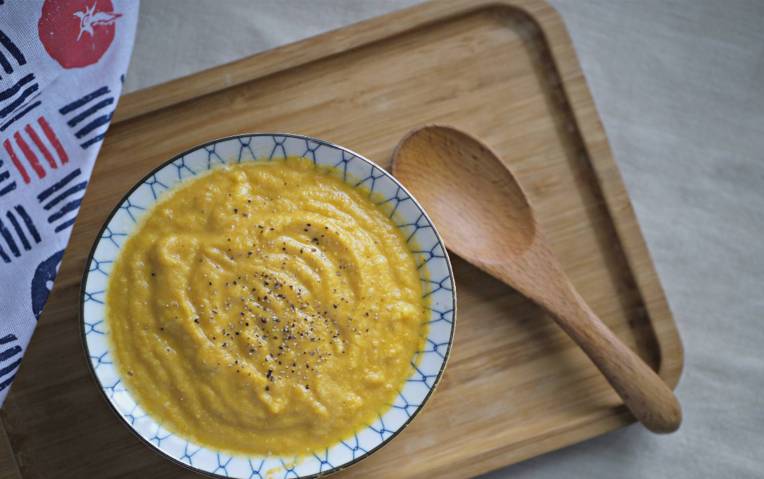
I like how the recipe added white rice to make the soup creamier.

Ugly Carrots // Mono + Co

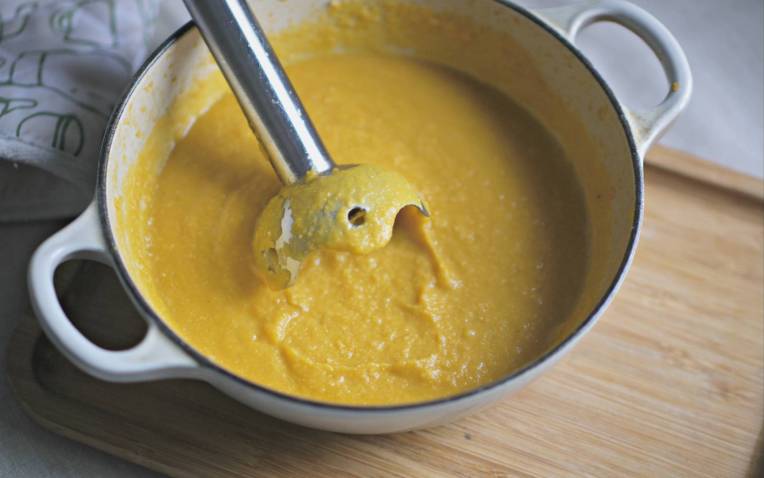
Added my own idea : Nutritional yeast instead of making broth from scratch and cashew nuts for a more nutty flavor.

Ugly Carrots // Mono + Co

After blending, who cares if the carrots have cracks or have snapped into halves?

//002. Pickled Carrot Sticks

adapted from here

Ugly Carrots // Mono + Co

Glass jars are great for pickles.  I sterilise mine by steaming before reusing.  More glass jars and bottle recycling ideas here.

Ugly Carrots // Mono + Co

Instead of finely julienned carrots, I simply prep mine matchstick style for crunch.

//003. Mashed Carrot Buns

adapted from here

Ugly Carrots // Mono + Co

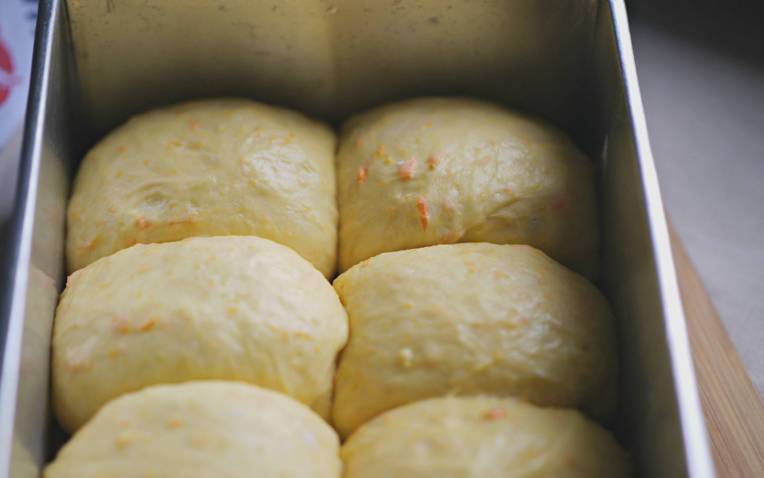
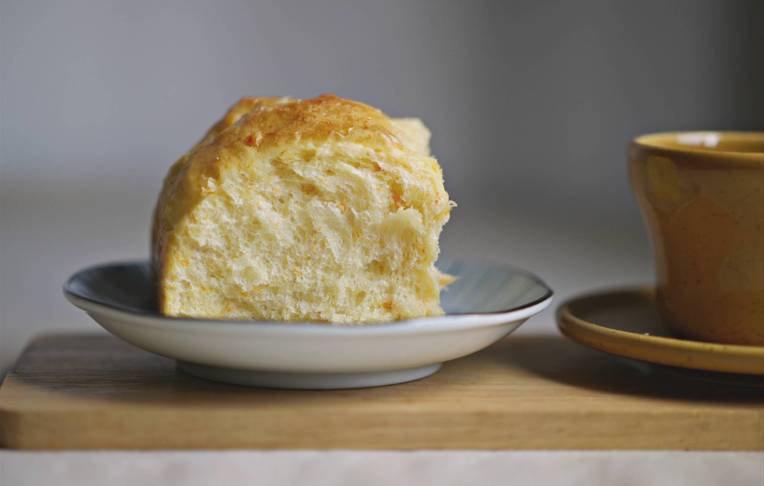
Instead of taro, I replace with the recipe with mashed carrots.

Ingredients: 250g white flour, 1 teaspoon instant dry yeast, 150g mashed carrots, t tablespoon raw honey, 1 tablespoon raw sugar, 1/4 teaspoon sea salt, 1 egg, 80g water, 20g cold butter.
Method: here

Some recipes use carrot juice to get the bright orange color for the bread, but there is something special about being able to spot real carrot bits in the buns when I use mashed vegetables to bake my bread recipes.

After making these, I still have half of the carrots left.  This and this for breakfast real soon.

Save

Save

Save

Save

Save

Save

5 Pantry Items As Natural Bath And Beauty Products

5 Pantry Items As Natural Bath And Beauty Products // Mono + Co

Through the course of switching to more eco-friendly body and skin care products with less packaging, I discovered a few gems in my kitchen.  Here are 5 that have become my must-haves in both the kitchen and bathroom.

++ Baking soda : This has so many uses around the house that I have been buying the larger 1.81kg box from Arms and Hammer in paper packaging instead of getting those 100g plastic bottles from the baking supplies aisle.  Occasionally, discount stores offer the 454g pack at $1.  I will add a teaspoon here and there for its clarifying and exfoliating properties.  It makes a great foot soak too, for removing feet odours especially from after wearing not so well ventilated covered shoes.  Brownie points for its paper packaging that can be recycled.

++ Organic raw honey : With the 1kg tub going slightly above $20, this is even cheaper than my gentle facial cream cleanser which isn’t even organic.  Do honey’s natural anti-bacterial and anti-inflammatory properties sound like a good idea for a cleanser?  While commercial brands of facial cleanser add honey as one of the many ingredients on the list, I am going for the 100%-honey-and-nothing-else method to clean my face when I don’t wear makeup.  I first learned about plain raw honey as cleanser from a local skincare entrepreneur at an eco-event.  Nothing to mix or cook, simply smear a thin layer of raw honey over damp face, leave it for 10 minutes and rinse off.  The first few attempts left a long trail of ants on my bathroom basin and counter, I now know better to rinse using more gentle action with less messy splashes.  I use only about half a teaspoon each time so the 1 kg tub would have last me really long if I hadn’t used it as food in the kitchen.

5 Pantry Items As Natural Bath And Beauty Products // Mono + Co

Until I can find a bee farm here, I will definitely end up with a plastic container after I finish up the honey.  I am starting a habit to reuse plastic type with recycling symbol #5 (Polypropylene or PP) instead of throwing them into the recycling bins since they are of stronger nature, able withstand higher temperature and thus has more potential for reuse.  As opposed to #1 (PET) from bottled water and disposable food containers which should not be reused and can be easily avoided by bringing own water bottles and lunch boxes.

The tub from honey happens to be a PP5, so off with ideas to reuse the nice looking translucent container.  The handle makes it a convenient non-hot-food storage container, like this honey lemonade I made with “ugly” lemons I bought off the shelves on discount.

++ Apple Cider Vinegar : I religiously start my mornings with a warm mug of water mixed with a tablespoon of ACV.  ACV is also my go-to ingredient for homemade facial toner after diluted with either plain filtered water or brewed green tea.

5 Pantry Items As Natural Bath And Beauty Products // Mono + Co

The ACV comes in 2 sizes and I buy whichever is on sale.  The larger empty glass bottle is reused as a water pitcher at home, reminding me to keep myself hydrated throughout the day.  I have kept aside 2 of the smaller size version, waiting for a perfect aha moment to reuse them.  Glass recycling is not as lucrative anymore anyway, so I might as well reuse these glass bottles instead.
++ Coconut oil : I bought coconut oil a few years back to make granola with a sweet smelling whiff of coconut, but the oil has since doubled up as a makeup remover.  I used to buy makeup remover with mineral oil to take off water-proof mascara, though I no longer wear mascara, this oil-in-make up remover thing got stuck with me.  While harboring thoughts of making my own makeup remover to save some moolah sent me to the kitchen pantry where my huge jar of coconut oil sat.  An earlier oil cleansing method attempt which I tried with coconut oil was brushed off as too troublesome since I ended up with the chore of preparing a pail of hot water and a greasy washcloth in the laundry.  However, the attempt taught me that coconut oil is indeed a very effective natural makeup remover.  So now, instead of going through the whole oil cleansing ritual, hot towel and all, I only rub the oil over my face to dissolve the makeup and wash away the grease and makeup with diluted liquid castile soap.  I did not come up castile soap + coconut oil recipe on my own, though I think the method of separate application is.  It actually came from a few sources (here and here) that gave instructions on how to diy makeup remove pads, I simply remove the need to buy (and discard) cotton pads and come up with my own 2-step cleansing process, talking about adapting for zero waste.

++ Tea seed/ Camellia seed powder : This year, I am adding tea seed/ Camellia seed powder to my growing list of natural body and skin care ingredients.  The powder was first acquired, after a long search, as a dishwashing detergent alternative that I have written earlier.  I am not sure why I had to have a hard time looking for this product here in Singapore, given its effective cleansing properties, affordable pricing and its popularity in Taiwan and Hongkong.  Camellia oil, on the other hand, is easily available in health shops here, marketed as a cooking oil that has an even higher oleic acid than olive oil.  The Japanese and Koreans also add the oil to their skincare regime.

5 Pantry Items As Natural Bath And Beauty Products // Mono + Co

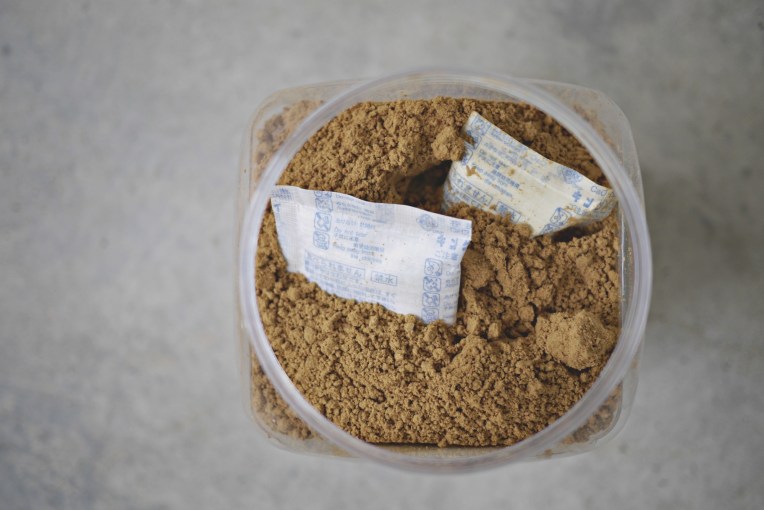
As for the powder with natural saponin, it is simply the residue which would otherwise be discarded from the process of camellia oil extraction.  The factories grind these seed residues into a very fine powder that can be dissolved in water, forming a paste or mixture for cleaning purposes.  Camellia seed powder, unfortunately, has a very short shelf life; one year if the packaging is unopened and 3 months after opening.  And after mixing with water to form a paste, it must be used up by end of the day as the process of decomposition starts to take place.  Given our humid weather here, I have been storing the powder in an airtight container with its past life as the ubiquitous Chinese new year goodies container.

5 Pantry Items As Natural Bath And Beauty Products // Mono + Co

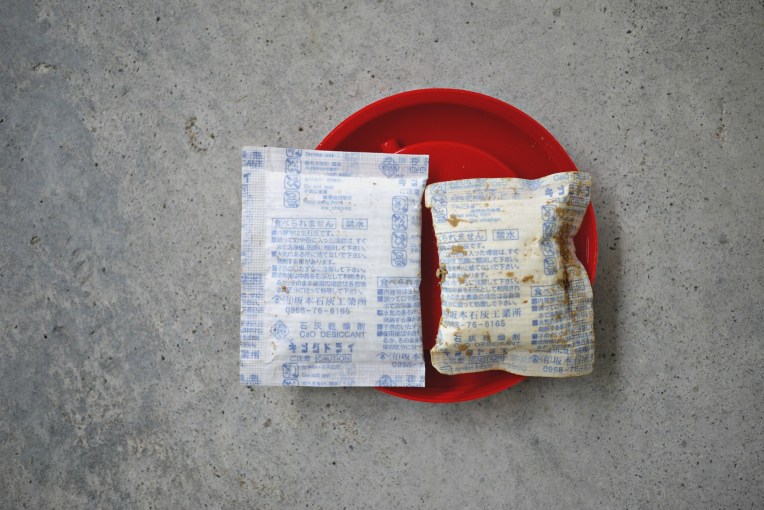
I also reuse dessicants found in Japanese seaweed packets to keep the powder dry.  On the right is an older packet I have been placing inside the powder for past few months and the newer one is on the left.  I find it wasteful to discard these palm-size packets that come with my Daiso seaweed sheets (and they weigh more than all the sheets added up!) so I reuse them in my cookie tins, tea leaves and anything that would thank a dry storage place.  They should be food safe since they come in direct contact with the seaweed sheets anyway.

Because tea seed powder needs to be used up quickly once opened, I have been finding ways to use them beyond cleaning my kitchen counter.  Like those pantry items above, camellia seed powder has crept into my bathroom as skin/hair care products.  Take note that when using tea seed powder as shampoo or facial cleanser, always be careful not to let it get in eyes.  Like any product with saponin, they sting and irritate the eyes when in contact.

Shampoo

1 teaspoon to 200ml water.  Shake to mix in a squeeze bottle.  Apply to scalp, massage gently to clean, rinse completely.

User note: The first time I shampooed with camellia seed powder, I was sorely disappointed that my scalp didn’t feel squeaky clean like my kitchen dishes after washing.  The real difference came the next day, when I noticed that my normally greasy scalp was not oily at all. This kind of prove that the shampoo was working in its own gentle way; cleaning my scalp and hair without stripping away all the natural oil, so the body will not produce even more oil to compensate.

Facial Wash + Scrub

Because the powder is really fine, it makes a gentle cleanser and an even more gentle exfoliant.
Mix 1 teaspoon of tea seed powder with 60ml of water to form a runny mixture.  Rub gently over face to clean.  Rinse completely.

Facial Mask

Mix 1 tablespoon of tea seed powder with just enough water to form a mud-like consistency, thick enough to apply on face.
Spread mask on face, avoiding delicate eye area.  Leave for 10 minutes.
Wash with water, remember to keep eyes shut until all residue has been rinsed clean.

Save

Save

Save

Save

Save

Save

Save

Save

Save

Save

Save

Milo Taro Pullman Loaf

Milo Taro Pullman Loaf // Mono + Co

I tried something different with this bake.  I used the water bath method to bake this bread for the first 10 minutes, but had to deconstruct the water bath structure once I realized that the bread top had risen to touch the oven’s upper heating element.  That explains the odd looking plateau you see on my bread top.  I continued to bake it the standard way for the remaining 20 minutes.

The additional steam inside the oven looks promising as a method to create taller loaves, although my table-top oven is too small for the set-up; rack + 10″ cake tin with hot water + trivet + Pullman tin.  I won’t put this in my recipe instructions below but I will try another method to create steam inside the oven by placing my smallest ramekins filled with hot water around the corners of the oven instead.  But that’s for another day.
Milo Taro Pullman Loaf // Mono + Co

As always, the addition of steamed taro makes my homemade bread moist and fluffy.  The Milo powder idea stems from this bread recipe that uses cocoa powder.  I added only 2 tablespoons of Milo powder (not the 3-in-1 type) so the loaf does not exactly whiff a strong aroma of chocolate malt, but the color reminds me of the brown traditional Hainan bread loaves : subtle.

For non-taro milo bread ideas (& for me to adapt with taro) :
this recipe with whole wheat flour
this bun recipe with milo custard filling

Milo Taro Pullman Loaf // Mono + Co


Milo Taro Pullman Loaf

280g plain flour
1 teaspoon instant dry yeast
1/4 teaspoon salt
2 tablespoon raw sugar
2 tablespoon Milo powder
100g steamed taro, cooled
1 egg
110g fresh milk
30g cold unsalted butter, cubed

In a mixer bowl, combine all the dry ingredients together ( flour, yeast, salt, sugar, milo powder) with a hand whisk.  Then add mashed steamed taro, egg, and milk to knead into a ball with a dough hook.  Stop the mixer and let the dough rest for 15 minutes.  Start the mixer again to knead for 1 minute before adding cubed butter one by one, and knead till the dough reach window pane stage.  Stop mixer and leave dough to bulk rise for 60 minutes.

After the dough has risen, punch down the dough to deflate and transfer to a clean work top.  Sprinkle worktop and palms with flour if the dough is too sticky to handle.

Divide the dough into 3 equal portions.  Flatten and shape each portion, rolling them up swiss roll style.  Arrange them in a Pullman tin, seam side downwards.  Leave this aside to proof for 60minutes, covered.

Preheat oven to 170C, and bake the bread for 30 minutes.

When done, remove bread from tin immediately and place on a rack to cool completely.

Save

Save

Save

Save

Save

Green Monday : DIY Beeswax Food Wrap Ver 4.0

Green Monday : DIY Beeswax Food Wrap Ver 4.0 // Mono + CoGreen Monday : DIY Beeswax Food Wrap Ver 4.0 // Mono + Co

When I first started making my own beeswax food wraps, one of the suggestions I received was to choose organic fabric for it to be food safe.  I can’t agree more, homemade products have the best reputation for quality when everything thing is made with love.  So I went in search of organic cotton in People’s Park Complex to make my FOURTH batch of food wraps.   Funny that this item was marketed to replace the use of disposable cling wrap, something that I hardly use in the kitchen previously.  However, after making these food wraps of different sizes, I realized that they are kind of useful around the house, and this is my version 4.0.  Yes, I tweak something slightly after every batch.

Green Monday : DIY Beeswax Food Wrap Ver 4.0 // Mono + Co

Version 3.0 saw me making natural dyes with food to dye the fabrics at home.  The latest batch that I am making is intended for wrapping cooked food, there is something uneasy about reusing the same wrap for raw ingredients like onion halves on a bread bun.  I am always running out of the bigger A4 sized wraps anyway.  So I bought $4 worth of cotton fabric that is food grade according to the textile shop owner.  People have been buying these for making tofu, milking hot soy milk and liner for steaming hot buns and dim sum dishes.  Sounds food grade enough.
Green Monday : DIY Beeswax Food Wrap Ver 4.0 // Mono + Co

When it comes to natural dyes, I only have luck with yellow and red/pink so far.  The last blue dye I tried making with blue butterfly pea flower faded away totally after just a wash.  This time, I tried boiling the fabric in pandan leaves to create pastel green shade.  Sadly, it was a waste of time (and gas) when I realize that the green color did not stay a bit on the fabric after one rinse.  Even the cloth I used to squeeze pandan juice to make kaya jam stained better.

Green Monday : DIY Beeswax Food Wrap Ver 4.0 // Mono + Co

And so it was back to just yellow and pink.  For more colors, this site has a comprehensive list of natural dyes, I simply use the ingredients I have in my kitchen and must not be too expensive since the dye is to be discarded after the project.

Green Monday : DIY Beeswax Food Wrap Ver 4.0 // Mono + Co

Here’s the variation I made to my 4th version: after the beeswax wraps have air dried, I hand sewn cloth labels to differentiate the sides so that same side always goes towards the food.  Just like commercial beeswax wraps, there will be a side with prints that will be the facing outside.

A very quick run down on how I treat and dye my fabric before turning them into turmeric yellow color beeswax food wraps:
Step 1 : Trim the fabric to sizes for beeswax wraps.
Step 2 : Handwash with mild detergent and air dry.  Cloth seller mentioned avoiding laundry detergent.

Step 3 : To make turmeric yellow dye, fill up half a small saucepan with water and add 1 tall heap teaspoon turmeric powder, stir to mix well. If you want brighter, deeper shade, add more turmeric powder.  Bring the solution to boil and add 1 heap teaspoon of salt.
Step 4 : Wet the fabric and wring dry before adding it into the yellow dye.   Boil for 5 minutes, turn off the fire and let it soak until the water cools to room temperature.
Step 5 : Remove fabric from dye solution and rinse in cool water.  Air dry and press with an iron.
Step 6 : Line a tray with parchment paper, place the fabric on top.  Sprinkle beeswax evenly and melt the beeswax in a preheated oven at 150C for 2-3 minutes.
Step 7 : Once all the beeswax has melted, take out the tray, add 1/4 teaspoon of coconut oil, spread the oil and melted beeswax evenly on the fabric using a brush with short bristles.
Step 8 : If more beeswax is required, top up and send it back into the oven, but keep a watchful eye on the oven as beeswax is flammable.
Step 9 : Remove fabric from parchment paper and air dry for 1 minute.
Step 10 : Rinse the beeswax wrap with mild detergent once and air dry again before the first usage.
Step 11: (Optional) Sew a cloth label on one side of the wrap so you will know which side always goes towards the food.

For the record, my $4 fabric was made into 9 pieces of beeswax food wraps of various dimensions.

Save

Save

Save

Save

Save

Save

Save

Save

Save

Save

Save

Save

Save

Homemade Spoon Butter : A Wood Preserver

Homemade Spoon Butter : A Wood Preserver // Mono & Co

I have quite a number of wooden kitchen items at home but I have never thought of applying oil over them to moisturize and protect their surfaces.  I always thought that wooden products, being a natural material and subjected to much abuse in my kitchen, are meant to split/turn moldy/breakdown/wear and tear and eventually be replaced due to hygiene reasons.

I was so wrong.

While going through some of the methods to clean and restore my chopping boards, I stumbled upon this post that detailed how to give old wooden salad bowls from the thrift store a total makeover. Another one here.  My wooden spatulas and spoons need more than a thorough nightly air dry as maintenance.  And they have the potential to outlive me and gain vintage status if I just give them regular TLC sessions with spoon butter, which is nothing more than a mixture of beeswax and a neutral flavor oil.  The super brief ingredient list only means that I am going the DIY route instead of buying a big jar that I can’t use up.

There are many recipes out there when you search for “spoon butter recipes” and they are really similar to how I have been making my lotion bars and lip balm.  So I am going to make just enough to buff my wooden utensils and use up the leftover as hand moisturizer for the next few days. I hate leftovers that linger for months.

After eliminating mineral oil, and a number of cooking oil that turns rancid easily, I decided to turn to this recipe that uses coconut oil, something that I have been using for my homemade skin care products.  According to other sites, walnut oil and olive oil are great choices too.  Pick something food grade that you already have in your pantry instead of buying a bottle for a single purpose.

Homemade Spoon Butter : A Wood Preserver // Mono & Co

I made a really small initial batch for testing, with just 3g beeswax pellets and 10g coconut oil, since most instructions mention “1 part beeswax/ 3 parts oil.”  I have covered almost every wooden items in my drawer except for 3 large chopping boards.  If you need more, simply increase the portion of ingredients accordingly, especially for chopping boards.  I will give my boards the royal treatment over the weekend and let it cure longer.

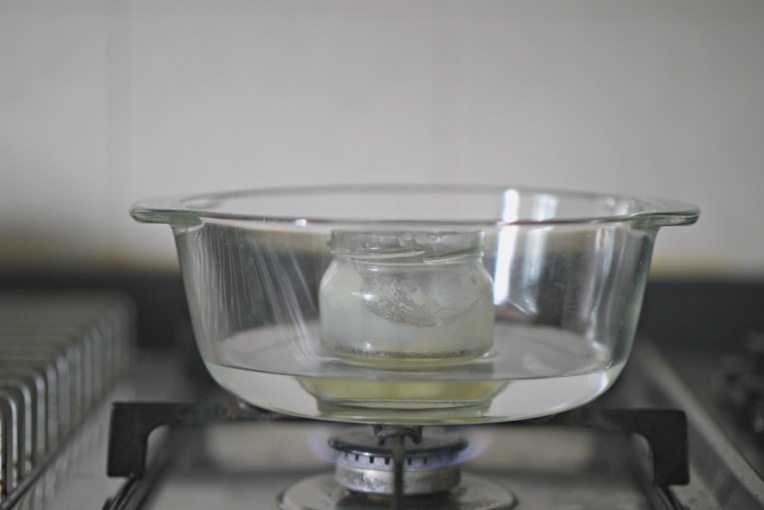
I made the spoon butter directly inside a small glass jar that I am storing it with, hardened wax is really messy to clean up.   I learned that the hard way after making my beeswax wrap, so I will avoid making it a separate vessel to skip the transferring and pouring steps altogether.  For this reason, use a glass jar instead of a plastic one since we will be heating it.

Homemade Spoon Butter : A Wood Preserver // Mono & Co

Place the glass jar with beeswax pellets and coconut oil in a pot of water over low heat and let it simmer.  Once the beeswax pellets melt (in my warm house, coconut oil is always in liquid state), stir to mix well.  I usually hold the bottle by its rim (wear a mitten and be careful) and swirl to mix.  Then leave the spoon butter on the kitchen counter and let it set at room temperature.

Homemade Spoon Butter : A Wood Preserver // Mono & Co

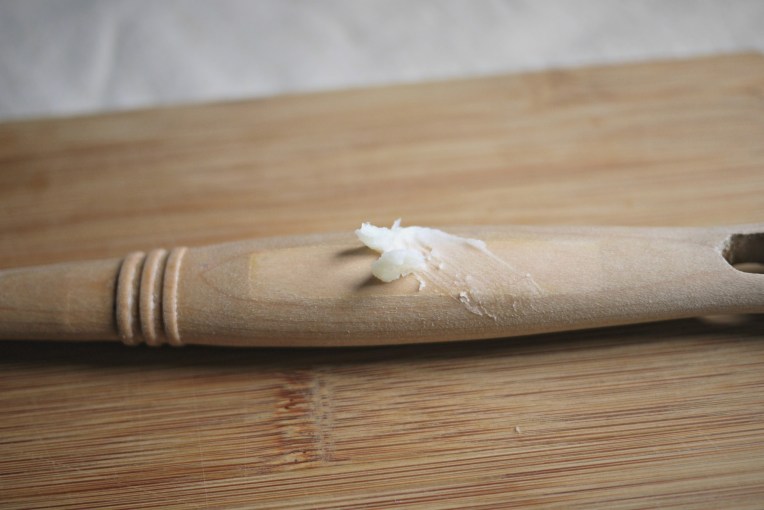
To use, rub the spoon butter over the clean and dry wood surfaces, either with dry cloth or bare hands.  Leave them to sit over night.  The next day, wipe away any residual grease that is not absorbed by the surface with a dry cloth.

Homemade Spoon Butter : A Wood Preserver // Mono & Co

Homemade Spoon Butter : A Wood Preserver // Mono & Co

I always thought my spatula handle feels unfinished and dry.  After treatment, the wood grains even start to look more beautiful.

Homemade Spoon Butter : A Wood Preserver // Mono & Co

The difference before and after on my bamboo chopping board.

Homemade Spoon Butter : A Wood Preserver // Mono & Co

Homemade Spoon Butter : A Wood Preserver // Mono & Co

Bamboo toothbrushes getting a treatment too, especially the ones with unfinished surfaces that gets moldy really easily inside the bathroom.  See the difference before (below) and after (top).  But I can’t seem to find a way to reach the part between the bristles.

Reapply whenever the wooden surfaces start to look or feel dry.  I won’t wait until they crack or split anymore.

Save

Save

Save

Save

Save

Save

Save

Simple Pleasures

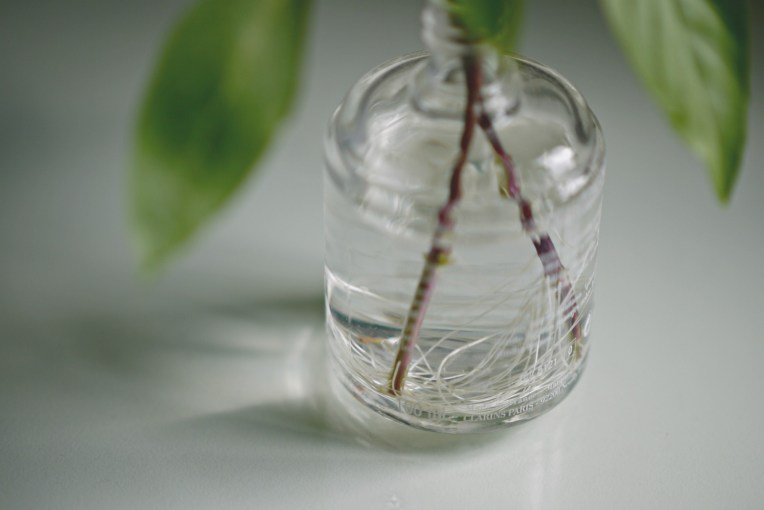
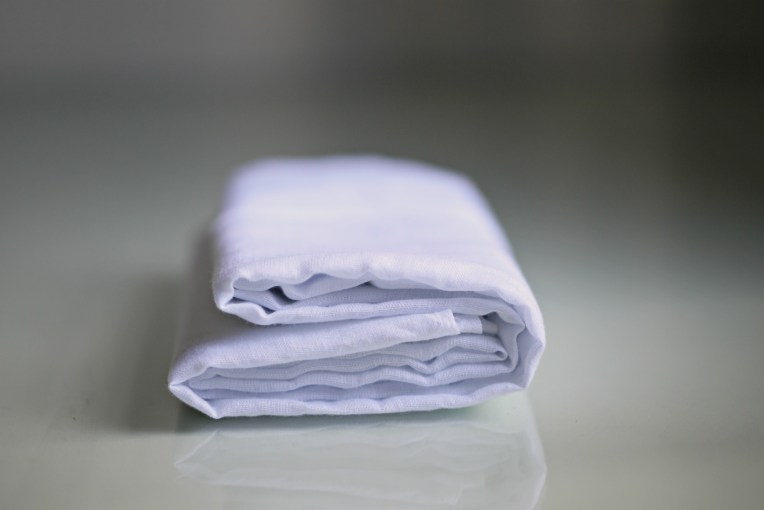
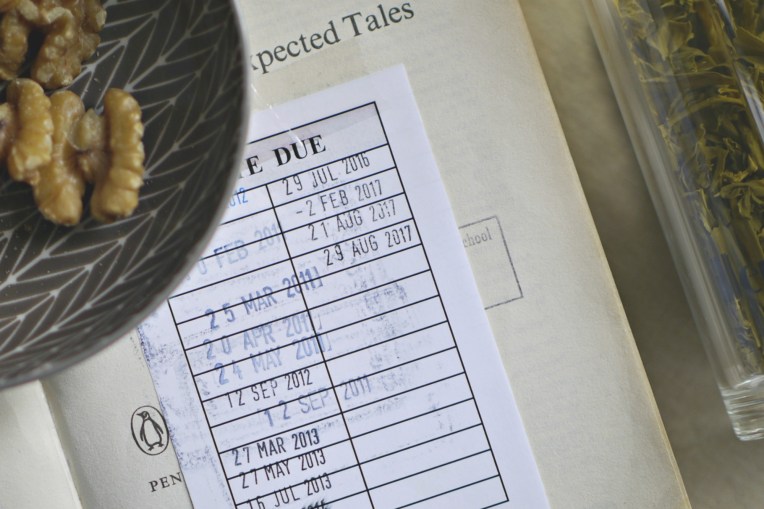
just a gather of some random shots of things that caught my eye, made my day, or meaningful enough to make me press the shutter, but just don’t seem to fit in anywhere or significant as a post.

Simple Pleasures // Mono + Co

// all these in 5 days, by the window sill.

Simple Pleasures // Mono + Co

//  food safe cotton fabric, ready for making soy milk.

Simple Pleasures // Mono + Co

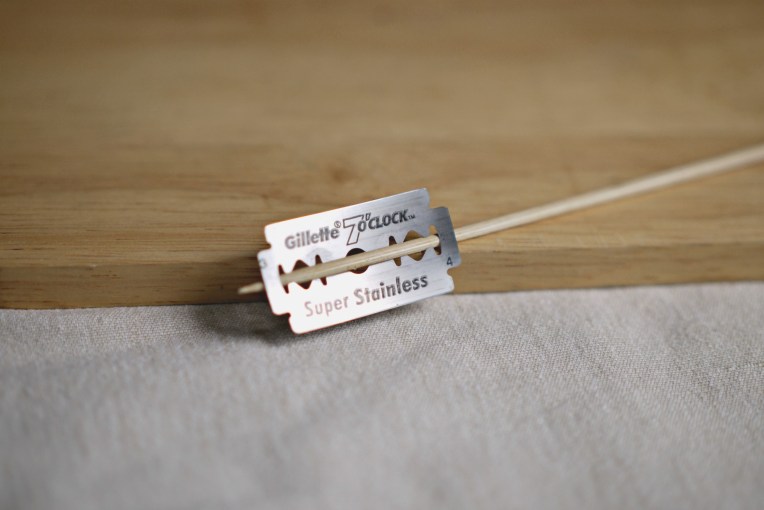
// almost bought a $10+ bread scoring lame, then I found razor blades in Chinatown selling $1.20 for 5.

Simple Pleasures // Mono + Co

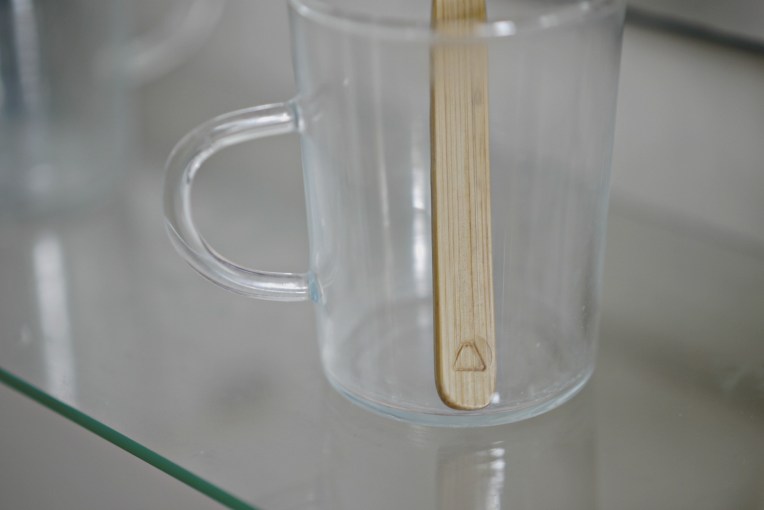
// glass tooth mugs kept sparkling clean with vinegar.

Simple Pleasures // Mono + Co

// hello due date sheet, long time no see! try creating your own library/ reading system from here and here.

Save

Save

Save

Save

Peach Gum, 4 ways

Peach Gum, 4 ways // Mono + Co

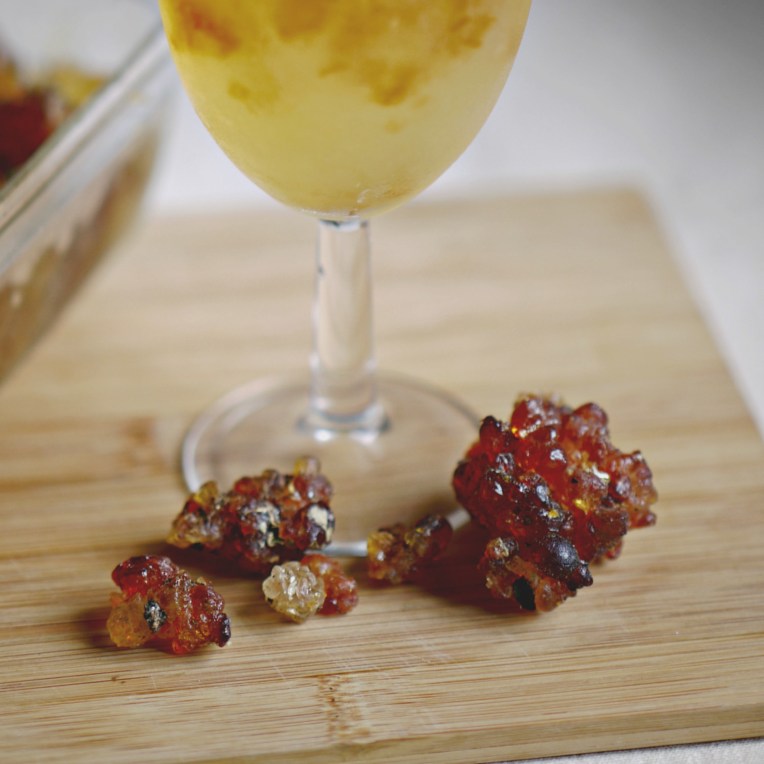
First, a note to self: peach gum expands 8 to 10 times in volume after soaking, so remember not to soak too many pieces next time.

Obviously, I forgot the lesson last time, repeated the same mistake and ended up with a very huge bowl of soaked peach gum after 2 nights in the fridge.  The hard crystals softened into a gelatinous texture that is very convincing as a collagen booster food.  Since peach gum is tasteless and I have no idea how much longer can it last inside the fridge, I decided to cook as much as possible in one day and leave the remaining to make a pot of this longan and peach gum dessert for tomorrow.  Yup, I have that much, so here we go:

Peach Gum, 4 ways // Mono + Co

++ Honey Lemon Peach Gum Drink ++

I got this idea from the popular bottled collagen drink in the market.  Since I don’t consume animal derived collagen, adding peach gum to my homemade honey lemon juice sounds like a good substitute. Delicious when served chilled.

P.S. I am not sure if peach gums can be eaten without cooking first, but I steamed the soaked gum for 15 minutes just to be safe.

Peach Gum, 4 ways // Mono + Co

++ Banana Milk Shake with Peach Gum ++

I was clearing some brown bananas into milk shake for my kids and decided to blend some steamed peach gums with the banana and milk as well.

Peach Gum, 4 ways // Mono + Co

++ Dashi Vegetable Soup with Peach Gum ++

Since the peach gum is tasteless, I am not limiting my collagen intake to just desserts.  I have cooked this meatless “trotter” vinegar with peach gum before, so I can surely add them to savory soups.  I made kombu dashi stock like this, add apples, onions, corn, and carrots and simmer for 1 hour.  The kombu from making dashi can be eaten, so don’t throw them away after making the stock.  After an hour, remove apple and onion from the pot, season with soy sauce, add soaked peach gum and boil for another 15 minutes.  Transfer to a bowl and serve immediately.

Peach Gum, 4 ways // Mono + Co

++  Udon Soup with Enoki Mushroom and Peach Gum ++

With leftover vegetable dashi stock, it’s easy to create this late afternoon snack.  Heat up the soup, add enoki mushrooms, peach gum and miso paste (optional).  In a serving bowl, place udon (cooked separately in another pot) and pour soup over it, top with a bunch of cilantro leaves.  Serve immediately.

Save

Save

Save

Save

Save

Save

Save

No Frills Shopping

No Frills Shopping // Mono + Co

I share frequently on my plastic-bags-free shopping style when shopping at the wet markets.  I will share today how I store the groceries after buying them packaging free.

This method of shopping somehow always piques interest as to 1) how i cope without plastic bags to line my trash bin, 2) how I store the produce without proper packaging.  Even the market stallholders are curious.  But they know a thing or two about the best way to store their stuff, so I often get useful tips from them, minus the plastic bags of course.

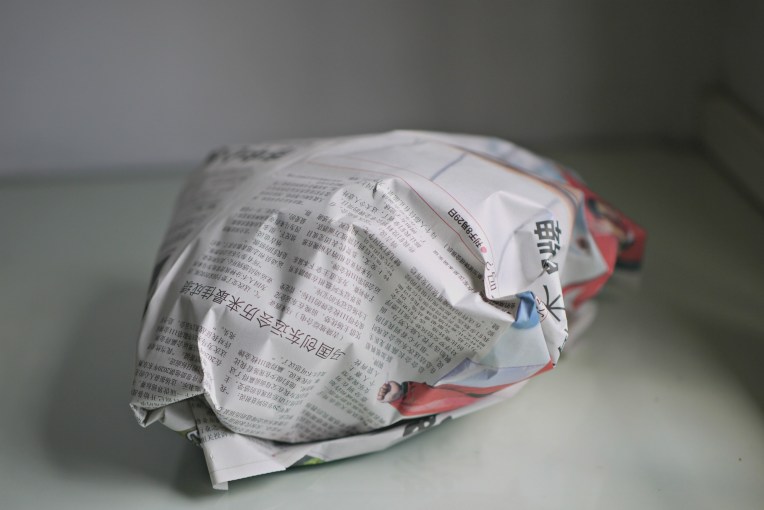
Like this yam, uncle told me “must remember to store inside fridge, but let it breathe.” Since I think newspaper is the best material to wrap fruits and vegetables and yet allow them breathe (most sellers bag in shiny plastic bags with a few punched holes,) I simply leave wrap in in newspaper and leave it inside the crisp drawer.  Placed this right at the bottom since I don’t want it to crush on the leafy vegetables.

No Frills Shopping // Mono + Co

Red spinach before.  Auntie merely wrap the roots with a smaller piece of newspaper to prevent the soil from making a mess in my shopping bag.  But I don’t really mind since I clean the bags often and make sure they are dry before folding them up for the next use.  It’s alway good to keep the reusable bags clean and ready.  Nothing foils a green shopping plan than fumbling around looking for clean shopping bags seconds before leaving the house.

No Frills Shopping // Mono + Co

Red spinach after.  All wrapped up with a larger piece of newspaper.  Always remember to remove the elastic bands that are used to tie the vegetables together.  Otherwise, the tension will cause the vegetables to rot fast.

No Frills Shopping // Mono + Co

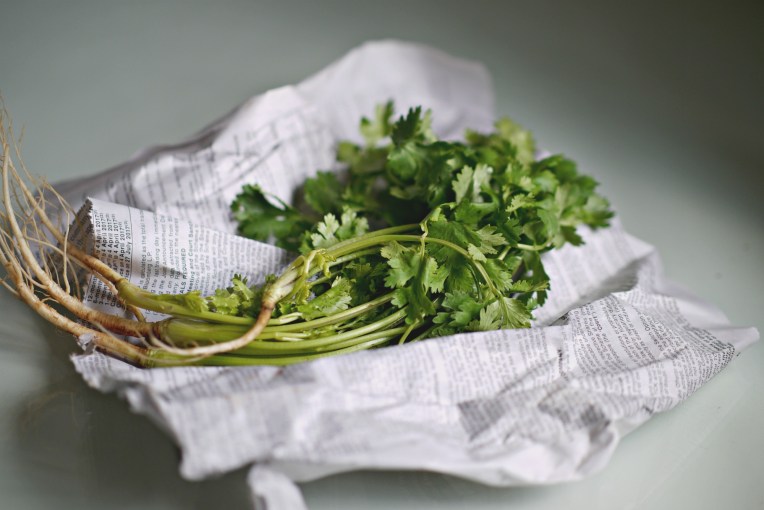
I used to buy just 1 or 2 stalks of cilantro as they don’t keep well by day 2, until the seller taught me the trick to keep them fresh and perky.

No Frills Shopping // Mono + Co

Store them inside an air-tight container and they will stay like this even after 2 weeks.

No Frills Shopping // Mono + Co

I have since started storing the scallions this way too, these are 1 week old.  Think I buy too much or use up too slowly.

No Frills Shopping // Mono + Co

Bok Choy, bundled with elastic bands.

No Frills Shopping // Mono + Co

Removed the bands and wrapped with newspaper.  These Bok Choy stalks might look limp, but a 15 minutes soak in a basin of water with a pinch of salt is all it takes to bring the crisp back.  I do the same with spinach too, but I will always make a mental note to use up these leafy vegetables first before cooking the more hardy ones.

No Frills Shopping // Mono + Co

Long beans, tied with elastic bands again, now you know why I find elastic bands one of the few household items that I will never need to buy.

No Frills Shopping // Mono + Co

Wrapped neatly with newspaper.

No Frills Shopping // Mono + Co

Next comes the “hardier” vegetables.

No Frills Shopping // Mono + Co

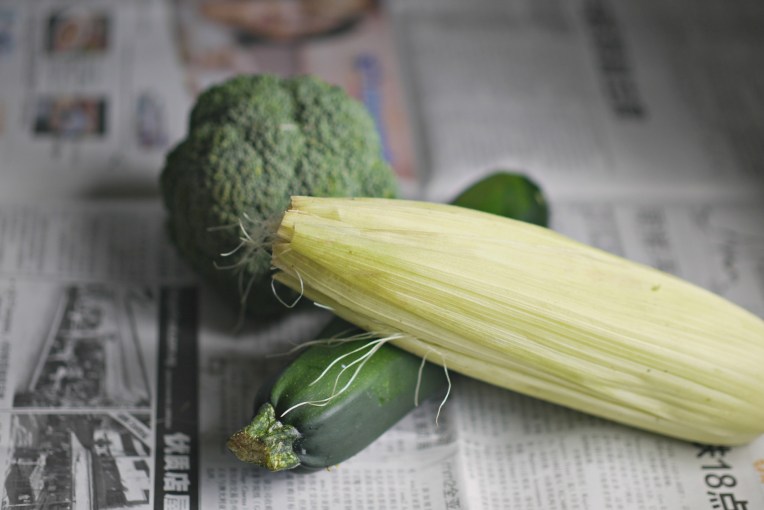
Wrapped all with newspaper sheets except for broccoli, with my diy beeswax wrap.  Not sure if my observation is accurate, but the wrap somehow keeps my broccoli florets longer without turning yellowish.

No Frills Shopping // Mono + Co

The only few items that I can’t get without plastic bag are the melon and pumkin wedges that the seller cuts up into smaller portions.  I tend to choose smaller pumkins so that I can buy them whole, but the whole sharksfin melon is too big for my family’s consumption.  Onions and tomatoes are bought without bags, and store outside the fridge in a basket with my garlic, ginger and potatoes.

No Frills Shopping // Mono + Co

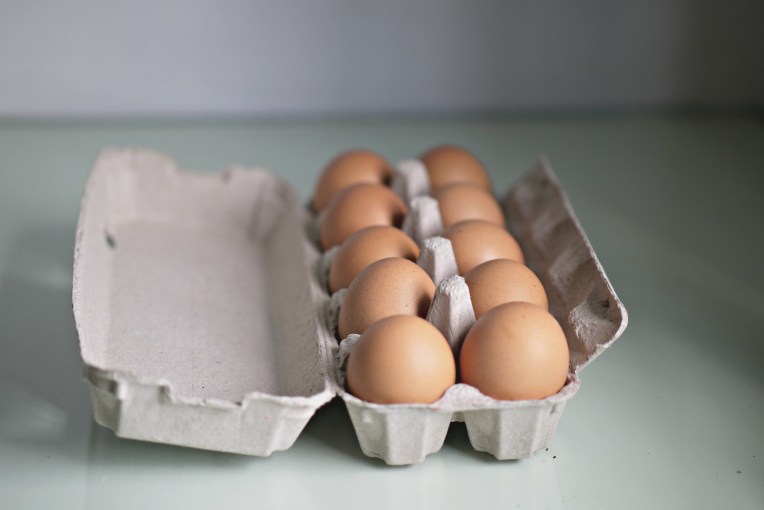
The eggs bought in an egg carton that I “borrowed” from the seller.

No Frills Shopping // Mono + Co

I will transfer the eggs to my box at home, and bring the carton back to the seller on my next trip to market.  Almost all the egg sellers at the markets I visit welcome customers to return clean egg cartons for them to reuse, whether plastic or paper.

No Frills Shopping // Mono + Co

I have been reusing this paper egg carton since June but didn’t bring it along to prevent it from getting damaged or torn.

No Frills Shopping // Mono + Co

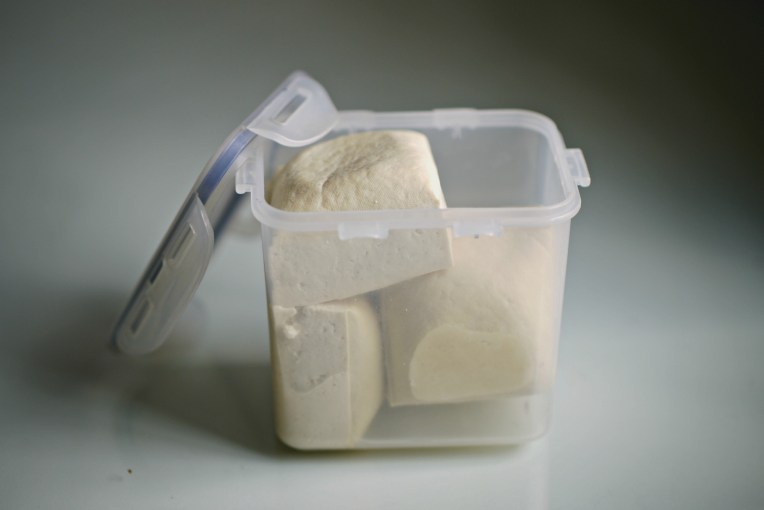
This is how I buy tofu, and the auntie taught me to rinse the tofu with water before storing inside the fridge.

No Frills Shopping // Mono + Co

Covered containers that I bring along to buy from the dry goods store where most of the items are packaging free.  This means that I can buy the minimal amount I need without overstocking.   Some planning is required though, to get the right sizing and a correct number of containers.

Save

Save

Save

Save

Save

Save

Save