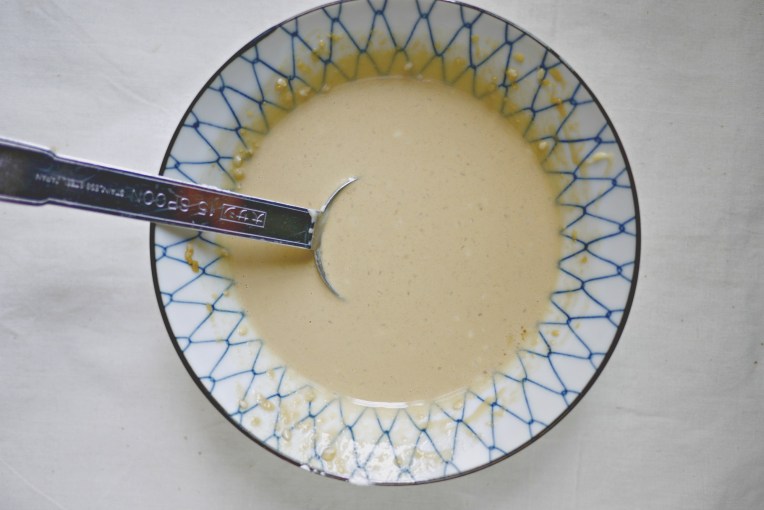
No Sugar Japanese Sesame Dressing

No Sugar Japanese Sesame Dressing // MonoandCoNo Sugar Japanese Sesame Dressing // MonoandCo

Another recipe that allows me to use up my bottle of Kewpie Mayo faster.

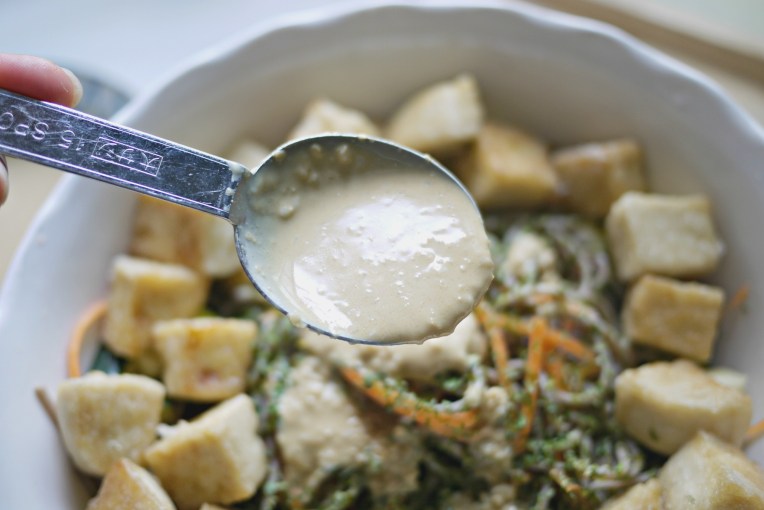
Been using the same sesame dressing recipe for over a year, sometimes I add less vinegar, but most of the time I cut down on the sugar added.  I have also used other kind of sweeteners like raw honey to make a healthier version, and I found that date syrup works best.  I even omitted mirin altogether when I use date syrup.


No Sugar Japanese Sesame Dressing


adapted from here

3 tablespoon roasted white sesame seeds
2 tablespoons japanese mayonnaise
2 tablespoons japanese rice vinegar
1 tablespoon light soy sauce
1 teaspoon date syrup
1 teaspoon sesame oil

Place roasted sesame seeds in a mortar and pestle, grind into powder.
Whisk all ingredients in a small bowl.
Drizzle on noodles or salad.
Store remaining unused portion in the fridge, for up to one week.

Extra Thick Kewpie Mayo Banana Buttermilk Pancakes

Extra Thick Kewpie Mayo Banana Buttermilk Pancakes // MonoandCoExtra Thick Kewpie Mayo Banana Buttermilk Pancakes // MonoandCo

So mayonnaise is the ingredient this week to clear.  I always buy the biggest bottle of Kewpie but use it really slowly to make sandwiches.  After almost a month, I still have more than half a bottle left.  Time to speed things up a bit.

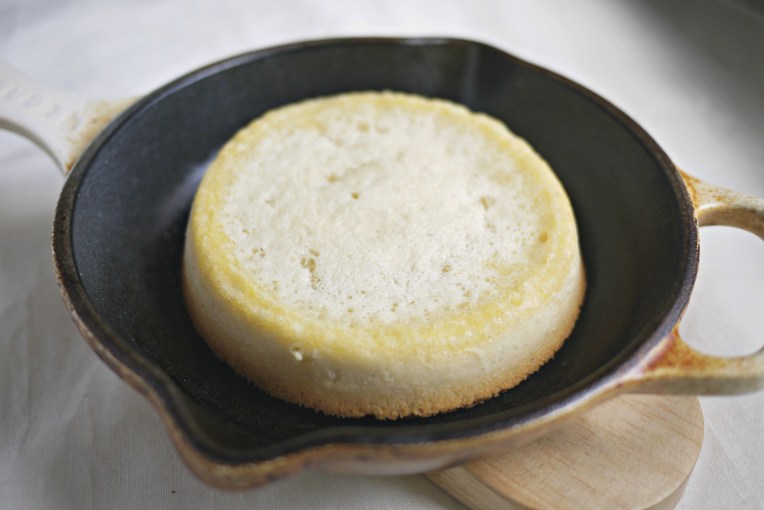
What looks like tiny cakes above are actually cooked in pancake’s style, over very low heat for 10 minutes to cook bottom up, then baked in oven for another 10 to cook the top down.  Do you  know that adding vinegar makes more fluffy breads, and does not leave any sour taste behind after baking?  So when this recipe suggests Kewpie mayonnaise to make extra tall pancakes, I knew that I need not worry about any weird aftertaste in the final product.  Plus this recipe uses buttermilk.  Mmmm…. how fluffy and moist can this pancake get, was the only question in my head.  Then I saw bananas on the kitchen counter, so I thought, might as well …

I made a final alteration to the recipe by separating the egg yolk and white, and beating the white to stiff peaks, just like my other fluffy pancake recipe.

The original recipe cooked the entire 4 cm tall pancake over the stove for 20 minutes with a diy mold that allows flipping and cooking the pancake on both sides.  I was too lazy to find and trim a cardboard and line it with parchment paper.  Egg rings are a good alternative, but I don’t have them at home, so I modified my smallest 4 inch tube pan instead, by simply removing the tube.   Remember to grease the insides with butter so that the pancakes can be dislodged easily after they are cooked.

Extra Thick Kewpie Mayo Banana Buttermilk Pancakes // MonoandCoExtra Thick Kewpie Mayo Banana Buttermilk Pancakes // MonoandCo

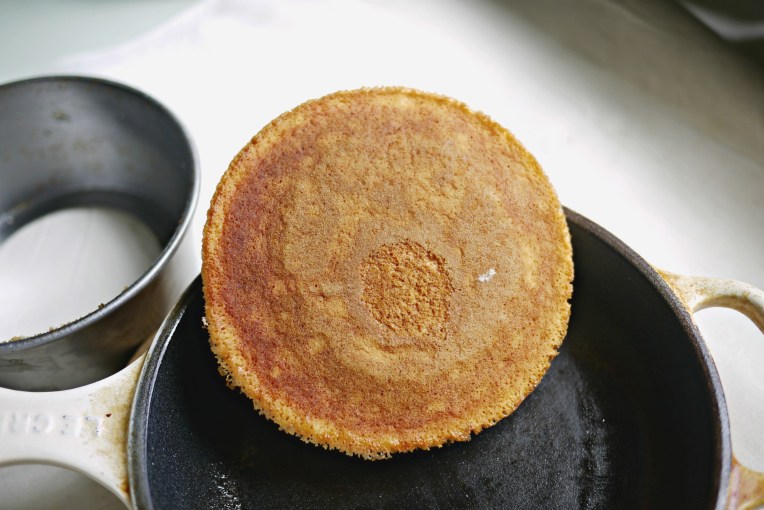
As flipping is not possible with this improvised tool, I send the whole thing, pan and all, into a preheated oven at 160C for the remaining cook time.  Now I wonder if it is possible to bake the entire pancake instead.

Extra Thick Kewpie Mayo Banana Buttermilk Pancakes // MonoandCo Extra Thick Kewpie Mayo Banana Buttermilk Pancakes // MonoandCo

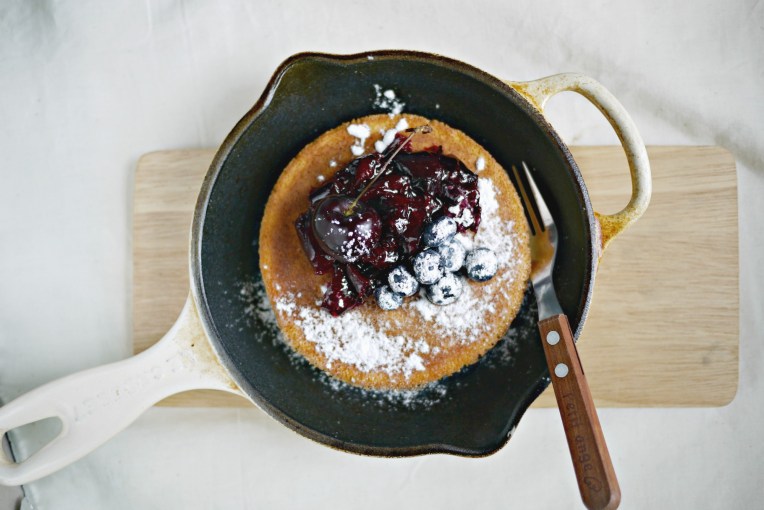
These pancakes must be served warm.  The recipe makes 2 thick pancakes.  I ate one in the morning for breakfast with banana slices, blueberries and honey as toppings, and warm the other one up later for afternoon tea.  To heat up pancake,  I placed it in a hot oven that I have just turned off after baking bread at 170C.  After 5 minutes, my pancake is warm again, this time I top with diy cherry sauce (fresh cherries pitted, sugar and lemon juice), blueberries and a sprinkle of icing sugar.


Extra Thick Mayo Banana Buttermilk Pancakes

adapted from chopstick chronicles

1 cup self raising flour, sieved
1/2 teaspoon baking powder
2 tablespoons raw sugar
1 large egg, separated
3/4 cup buttermilk
1 banana, mashed
1 teaspoon vanilla extract
1 tablespoon Japanese Mayonnaise

Whisk egg white till stiff peak, set aside.

In a bowl, stir buttermilk and mashed banana to mix well.  I use an immersion blender to make banana flavored buttermilk so that I won’t get lumpy pancakes, but this step is optional if you like the idea of finding small pieces of banana inside your pancakes.  Stir in the egg yolk and vanilla extract next.

Combine all dry ingredients, sieved flour, baking powder and raw sugar, in a separate large mixing bowl and make a well in the center.  Pour the buttermilk mixture into the well and whisk to make a uniform batter.  Add in mayonnaise and whisk again.  Finally, fold in the egg white meringue.

To cook pancake, heat up a pan slightly greased with butter.  Grease inner side of the ring mold with butter/oil and place it on the pan.  Over the lowest heat (the lowest flame you can set, it’s a whole 10 minutes of cooking over fire, bottom might get charred if temperature is too high), pour half the pancake batter into the ring mold and cover the mold/pan to let it cook for 10 minutes.  I simply cover my diy mold with a metal cookie tin cover to trap steam and heat during the low heat cooking process.

Once 10 minutes is up, cook the pancake in a preheated oven at 160C for another 10 minutes.  Repeat to make another pancake with the balance batter.

After baking, remove the pancakes from the molds and serve them warm immediately with your preferred choice of toppings.

Make it Healthier : Oatmeal Potato Bread Loaf

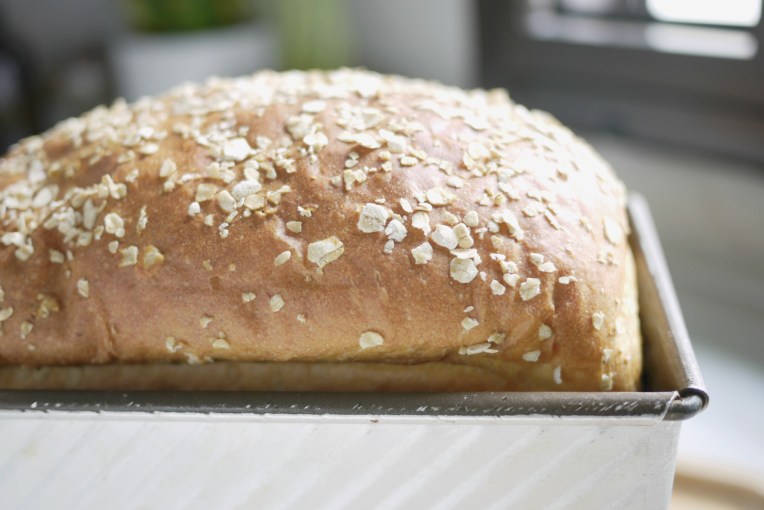
Oatmeal Potato Bread // Mono+CoOatmeal Potato Bread // Mono+Co

I am on a bread baking lucky spree, you know, the period when every single thing you modify to a recipe turns out 101% successful?  This was made with adding oat flour (diy!) and raw sugar to amp up its feel-good factor.  Very glad that this oatmeal loaf recipe has turned out so well.  The dough rose over and above the tin, creating these stretchy structure below the crown that are really pleasing to the eyes after baking.  As with the other potato breads that I have baked, the interior is soft and fluffy.

I have been baking this recipe at 170C degrees, and this is my preferred oven temperature nowadays, instead of 180-190C. Baking at this temperature for at least 30 minutes achieves the most delicate, softest, yet golden brown crust, my essential requirements for bread loaves are that are both cottony and great looking.  As I usually bake for next day’s breakfast, I find that breads baked at this temperature also stay soft longer.  Breads I have baked with thicker crusts tend to turn crummy next day which lead to more clean up work after breakfast.  No good.
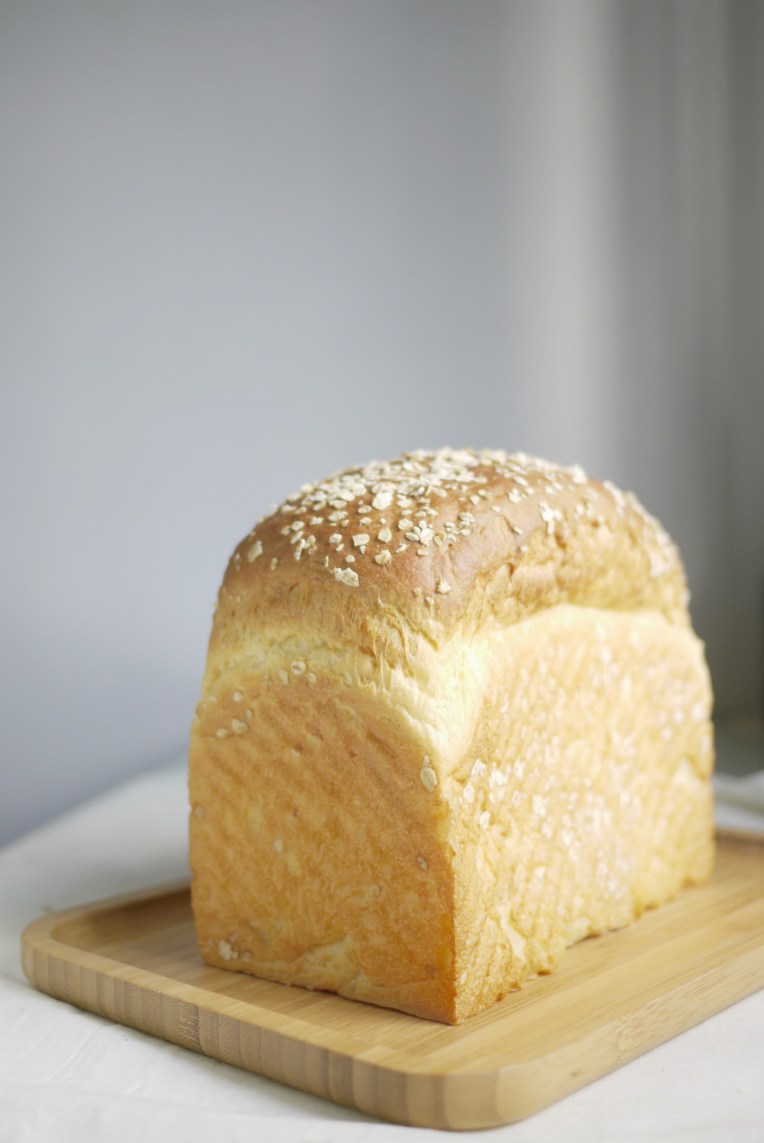
Oatmeal Potato Bread // Mono+CoOatmeal Potato Bread // Mono+Co

Slice this super soft loaf with a good bread knife.  I recently acquired a new one only to realize what a world of difference it made.  Too often, I destroy my perfectly baked pillowy loaf with a lousy bread knife that squash my bread more than slicing it.  Now I can serve perfectly sliced breads for breakfasts, thin or thick, without any problem!

Oatmeal Potato Bread // Mono+Co


OATMEAL POTATO BREAD

100g bread flour
100g plain flour
30g oat flour **
100g cooked+mashed potatoes
2 tablespoons raw sugar
1/4 teaspoon salt
1/2 tablespoon instant yeast
1 egg ***
40-50g water
40g cold butter, cubed
2 tablespoons oatmeal, and more for topping

** If oat flour is not a regular item in your pantry, no need to buy a bag just for this recipe.  Simply run oatmeal/rolled oats in a processor till fine, that’s your oat flour.  Or omit this completely and coat dough with more oatmeal on top before baking.

*** I use 1 small whole egg, weighing about 50g with shell.  If you have larger eggs (70g and above), use half of a beaten egg.

*** Use water left over from boiling the potatoes with, this water contains starch from the potatoes and are great for making bread.  Remember to cool them down to room temperature before using.

In a mixer bowl, place bread flour, plain flour, oat flour, potatoes, raw sugar, salt, yeast, and mix these dry ingredients well with a spoon.  Add beaten egg and 40g of water.  Turn the mixer on, with a dough hook, knead ingredients on low speed (KA:1).  Watch the ingredients as it gathers to form a dry ball dough, if it doesn’t, slowly add more water from a pouring cup, and stop when a dough is formed.  Let the mixer knead this dough for another 2 minutes.  Then leave this dough aside for 15 minutes to allow the flour to absorb the liquid properly, a process known as autolyse method.

After 15 minutes, turn the mixer on again on low speed, you might notice that the dough is now slightly more elastic than before, let mixer run for a minute before adding cubed cold butter one by one, till they get mixed well into the dough and there is no visible sight of solid butter.

Continue to knead this dough to reach window pane stage, it should look and feel smooth and elastic.  Remove mixing bowl from mixer, cover bowl with a clean towel, and let it rise for an hour.

After an hour of rising, punch dough down to deflate and transfer to a clean worktop.  If the dough is too sticky, grease hands and worktop with some butter for easier handling.  With a rolling pin, or bare hands, deflate dough to squeeze out air bubbles trapped inside the dough.  Roll dough into a rugby ball shape to fit your bread tin, roll it over a plate filled with 2 tablespoons of oatmeal, place the dough inside baking tin, seam side down.  We will coat more on the top after the dough rise to the top of the tin.  Let it proof for another 45 minutes to 1 hour, covered and placed in a draft free place.

After its final proof, mist the top of the bread slight with water, sprinkle generously with more oatmeal to your liking, tap lightly to make the toppings adhere better to the dough.  Bake bread in a preheated oven at 170C for 30 minutes, till golden brown.

Remove bread from its tin immediately after baking and let it cool completely on a rack before slicing/ serving it.  Due to the weaker interior structure of this bread when it is steaming hot, I cool it lying on its side to prevent the bread from collapsing on its weight.  After cooling down, the crust structure will become more stable and the bread will be able support its own weight upright.

Meatless Vegetarian Steamed Bun

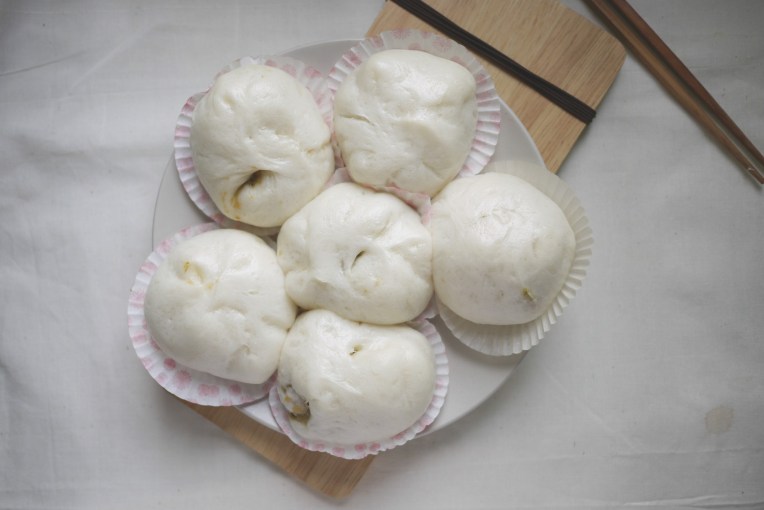
Vegetarian Steamed Bun // Mono+Co Vegetarian Steamed Bun // Mono+Co

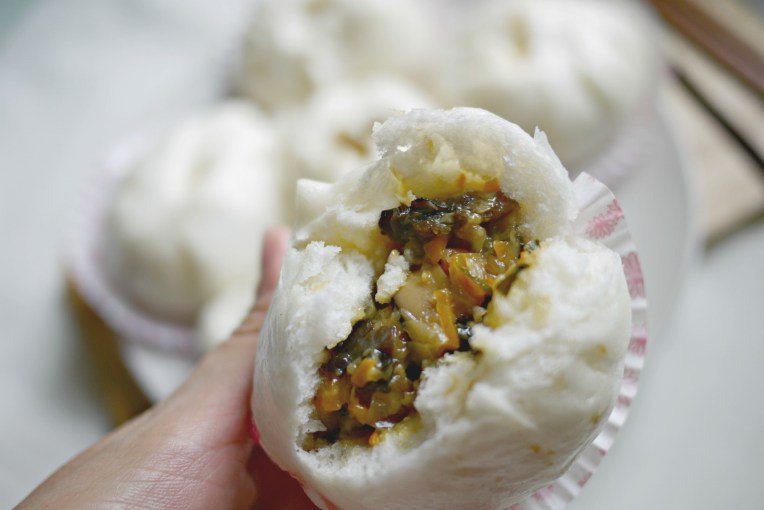
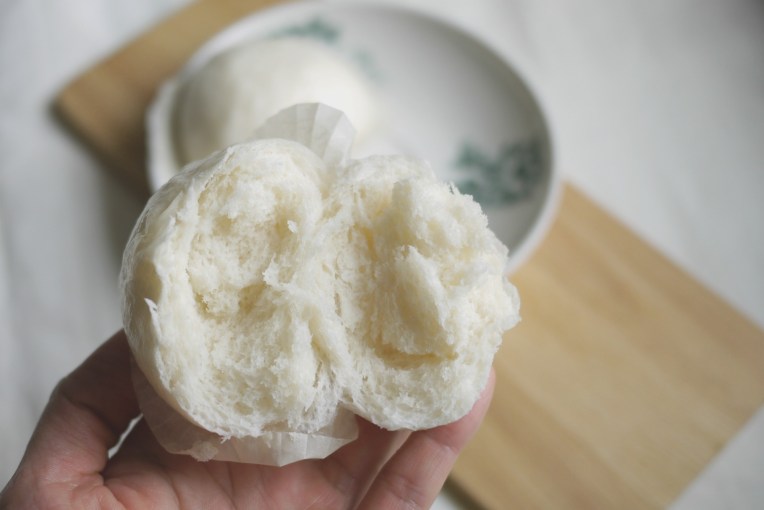
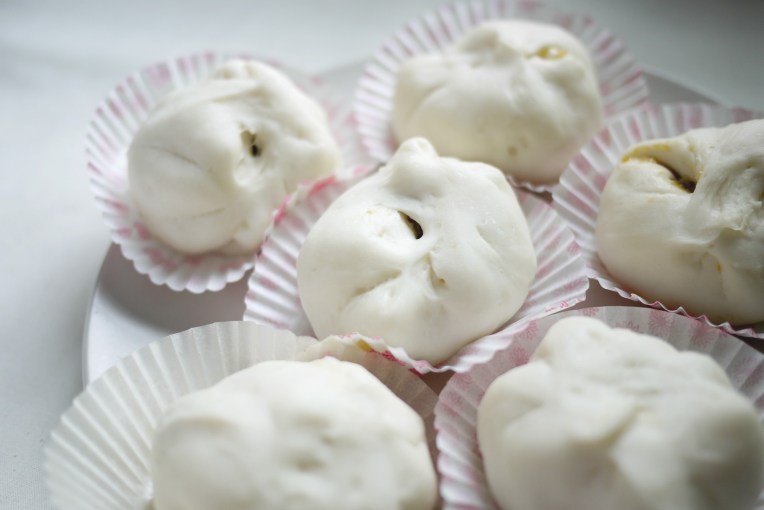
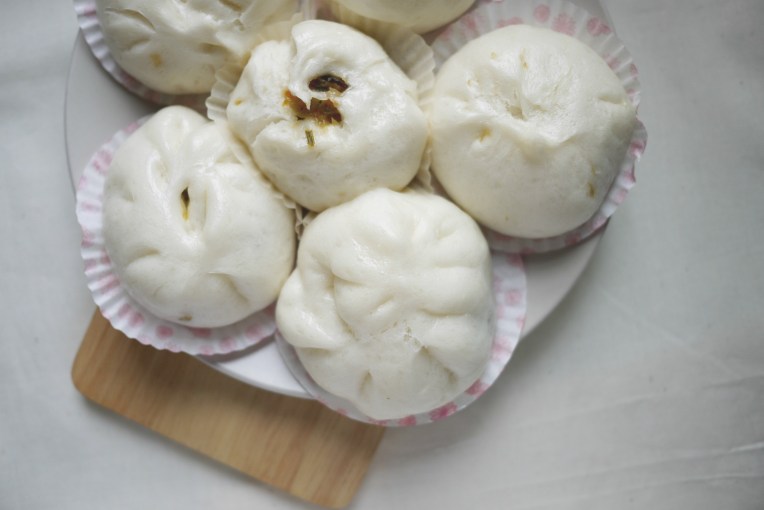
I’ll be frank.  They were ugly.  So ugly that I had to put up a photo of the cross section of the finished bun so that no one will not be turned off by the final product and stop reading this post.  But the dough recipe was good, so I wanted to jot it down here to share and thus the reason for the second photo.

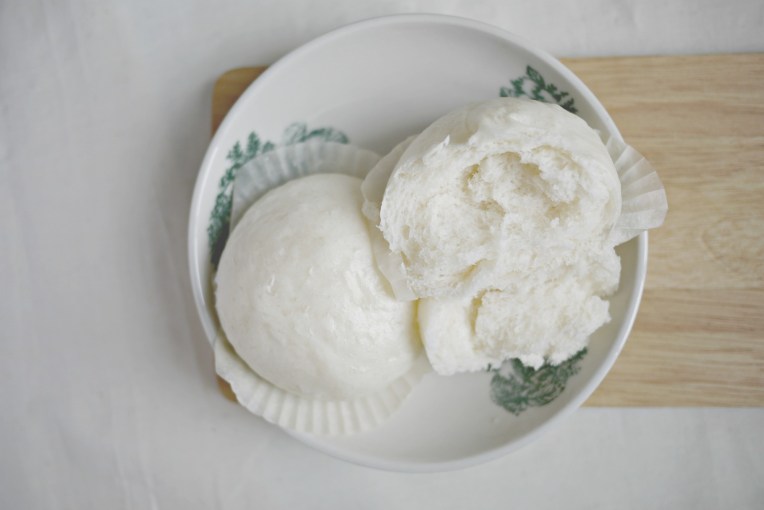
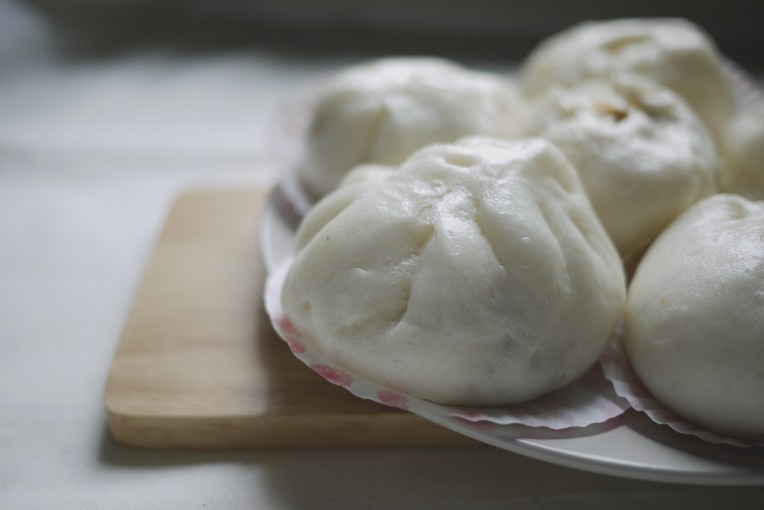
They were soft, fluffy and have the right amount of sweetness that make the buns enjoyable even when eaten plain.  Made some “kosong” (empty without fillings) version, which were easier to shape and more “photogenic”; no pleats, smooth perfect dome.  Nice.

Vegetarian Steamed Bun // Mono+CoVegetarian Steamed Bun // Mono+Co

The recipe below yields 18 buns.  I got more tips from here , that says adding a few drops of vinegar into the water in the steamer will produce whiter colour buns, and misting the buns before steaming will produce smooth skin.  Can’t wait for my next bun making session to test these out!


CHINESE VEGETARIAN STEAMED BUNS

dough recipe adapted from here
fillings recipe, my own

for dough:
300g hong kong "pao" flour
25g corn starch
50g fine sugar
1/4 teaspoon salt
1/4 teaspoon baking powder
5g instant yeast
30g oil (i used peanut oil)
150g water

for fillings:
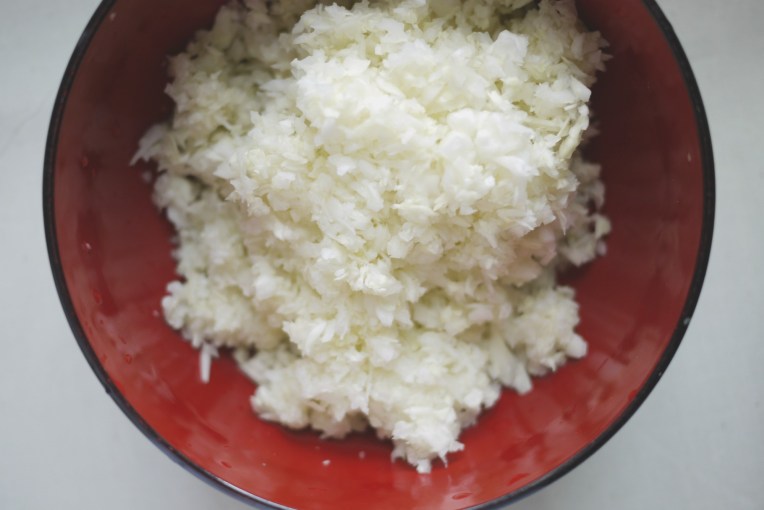
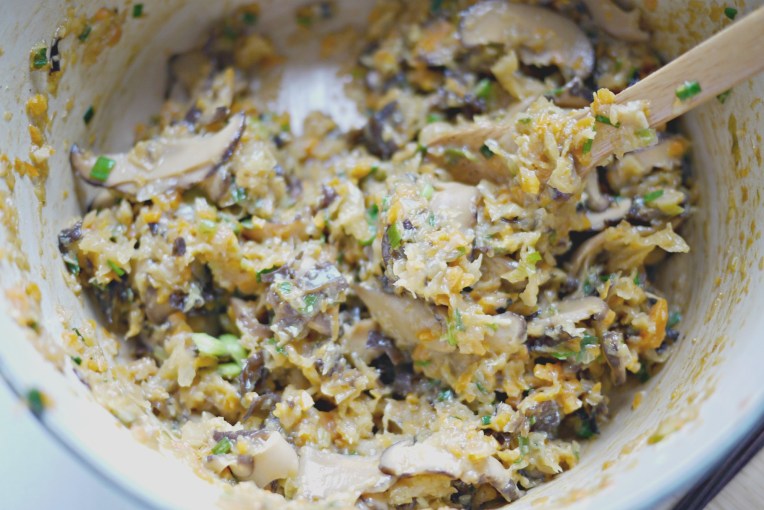
350g taiwanese cabbage, chopped
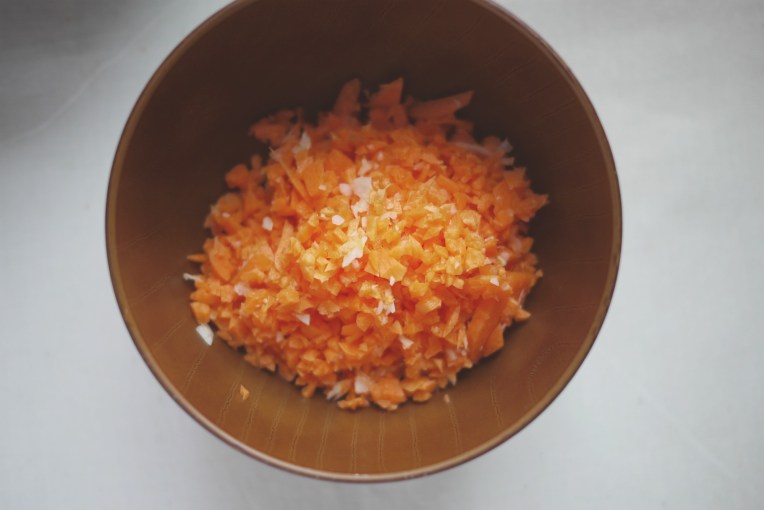
50g carrots, chopped
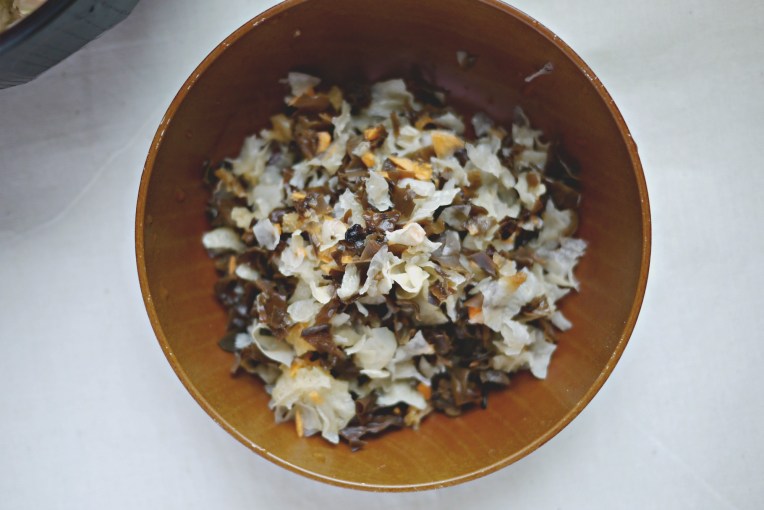
50g white/black fungus, chopped
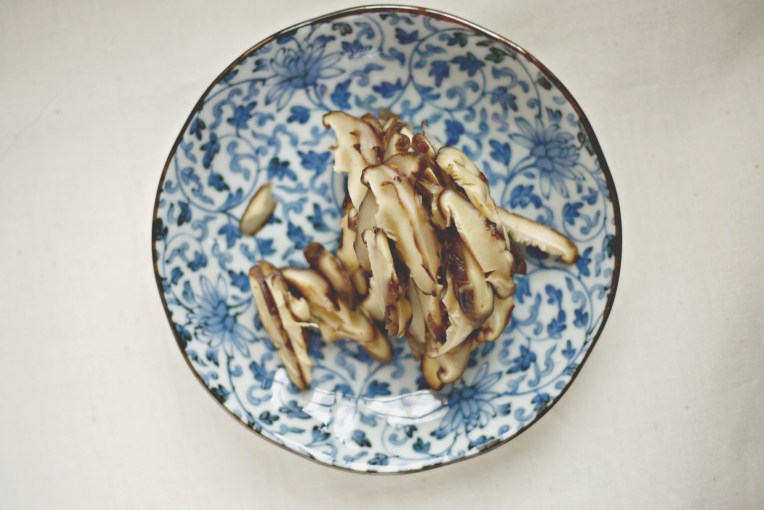
50g chinese mushrooms, sliced**
3 stalks of spring onions, chopped***
small knob of ginger, sliced
2 tablespoon cooking oil
1 teaspoon nutritional yeast
1 tablespoon vegetarian oyster sauce
1 tablespoon white sesame oil
white pepper, sugar, to taste
1-2 teaspoon cornstarch

** I chop all the filling ingredients except for Chinese mushrooms, which I prepare as slices, as I like some bite in the fillings.

*** Optional, for Buddhist vegetarian diet that excludes 5 pungent spices :onions, garlic, scallions, chives and leeks, omit spring onions.

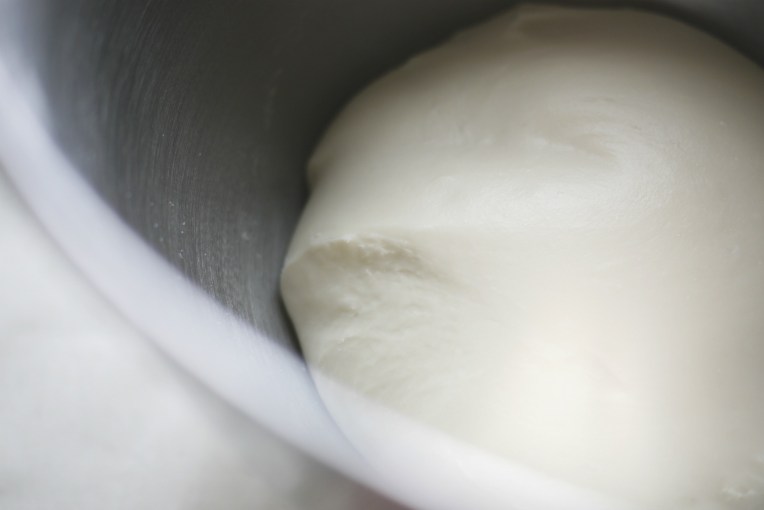
To make bun dough, place all dry ingredients (flour, corn flour, sugar, salt, baking powder and yeast) in a mixing bowl, stir to mix evenly with a hand whisk.  Next add water and oil , and knead the ingredients with an electric mixer at slow speed into a soft and smooth dough with a dough hook, takes around 10-12 minutes. Leave it aside, covered with clean towel, let it rise to double its volume for 30 minutes.

Prepare the fillings next.

Vegetarian Steamed Bun // Mono+Co Vegetarian Steamed Bun // Mono+Co Vegetarian Steamed Bun // Mono+Co Vegetarian Steamed Bun // Mono+Co

To cook fillings, heat oil in a frying pan, fry ginger slices till fragrant, discard the ginger slices. Add sliced mushrooms, chopped carrot, cabbage and fungus, stir to cook well.  Add chopped spring onions, if using.  Season first with nutritional yeast, stir to mix, then add oyster sauce, stir around to cook again.  Lastly, add sesame oil.  Taste test the filling, and finally add white pepper and sugar to taste.

To make the fillings slightly sticky, similar to the texture of minced meat, I thicken it by adding cornstarch, all the while stirring the mixture to prevent it from burning at the base of pan.  Once the filling mixture thickens to the consistency you like, turn off fire and let it cool down before wrapping it with the bun dough.  If it is too hot, it will kill the yeast in the dough and the bun will not rise while cooking.

Vegetarian Steamed Bun // Mono+Co

To assemble bun, pinch a piece of dough about the size of a golf ball with hands oiled with sesame oil to make the sticky dough easier to handle, roll it into a ball and flatten it into a round shape wrapper.  Use this to wrap roughly 1 tablespoon of fillings and pleat to seal the buns (I found this helpful demo video only after making the buns) and placed them on flattened paper cupcake liners.  I use 30g of dough to wrap about 25g of fillings  Let the buns rest for at least 15 minutes before steaming.

Prepare steamer by boiling the water first before placing the buns inside to cook.  Never put the buns into the steamer before the water starts to boil vigorously. We need the hot steam to make the buns expand and rise, so remember to leave enough gaps between each bun when arranging them in the steamer basket, like this:

Vegetarian Steamed Bun // Mono+Co

These are the buns after steaming for 20 minutes.  Make sure there is enough water in the steamer for the entire 20 minutes.  Opening the cover half way during steaming or topping up with cold water in the midst of steaming are not allowed.  Serve immediately.

Vegetarian Steamed Bun // Mono+Co Vegetarian Steamed Bun // Mono+Co Vegetarian Steamed Bun // Mono+Co

Pandan Chiffon Cake Ver 2.0

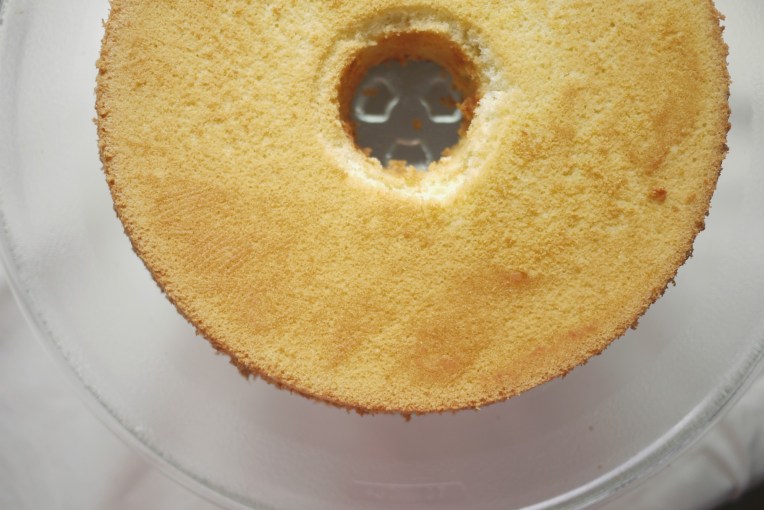
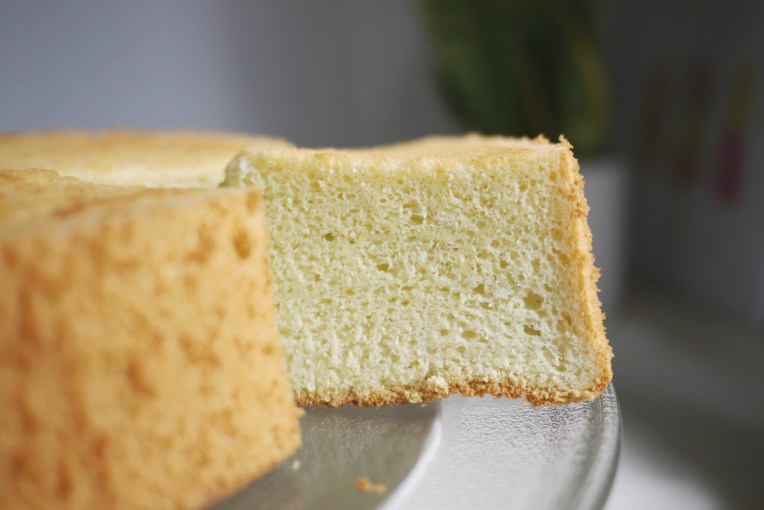
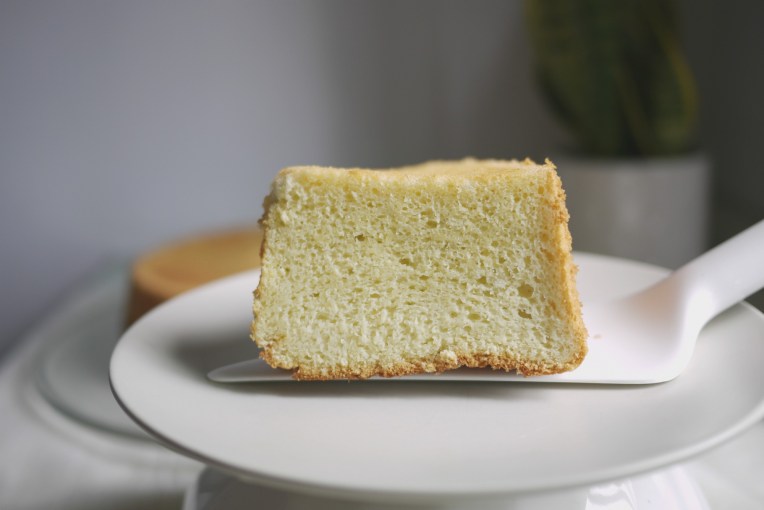
Coconut Oil Pandan Chiffon Cake // Mono+Co Coconut Oil Pandan Chiffon Cake // Mono+Co  Coconut Oil Pandan Chiffon Cake // Mono+CoCoconut Oil Pandan Chiffon Cake // Mono+Co

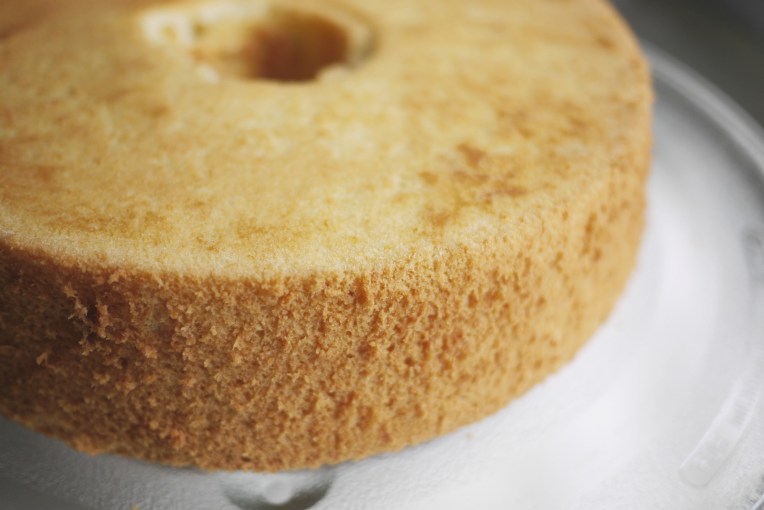
Not many cake recipes get to stay in its original version in my home kitchen.  Sometimes, I tweak with lesser quantity of an item, mostly likely sugar.  Other times, I substitute an ingredient with a different, preferably a healthier one, and call it an improved version.  I have been using olive oil to bake my pandan chiffon cakes for years.  This time, I substitute with cold pressed coconut oil, and I wonder what took me so long to make this switch!  Coconut oil stays liquid here at our room temperature of 30C, so I don’t even need to melt it.

I mix the yolk batter with a hand whisk since it doesn’t require flexing that much arm muscles, compared to making the meringue, which I totally rely on my Kitchen Aid.  This is partly because I have only one mixing bowl that fits the electric mixer and also mostly due to the fact that I hate the need to wash it in the middle of cake preparation.  I love cooking, but I really really detest the tidying/washing up bit, especially when cooking from scratch requires the use of a lot more utensils than making something out of a box of premix.  The upside: you get to boast about it being homemade from scratch … so make sure you flaunt it big time by serving it with a personalized cake topper that says it is so!

~ Happy Baking!


COCONUT OIL PANDAN CHIFFON CAKE RECIPE

largely adapted from an earlier bake here

for yolk batter:
6 egg yolks
20g sugar
50g extra virgin cold pressed coconut oil
100g coconut milk
1 teaspoon condensed milk
2 teaspoons pandan leaf juice
100g top flour, sifted

for meringue:
6 egg whites
80g sugar
12g corn flour

In a large mixing bowl, whisk the yolks and sugar till well combined.  Add coconut oil, coconut milk, condensed milk, and pandan leaf juice, whisk to mix again.  Finally, fold in sifted top flour and stop stirring when no traces of flour is seen in the batter.  Let this batter mixture stand aside while we prepare the meringue.

Whisk egg whites till frothy, and add sugar, continue whisking on high speed till soft peaks form, note: not stiff peaks.

Add corn flour, whisk for 10 to 15 seconds and check if stiff peaks have formed, if not, whisk again for another 10 seconds before checking on the stage of peaks again.  The meringue should be whisked only to its early stage of stiff peaks, stop when the peaks no longer droop; over-whisked-too-stiff meringue bears the risk of an uneven final cake batter as it is more difficult to be folded uniformly into the yolk batter.  The corn flour is said to add gloss and stability to make a better meringue. Try not to omit this, unless you have absolutely no other uses for corn flour and do not want to stock it just for chiffon cake recipes.  Cream of tartar does the same thing, but I have more uses for corn flour than tartar, so I use corn flour.

Fold the meringue gently into the yolk batter in 3 separate additions.  Once the batter is well mixed, tap/bang the mixing bowl on the counter top to remove any large air bubbles inside the batter.  This will make the cross section of the sliced chiffon cake looks nicer with uniform sized holes during serving.  Pour the batter into a 23cm tube pan** (do not grease it, you want the cake to really stick to the pan as it will be inverted after baking) really slowly, this will prevent further air bubbles being trapped while transferring.  When done, tap/bang the cake pan on the counter top again, a few more times, just to make sure that the large air pockets are gotten rid off.  Alternatively, you can run a butter knife across the cake batter, but I hate washing another item, so … I just bang.

Bake for 40 minutes in a preheat oven at 170C.  If the top appears too dark during the mid of baking, cover with aluminum foil.  When done, check with a skewer to make sure that it comes out clean, if not, extend the baking time by another 5-10 minutes.  So far, I never bake this 6-eggs cake beyond 40 minutes, however every oven temperature is different, so it is best to check.  Once the cake has been baked thoroughly, remove it from the oven, and invert the cake pan immediately on a rack to cool to prevent the chiffon from collapsing on its own weight.

Once the cake is cooled, separate the cake from the tube pan, first from the side, then the bottom.  Serve immediately, and yes, the cake should be served with the prettier bottom side up.  If not consume immediately, store in air tight containers and finish as soon as possible.  If storing overnight, keep chilled in fridge.


** I only have a large 25cm tube pan, that’s why my photos show a considerably flatter cake that most other recipes that are baked with 6 eggs and 21/23cm pans instead.  The original recipe I adapted from used an even smaller 16cm one!  I have since checked that I should be using a recipe that uses 8 eggs so that the cake rises all the way to the top of my 25cm pan.

Make Them Softer : Mini Walnut Bread Rolls

Walnut Mini Rolls // Mono+Co Mini Walnut Bread Rolls // Mono+Co Make Them Softer: Mini Walnut Bread Rolls // Mono+Co Make Them Softer : Mini Walnut Bread Rolls // Mono+Co

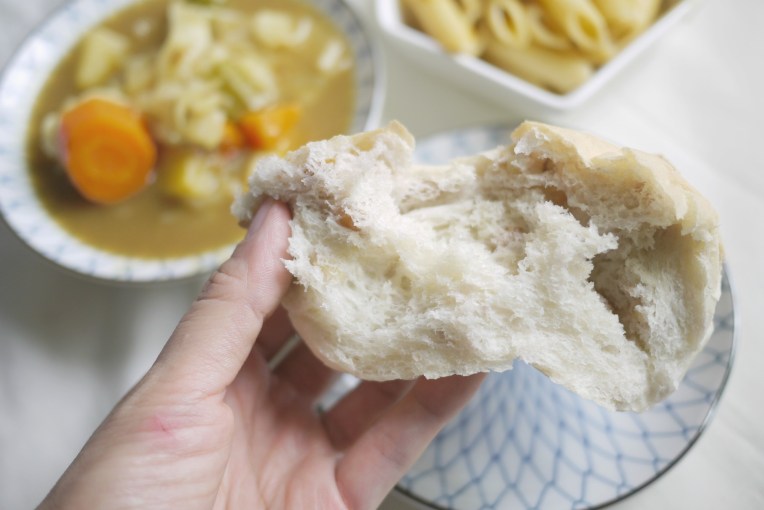
For the past few months, I have been on a bread baking spree converting a few bread recipes to include mashed potatoes as an additive.  This walnut roll’s  original recipe is from a Japanese baker/author Backe Akiko, whose backyard garage cafe I really envy.  Her recipes requires only basic ingredients, but I wish they have a more “squishable” bite.

Enter the mashed potatoes.

I halved the original recipe, tweaked the flour and water amount with added potato and the end result is a softer bun.  As the dough is quite wet, I suspect I might have used easily another 2-3 grams of butter when oiling my hands and work top to make the handling of the dough easier without sticking.

I served them with Japanese curry for breakfast and thought they made a perfect match, although the bread rolls can also be great on their own too, or simply add a spread of butter for a quick on the go snack.

~ Enjoy!


MINI WALNUT BREAD ROLLS

largely adapted from Backe's book here

60g mashed potatoes**
100g bread flour
 1/2 tablespoon sugar
 1/4 teaspoon salt
 1 teaspoon instant yeast
 40g water***
 2g chilled butter
 25g walnuts, chopped

** Potatoes are boiled, mashed and cooled to room temperature before use.
*** You may like to use the starchy water left behind from boiling the potatoes with, cooled to room temperature.

In a mixer bowl, combine the flour, sugar, salt and instant yeast with a hand whisk to mix well the dry ingredients together.  Add mashed potatoes, and start the mixer running with a dough hook on the lowest speed.

Slowly drizzle the cooled potato water into the mixture with a pouring cup, or spoon by spoon, and when the mixture gathers into a ball, stop adding water.  As the quantity of ingredient is really quite small for the dough hook to reach in the big mixer bowl, halfway through the liquid addition, it will be a good idea to stop the mixer and use a spoon to manually incorporate the wet and dry ingredients together, otherwise you may end up adding too much water. Add butter and knead the dough till window pane stage.

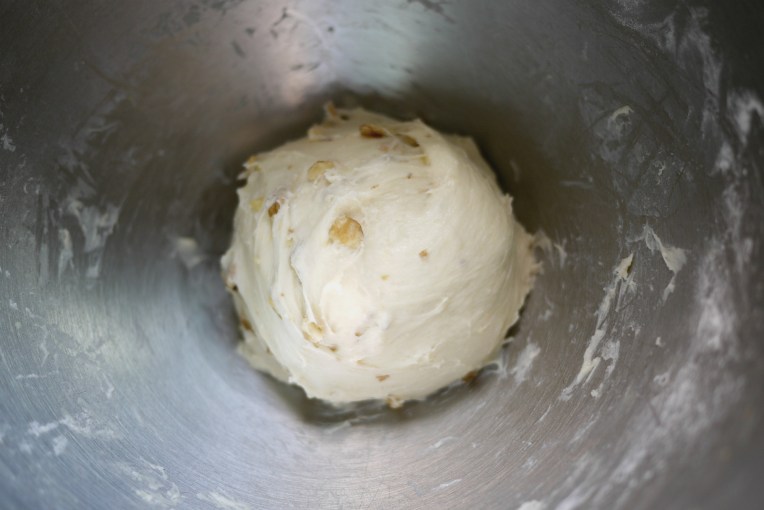
Pour all the 25g chopped walnuts into the mixer to incorporate the nuts into the dough.  The dough will be wet and sticky, but still manageable with oiled hands/fingers.  Stop the mixer, and place dough in a greased bowl for its first proof, around 45 minutes.

The dough would have risen to about twice its original size after 45 minutes, punch down the dough to deflate it, and transfer the dough to a clean work top.  Grease the work top if the dough is too sticky.  Divide the dough into 3 portions, roughly roll them into balls, place on work top, cover and let the dough relax for 10 minutes.

After 10 minutes, deflate to squeeze out any air bubbles trapped in the dough balls, and then shape them into balls again, and arrange them in a greased 8″x3.5″x3″ rectangular cake tin.  Let it go through its final proof before baking, covered and placed in a draft free place, around 45 minutes.

When ready to bake, make sure that the oven has been preheated to 190C.

Bake for 15-18 minutes, till the bread are golden brown.

Remove from oven and cool on rack before serving.  If you want a soft crust, brush melted butter over the bread now while they are fresh hot out of the oven.

If not eaten immediately, store in an airtight container to keep the bread rolls soft after they have cooled down.

Save

Start The Day With Sweet Potato Bread

Sweet Potato Bread // Mono+Co Sweet Potato Bread // Mono+Co

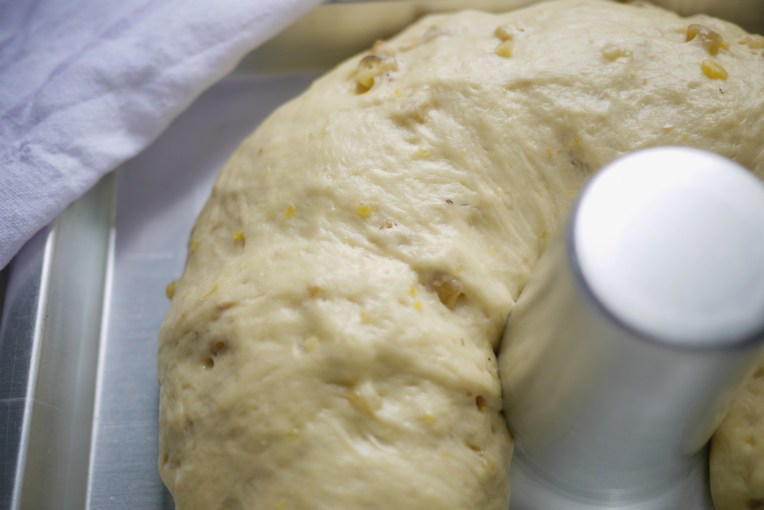
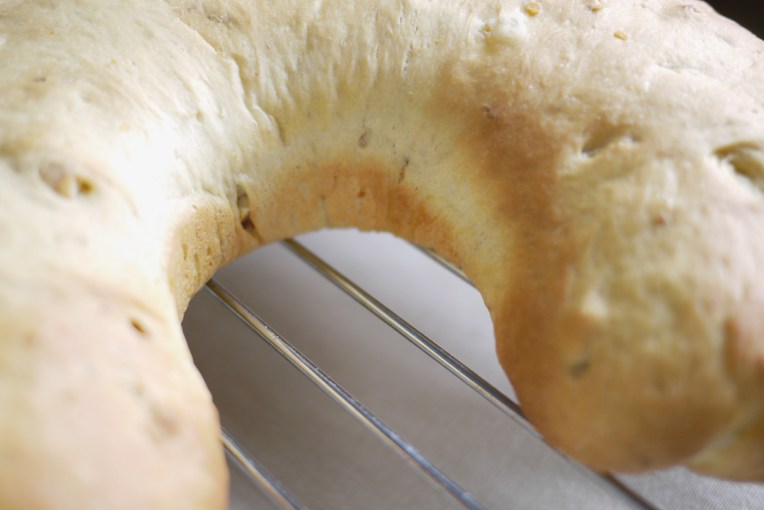
If I have to give one compelling reason to not own a bread machine, it has to be the freedom to shape my own bread.  But that is only because my KitchenAid mixer did most part of the hard work: the kneading process.  This horse shoe shaped bread was inspired by a modern bakery from Taiwan.  After making some mental notes on the ingredient permutations (they even kimchi!) and some interesting scoring patterns, I decided to bake my next day’s breakfast loaf using a familiar recipe but shaped it like a horse shoe, just like those ‘artisan-looking’ breads on the bakery’s shelves.

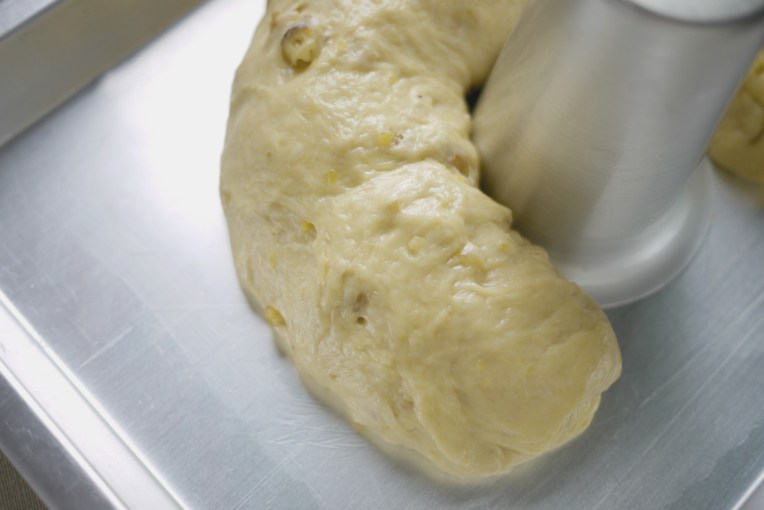
I used a Wilton heating core to hold the bread dough in a semi circle shape, even after a pretty dramatic final proof.

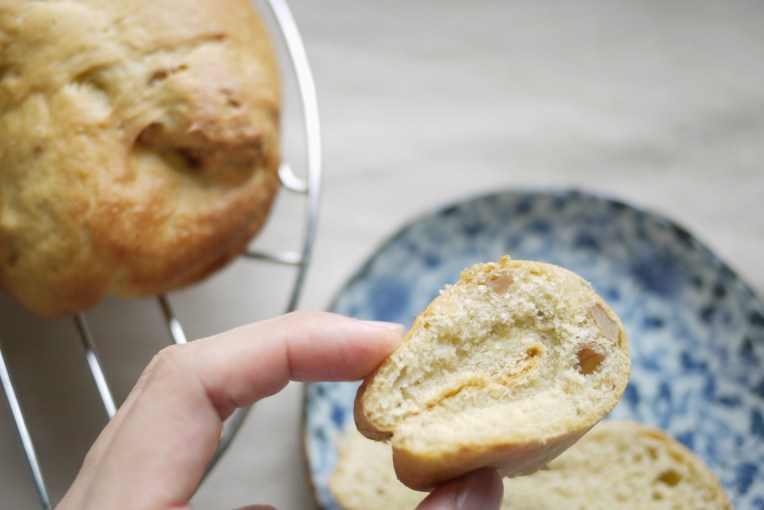
As usual, with one sweet potato, the recipe produced a super duper soft bread texture, without any need for chemically derived bread improver.  I can’t help doing one or two “bread-yoga-poses” to  illustrate my point.
Sweet  Potato Bread // Mono+Co Sweet  Potato Bread // Mono+Co Sweet  Potato Bread // Mono+Co Sweet  Potato Bread // Mono+Co Sweet  Potato Bread // Mono+Co


SWEET POTATO WALNUT HONEY BREAD

adapted from here

93g cooked+mashed sweet potato
 175g bread flour/ plain flour
 2 tablespoons honey
 1/4 teaspoon salt
 1/2 tablespoon instant yeast
 1/2 egg
 40g water
 35g cold unsalted butter, cubed
 40g walnut, roughly chopped

*After many rounds of baking breads with tubers, I think that the amount of sweet potatoes added does not have to be as accurate as the recipe.  To avoid food waste, I simply eyeball one that would roughly give me around 70g-100g of potato after peeling, and use up the entire cooked potato for the bread, instead of leaving behind small chunks just to adhere strictly to the amount the recipe had called for.  However, as the additional potatoes contains water, the amount of liquid added to the dough subsequently need to be adjusted; just enough for the ingredients to come to a ball.
In a mixing bowl, combine flour, mashed sweet potatoes , honey, salt, yeast and beaten egg.  With a dough hook, knead the ingredients on low speed, nothing much would happen now as most of the ingredients are dry, slowly drizzle water from a pouring cup and stop when the ingredients start to gather into a ball.  You may like to use the starchy water left behind from boiling the sweet potatoes with, just return them to room temperature.

If you have time, leave this dough aside for 15minutes to allow the flour to absorb the liquid properly.  Otherwise, add cubed butter one by one, till they are mixed completely into the dough and there are no sight of butter left. Continue kneading this dough to window pane stage, the dough should look really smooth and elastic.  Finally, add the roughly chopped walnuts and let the mixer incorporate the nuts into the dough, takes about 1 minute.

Place dough in a greased bowl, cover and let it rise for an hour. Punch dough down to deflate it and transfer to a clean worktop. Shape to desire, in my case, I flatten the dough on the worktop with a rolling pin and push out all trapped air bubbles, then I roll up the dough, longer side facing me, swiss roll style.  Pinch the open ends to seal them firmly.  With seams facing downwards, place the dough on a greased baking tray and wrap it around a greased Heating Core (totally optional, if you don’t have this, just roughly bend the dough into horse shoe shape on the baking tray).  Leave it covered, place in a draft free place, and let it rise for 45min to 1 hour.

Preheat oven to 170C and bake the bread for 25 to 30 minutes, till golden brown.  Lightly mist the bread with water before putting it into the oven. I learned this trick when baking sourdough style bread, and have since adopted this habit with all of my breads, somewhat like my “lucky charm” for a successful bake.  Try this with your next homemade bread, and see if it works for you too!

When the baking is done, remove heating core and transfer the bread to a wire rack to let it cool completely before slicing/ serving.

Miso Soba From Leftover Chap Chye

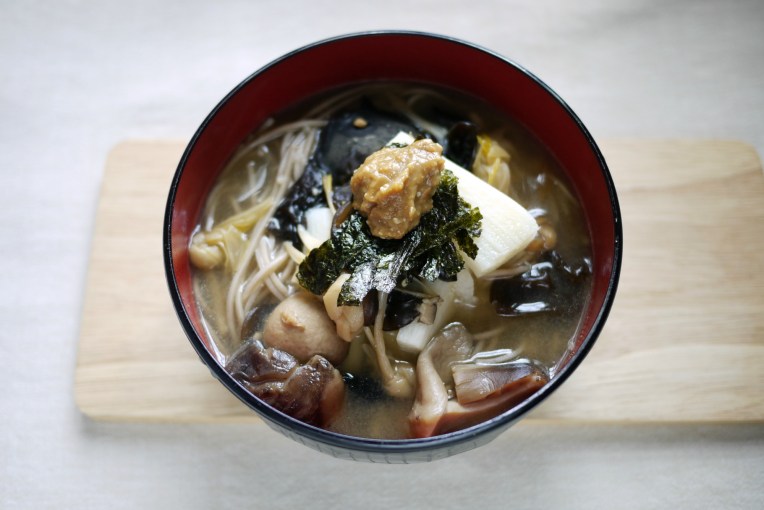
miso soba

I had some leftover vegetarian Chap Chye from Sunday’s dinner that I wanted to recycle for next day’s lunch.  The heavy downpour in the morning had allowed the temperature to dip just enough for one to have a craving for something hot and soupy.  So I added water to the leftover and a very flavorful instant broth for soba emerged.

Fermented beans, a close relative of miso, is a key seasoning ingredient in nonya chap chye and that why the broth turned out tasting similar to Japanese miso soup.  You can still add some Japanese miso paste if you find it not salty enough after watering down chap chye.

My Chap Chye is already filled with assorted mushrooms, black fungus, burdock and lily bulbs that I picked out from the heap of bean curd sticks and cabbage to make the soup broth.  I left out the last two ubiquitous chap chye ingredients as I did not want my lunch to look like a sloppy effort, though to a certain extent, adding water and noodles to an overnight stew does sound like it!

MISO SOBA WITH LEFTOVER CHAP CHYE

Leftover Chap Chye
Some water
Soba
Japanese miso, optional

METHOD

01. Cook soba according to package instruction, set aside in serving bowl.

02. In a pot, mix chap chye and enough water to make a serving of soba broth.

03. Do a taste test and add some miso paste if it is not tasty enough. I topped my soba with half a teaspoon of miso paste upon serving.

04. Pour the soup over the cooked soba and sprinkle some nori seaweed strips as garnish.

Pineapple Tarts – Enclosed Version

pineapple tart 001 pineapple tart 003

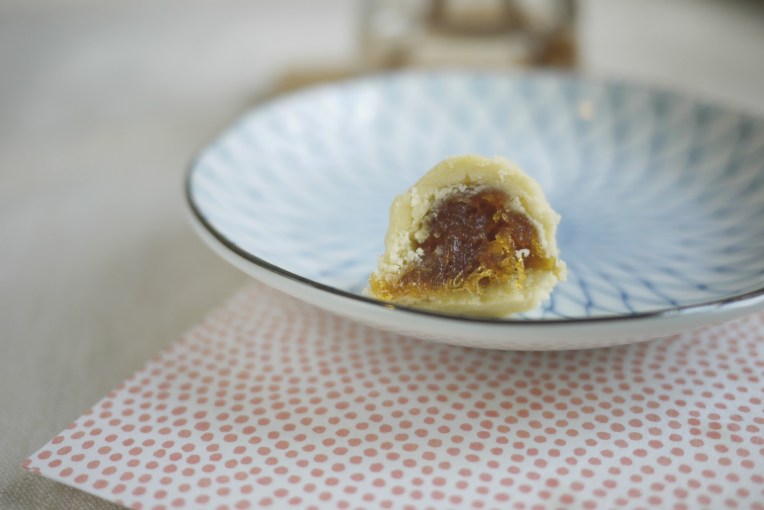
I omitted the egg from this nastar style pineapple tart recipe , and made an enclosed version this year. On hindsight, I should have give them a bright orange eggwash like this, mine are looking way too plain.  But this pastry, once again, pass my kids’ taste test with flying colors.

PINEAPPLE TARTS
// Adapted from A Spoonful Of Sugah
// Yields 27 tarts

170g plain flour
10g corn flour
1 tablespoon icing sugar
125g cold salted butter, cubed
1 teaspoon vanilla essence
1 tablespoon fresh milk, cold
½ serving of this homemade pineapple jam**

METHOD

01. Sieve plain flour, corn flour and icing sugar into a large mixing bowl. Set aside.

02. Mix vanilla extract to fresh milk and set aside. (I prepare this mixture first so that I can add this into the dough mixture straight after rubbing in the flour.  Hands would be too oily by then.)

03.  Add the cubed butter into the sieved flour and swiftly rub butter into flour with clean fingertips until mixture resembles yellow bread crumbs.

04. Fingers will be messy with butter and flour.  With a pastry scraper, scrap the bits stuck on fingers back into the bowl.  The butter is too good and expensive to be wasted!

05. Add milk + vanilla mixture, mix with a metal spoon.

06. If the dough appears dry and cannot be formed into a ball, gradually more cold milk, 1 teaspoon at a time until a soft dough ball finally forms.
07. Chill dough in the fridge for 10 – 20 minutes.  This is to make the dough less sticky and easier to handle.  Do not leave it too long in the fridge, otherwise, it will turn into a very hard block when the butter content turns total solid.

08. While the dough is chilling, roll pineapple jam into tiny balls, 8g each, and  arrange them on a plate. But I usually do this shaping step immediately after my pineapple jam has chilled to room temperature after cooking, and store them in an airtight container in the fridge.

09. Remove dough from fridge.  Weigh 12g of dough, and wrap the pineapple jam with it, and roll it into a neat ball.

10. Arrange tarts on baking tray.  Apply eggwash on top.

11. Bake in preheated oven at 150C for 20minutes.

12. Cool completely before storing in an air tight container.


** The homemade jam recipe yield approx 60 x 8g jam balls (depending on how big the pineapples are), so you might want to double this pastry recipe if you want to finish up the pineapple jam.