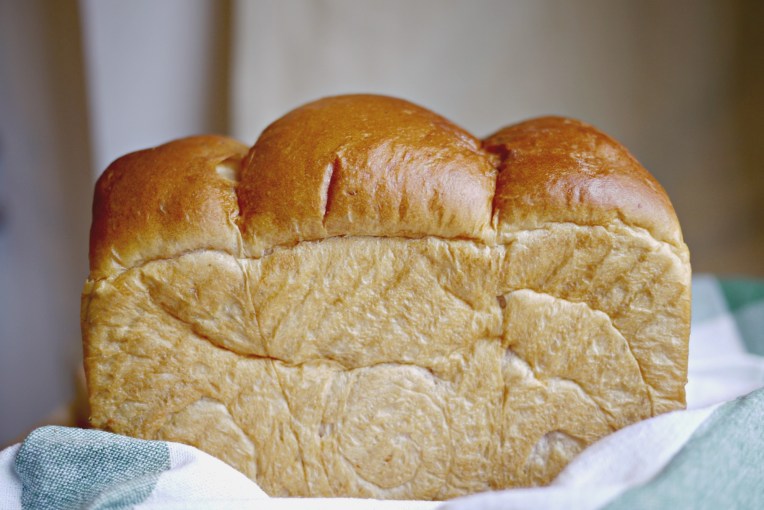
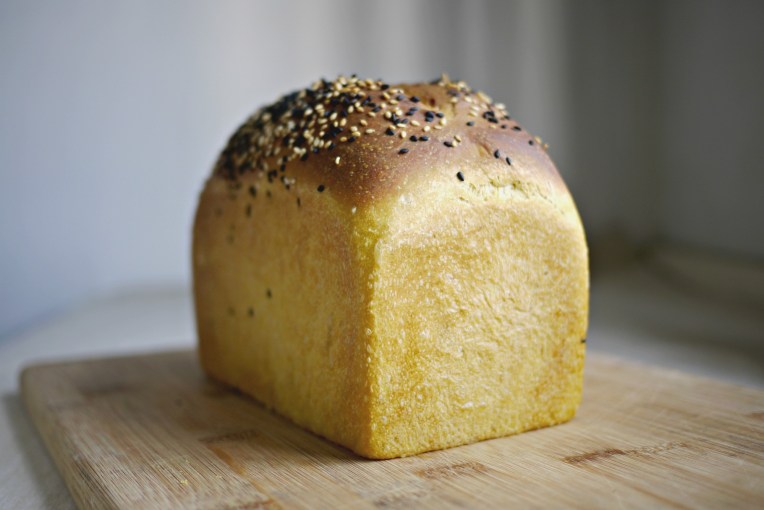
Natural Starter Pumpkin Pullman Loaf

Natural Starter Pumpkin Loaf // Mono+Co Natural Starter Pumpkin Loaf // Mono+Co

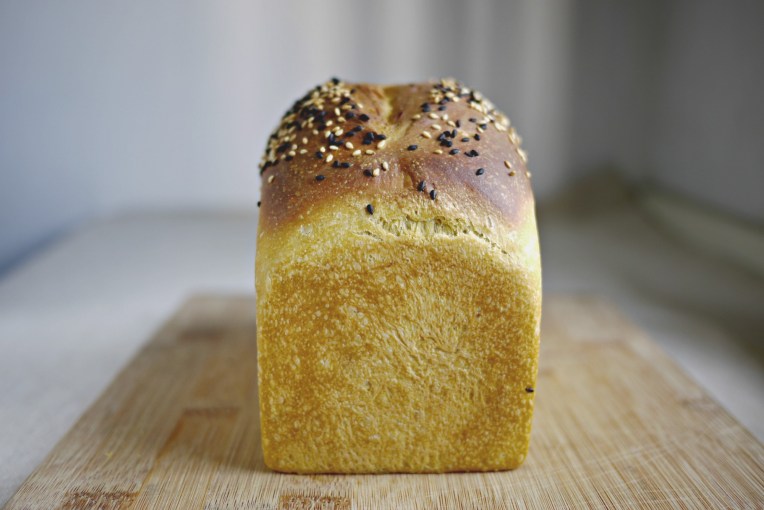
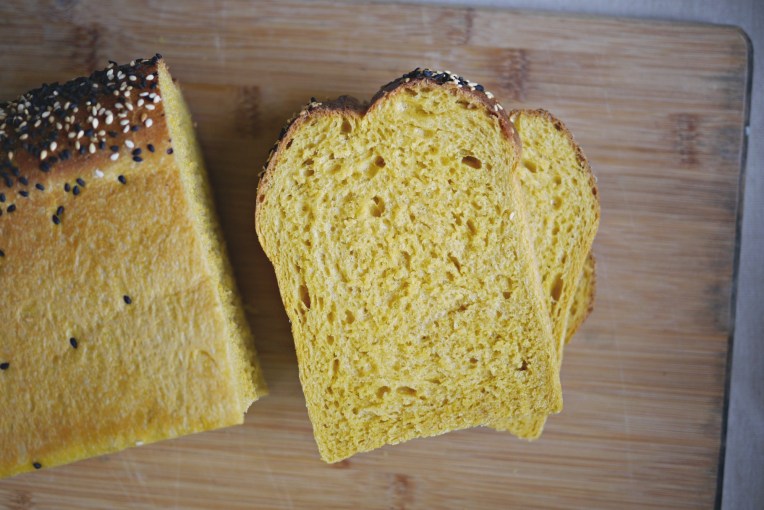
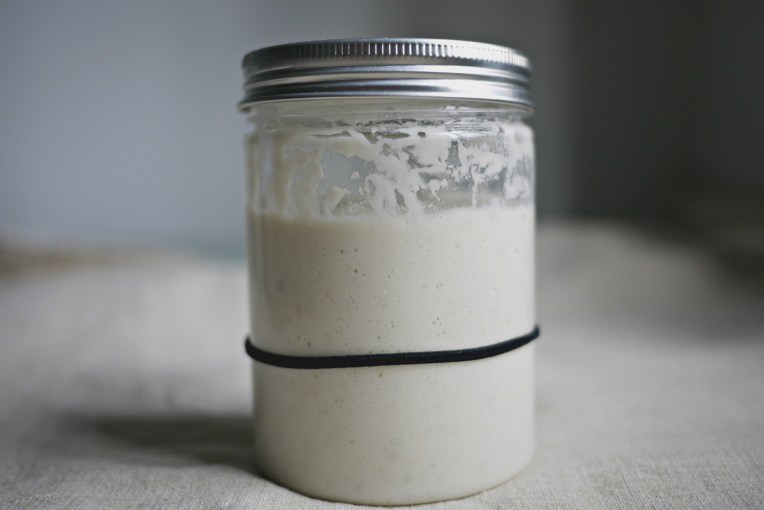
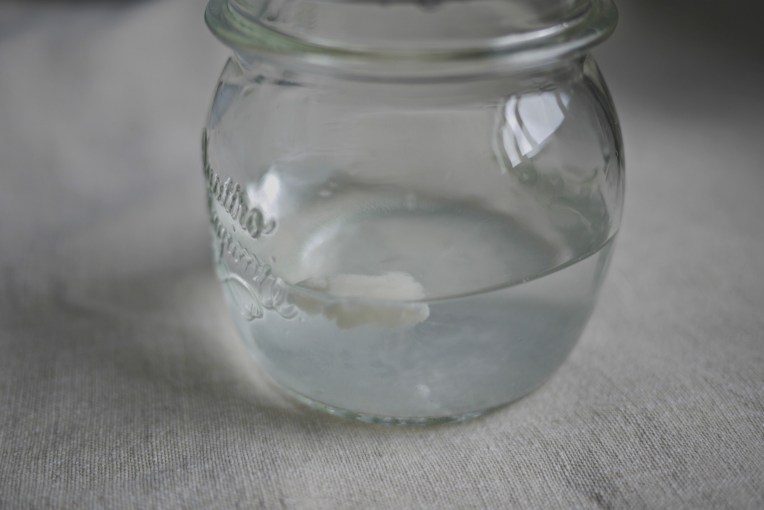
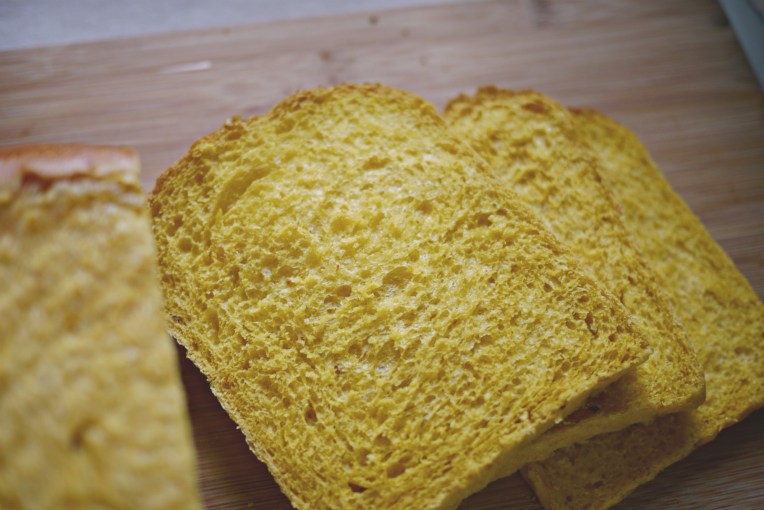
I am so addicted to the height my natural starter gives to all the homemade bread.  The dough might take longer to bulk rise or ferment, but the magic they do once they are in the oven is amazing.
Natural Starter Pumpkin Loaf // Mono+Co

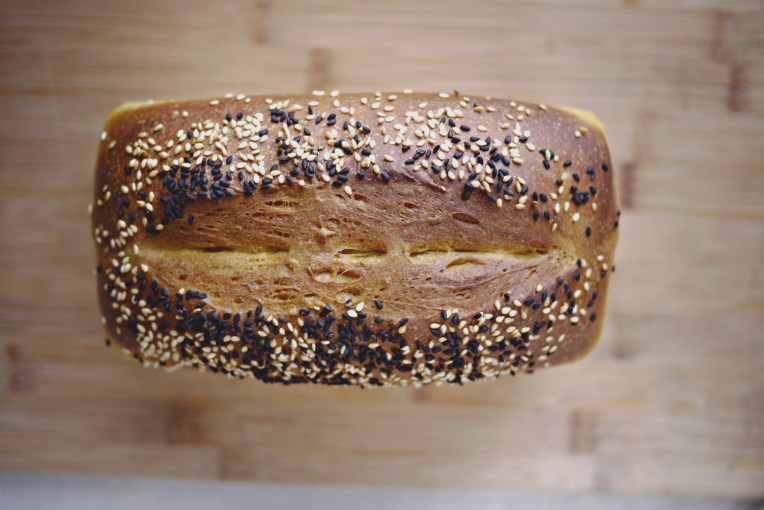
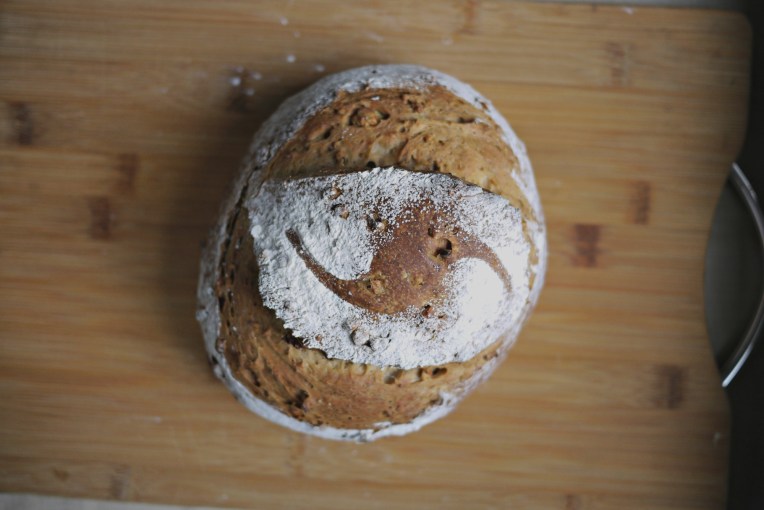
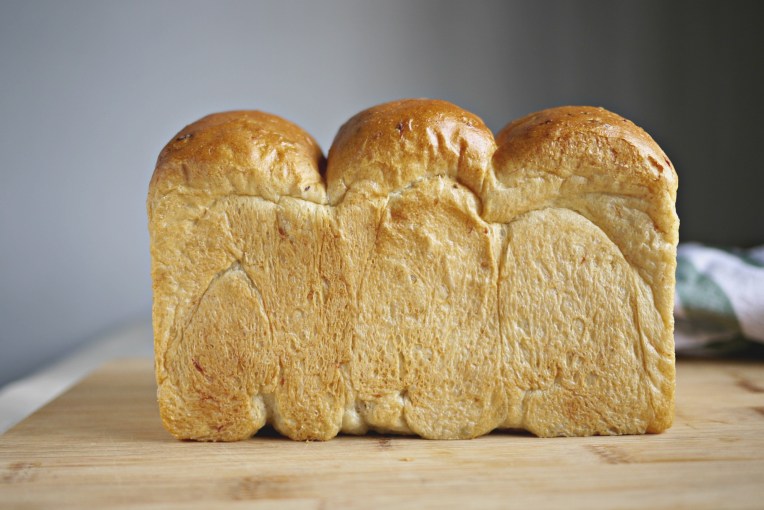
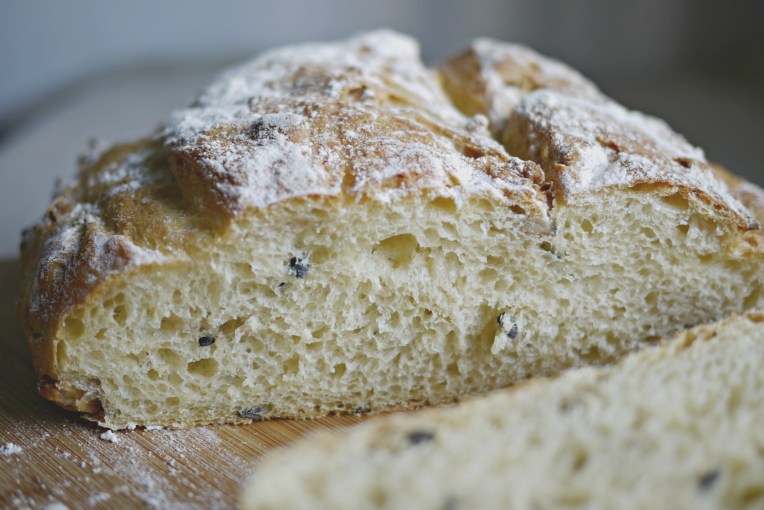
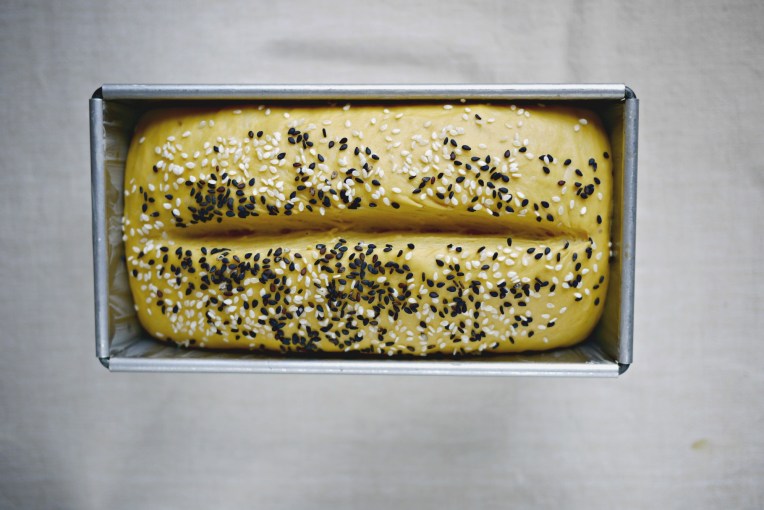
I sprinkled a mixture of white + black sesame seeds and slashed the loaf top lengthwise for decorative effect because I know the natural starter will create an oven spring that gives the loaf a beautiful split top look.  And I was not disappointed.
Natural Starter Pumpkin Loaf // Mono+Co Natural Starter Pumpkin Loaf // Mono+CoNatural Starter Pumpkin Loaf // Mono+CoNatural Starter Pumpkin Loaf // Mono+Co


NATURAL STARTER PUMPKIN PULLMAN LOAF


150g fed starter **
245g plain flour
100g steamed pumpkin
2 tablespoons brown sugar
17g water
1/4 teaspoon sea salt
20g cold butter, cubed
1 tablespoon black + white sesame seeds

** I used a starter made from raisin yeast.

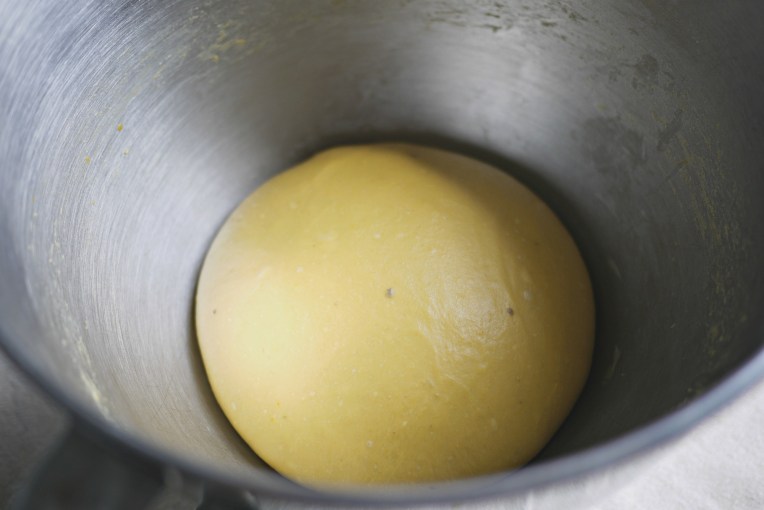
In a mixer bowl, add the starter, plain flour, cooled and mashed pumpkin, and brown sugar.  Start mixer to knead on its lowest speed with a dough hook, and add water in a trickle until a dough ball is formed.  You might not use up all the water or you might need more, depending on the hydration level of the ingredients, especially with pumpkin.  Stop the mixer and let the dough rest for 15 minutes to allow the flour to absorb the liquid better.

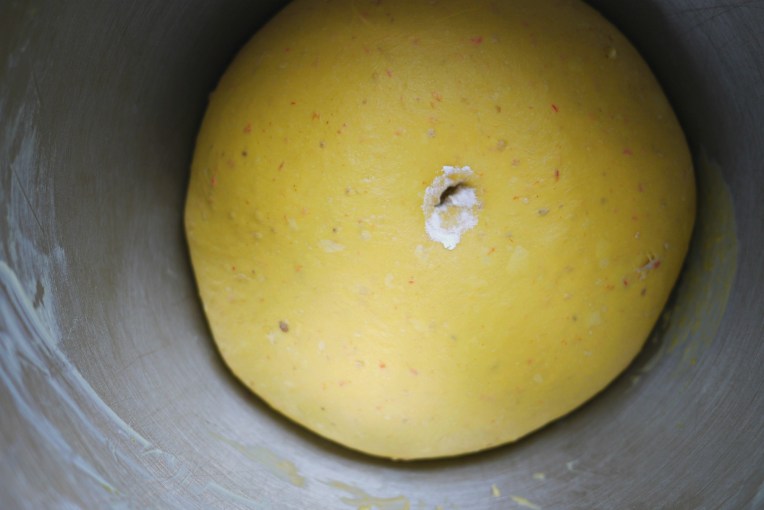
After 15 minutes, sprinkle the sea salt on the dough and start the mixer again to knead for 1-2 minutes before adding cubed butter one by one.  Knead until the dough reaches window pane stage.  Stop mixer and leave the dough to bulk rise at room temperature for 120 – 150 minutes, until the dough expands and passes the poke test, a sure sign that the first fermentation is completed.

After the dough has risen to double its volume, punch down the dough to deflate and transfer to a clean work top.  Sprinkle worktop and palms with flour if the dough is too sticky to handle.

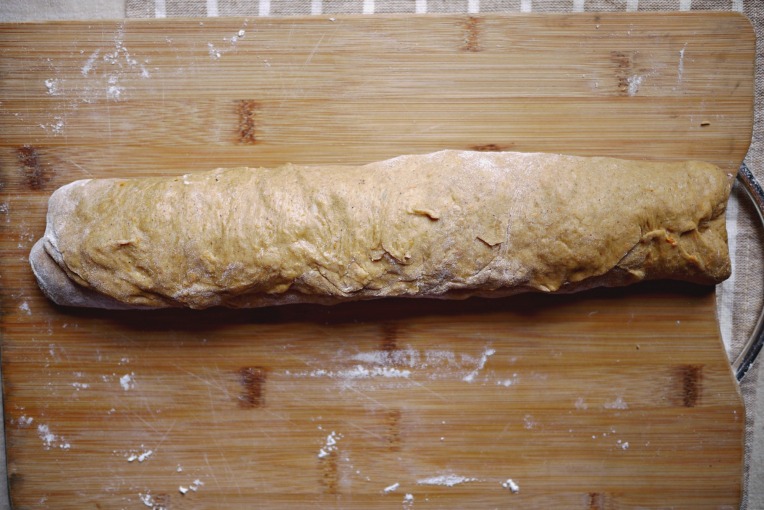
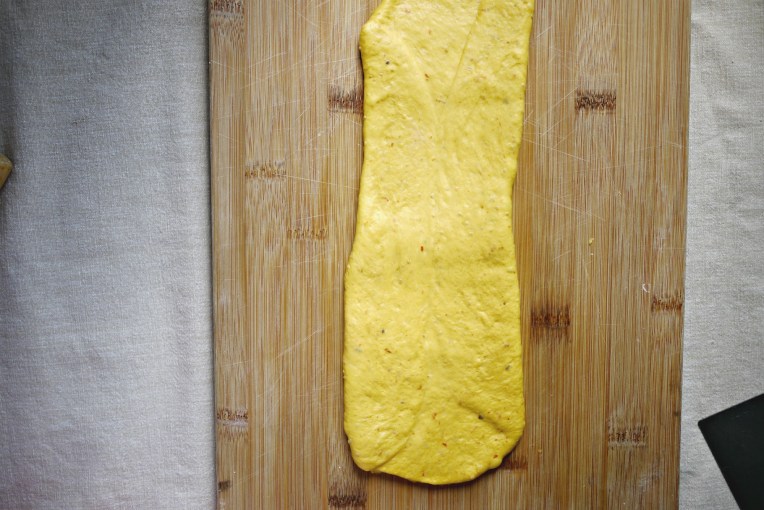
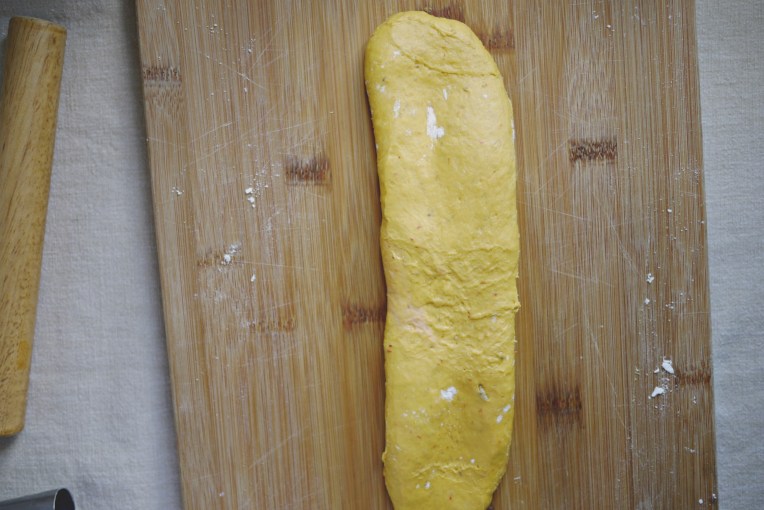
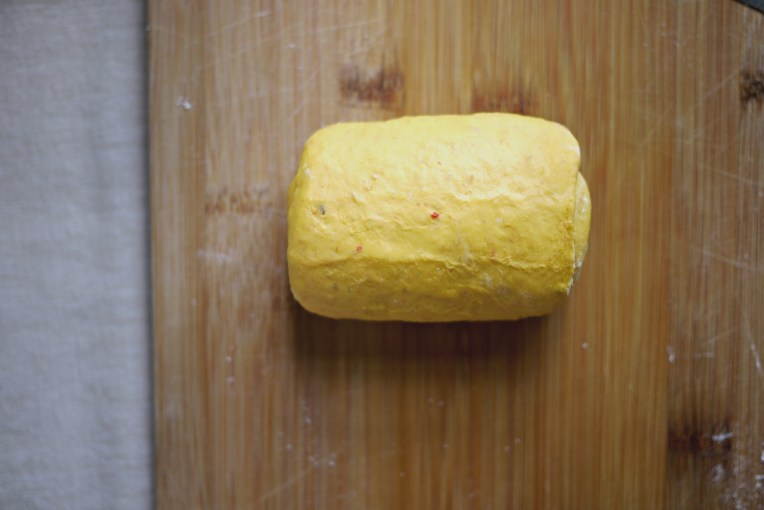
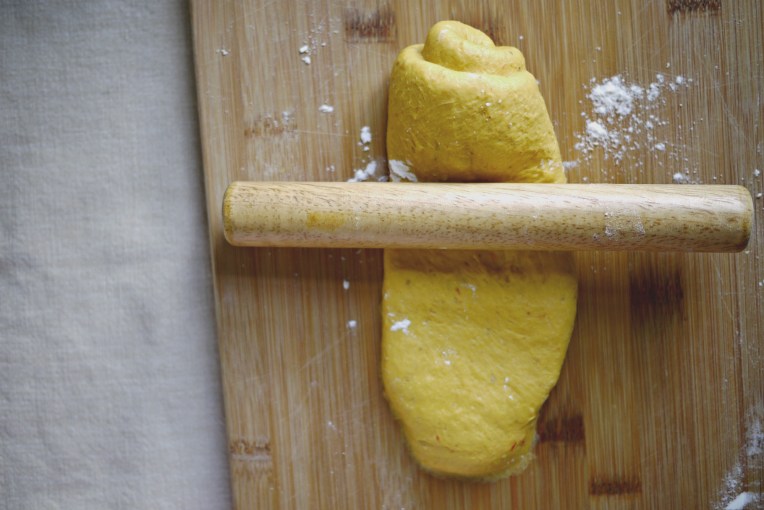
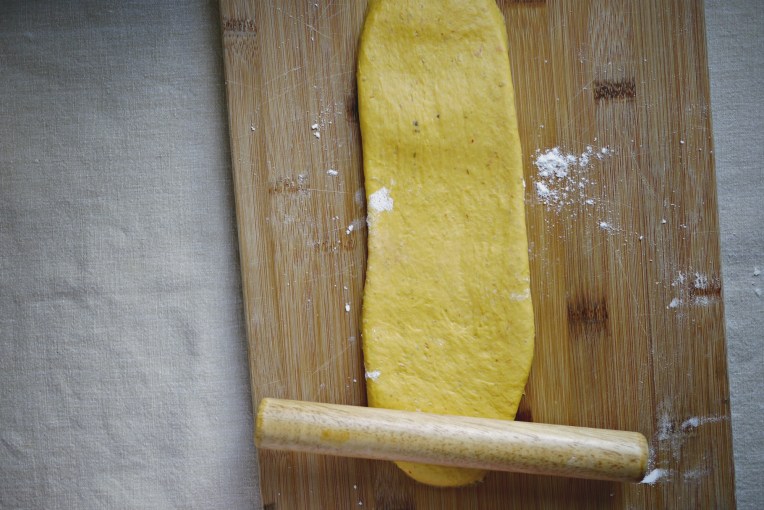
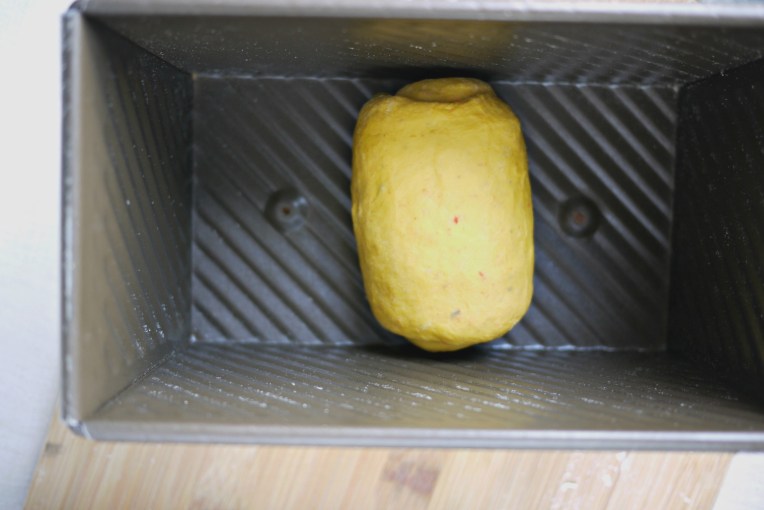
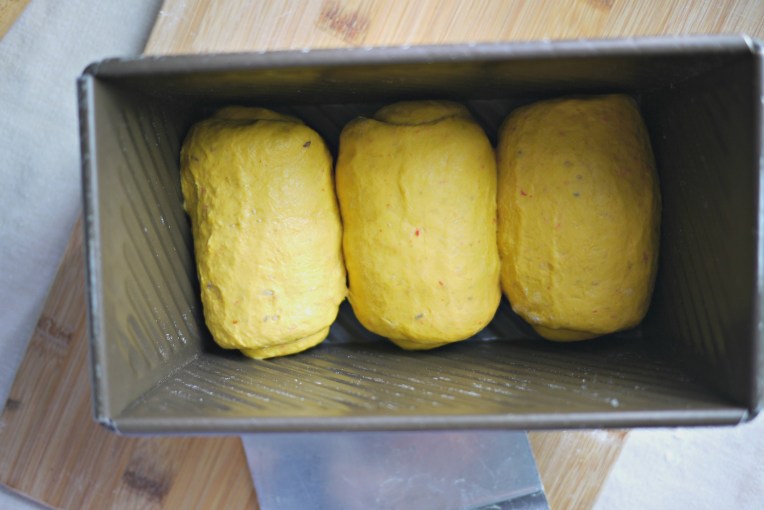
Flatten the dough with a rolling pin to push out air bubbles trapped inside during the bulk rise stage.  Shape the dough into a long roll that fits inside a Pullman tin, mist the top of the dough with some water, and sprinkle black and white sesame seed mix on top evenly.  Then place the dough in the tin and proof for another 120 – 150 minutes, till the bread height rise to reach the top of the tin.  Make a deep slash across the top of the dough, lengthwise, before baking in a preheated oven at 200C for 25 minutes.

Remove bread from tin immediately after baking and cool completely on a rack before slicing or serving.
Save

Save

Save

Carrot Cinnamon Raisin Buns

Carrot Cinnamon Raisin Buns // Mono + Co

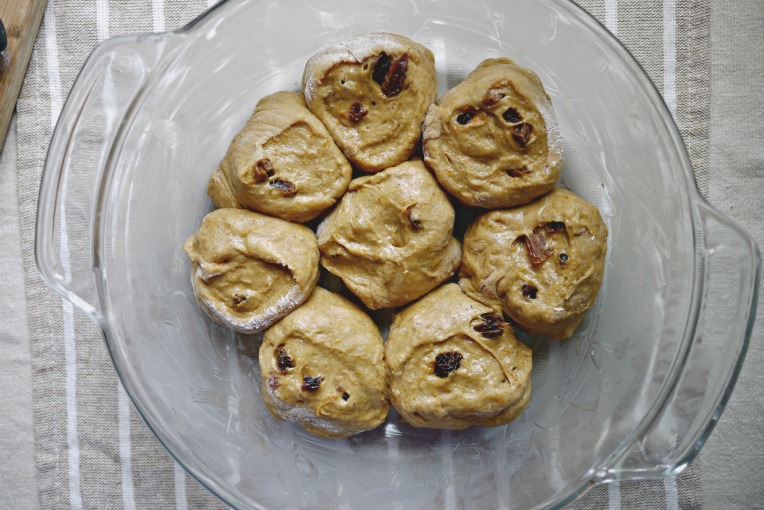
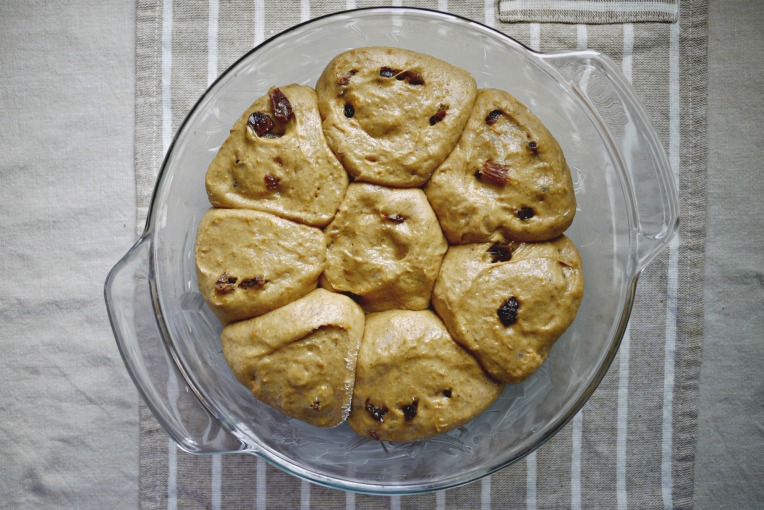
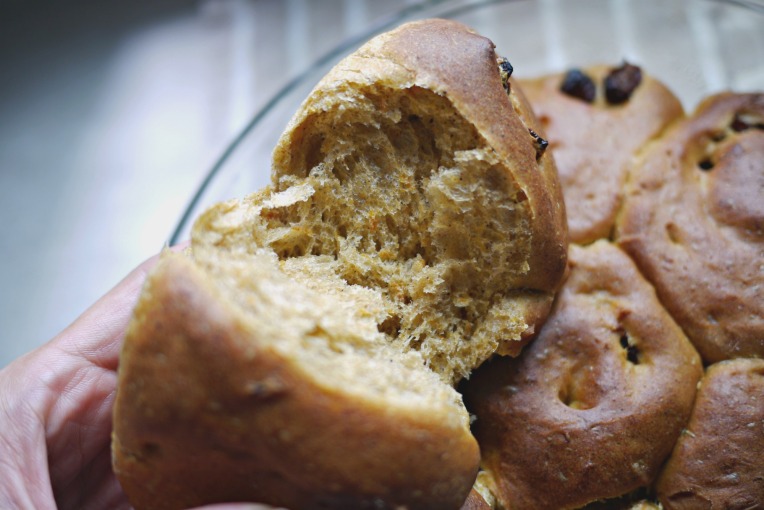
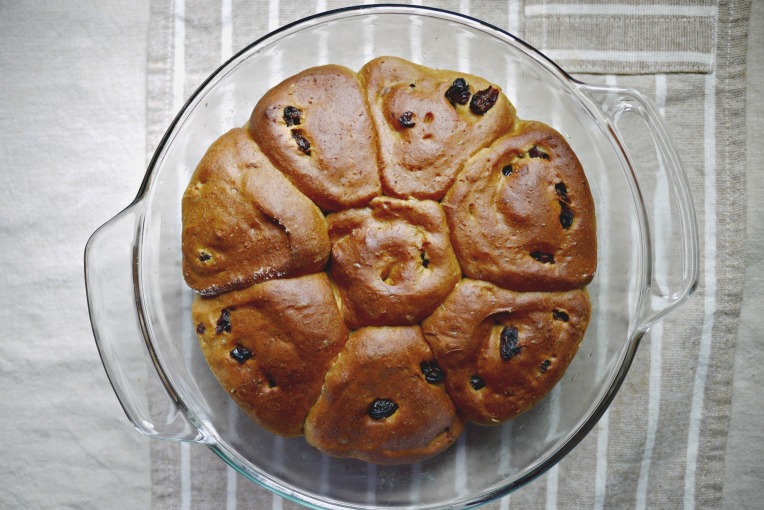
These are basically cinnamon buns with the sugary fillings and glaze removed.  I thought it was a good idea to add mashed carrots into the dough since they go so well with cinnamon and raisins in my carrot cakes.

Carrot Cinnamon Raisin Buns // Mono + Co

Because I did not spread butter and sugar on the surface of the dough, there were no pretty swirls on my cinnamon buns. If you prefer to see that on your rolls, brush a generous layer of melted butter, followed by another layer of cinnamon grounds, brown sugar and raisins before rolling the dough up.  The layer of fat will keep the dough from sealing up during slicing and proofing.

Carrot Cinnamon Raisin Buns // Mono + Co

I baked these buns in my 9-inch/ 23cm clear glass pot instead of my round tin as I wanted to utilize the pot more.  It also serves as a great storage container for the buns since it comes with a heavy glass lid.

Carrot Cinnamon Raisin Buns // Mono + Co Carrot Cinnamon Raisin Buns // Mono + Co Carrot Cinnamon Raisin Buns // Mono + Co

I feel great seeing carrots in my breakfast rolls!


Carrot Cinnamon Raisin Buns

235g plain flour
1 teaspoon instant dry yeast
1/4 teaspoon sea salt
3 tablespoons brown sugar
2 tablespoons cinnamon grounds
1 small egg, beaten
95g carrots, steamed + mashed
25g water
25g cold butter, cubed
50g raisins **

** Soak raisins in a bowl of warm water for 30 minutes.  Drain and gently squeeze dry to remove excess liquid before use.

In a mixer bowl, combine all the dry ingredients together (plain flour, yeast, sea salt, brown sugar, cinnamon grounds) with a hand whisk.  Then add beaten egg, cooled mashed carrots and water.  Turn on the mixer to knead with a dough hook.  Once a dough ball is formed, stop the mixer and let the dough rest for 15 minutes.

Start the mixer again to knead for 1 minute before adding cubed butter one by one, and knead till the dough reach window pane stage.  Stop mixer and leave the dough to bulk rise at room temperature for 60 minutes.

After the dough has risen, punch down the dough to deflate and transfer to a clean and lightly floured work top.  Sprinkle worktop and palms with flour if the dough is too sticky to handle.

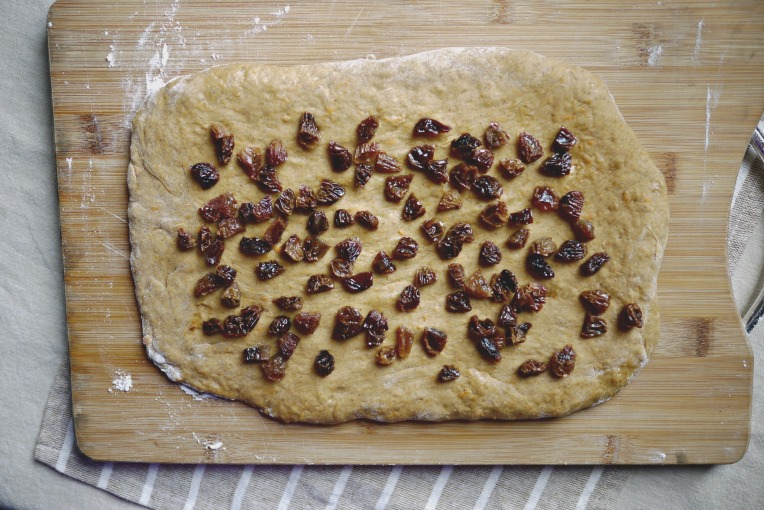
Roll out the dough to a rectangle sheet, spread raisins on the surface.  Roll up the dough from the longer edge and pinch to seal.  Slice the roll into 8 pieces and arrange them in a 9-inch pan.  Leave this aside to proof for another 60 minutes, covered.

Preheat oven to 170C, and bake the bread for 25-35 minutes.

When done, remove bread from baking tin immediately and place on a rack to cool completely.

Save

Save

Save

Save

Natural Starter Walnut Boule : Overnight Fermentation

Natural Starter Walnut Boulet // Mono + Co

This homemade bread is by far my best attempt to use ingredients that I can purchase sans the packaging.  The dry goods stores in wet markets and Victoria Wholesale Center are my best bet for sources of bulk food. I simply plan in advance to know how many reusable containers or bags to bring along.  I buy plain flour, brown sugar and walnuts packed in my own containers.
The best part about buying from these unofficial bulk stores is that I can buy as little as I need, I usually don’t require that much.  Thanks to the flexibility, for example: I can purchase just enough dried Chrysanthemum to make a day’s supply of Chrysanthemum tea, without the need for storing the unused portion.

Natural Starter Walnut Boulet // Mono + Co

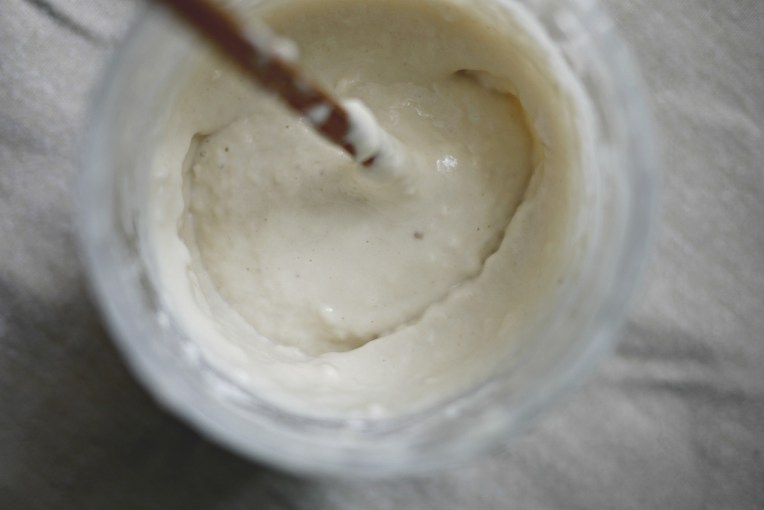
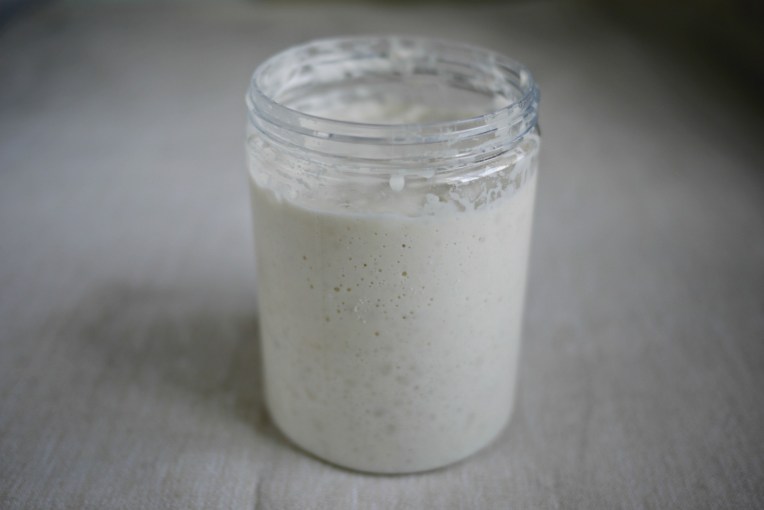
Another important ingredient that I have been making my own is this natural yeast starter.  This also helped me to do away with packaging from the instant dry yeast.  Simply feed it with an equal amount of flour and water, it will actively multiply itself in the next few hours and I will have enough to bake a bread and some balance that I can keep feeding subsequently to maintain a continuous supply of natural starter for homemade bread.

Natural Starter Walnut Boulet // Mono + Co

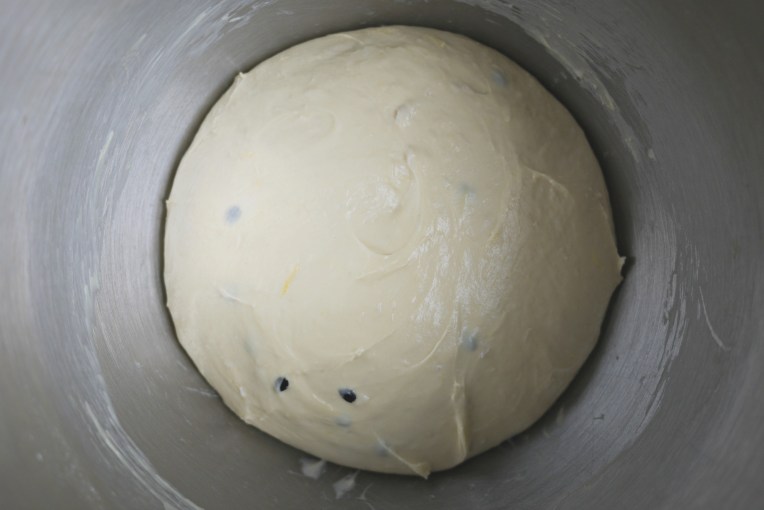
Once the starter doubles its volume and passes a float test (see photo, above), it can be added to a favorite bread recipe in place of instant yeast.

Natural Starter Walnut Boulet // Mono + Co  Natural Starter Walnut Boulet // Mono + Co Natural Starter Walnut Boulet // Mono + Co


Walnut Boule

160g fed starter **
295g plain flour
2 tablespoons brown sugar
50g water
1/4 teaspoon sea salt
25g cold butter, cubed
75g walnut, chopped roughly

** I used a starter made from raisin yeast.

In a mixer bowl, add the starter, plain flour, and brown sugar.  Start mixer to knead on its lowest speed with a dough hook, and add water in a trickle until a dough ball is formed.  You might not use up all the water or you might need more, depending on the hydration level of the ingredients.  Stop the mixer and let the dough rest for 15 minutes to allow the flour to absorb the liquid better.

After 15 minutes, sprinkle the sea salt on the dough and start the mixer again to knead for 1-2 minute before adding cubed butter one by one.  Knead until the dough reaches window pane stage and add chopped walnuts to mix.  Stop mixer and transfer the dough into a covered container, leave this in the fridge overnight for its first fermentation.

Take out the container from the fridge and leave it on the counter for 2 hours to return the temperature of the dough to room temperature, it will expand its volume at the same time.  Transfer the dough a floured worktop and do a stretch and fold step like this.  Sprinkle worktop and palms with more flour if the dough is too sticky to handle.  Leave the dough aside, covered, for 1 hour.

Shape the dough into a boule like this.  I arrange it on a floured baking tray and leave it to proof for one last time for 2 hours inside the oven.

When ready to bake, take out the bread from the oven, and preheat the oven to 220C.

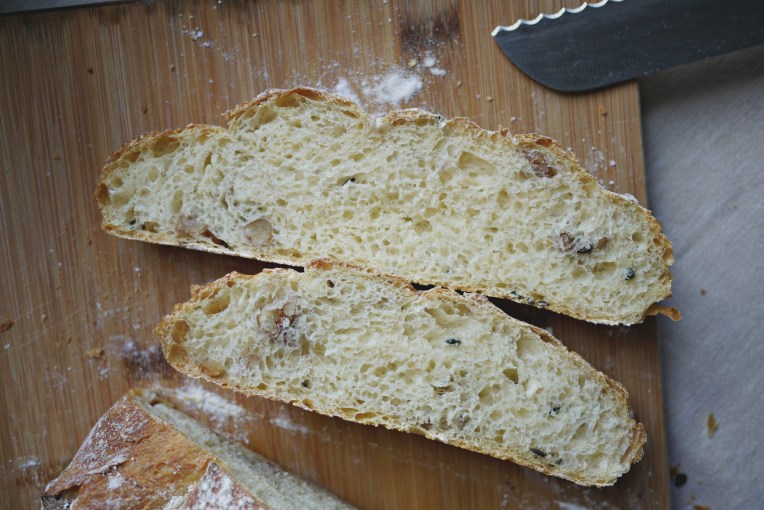
Sprinkle a coat of flour, then make a few slashes on the surface with a sharp knife just before sending the bread into a preheated oven to bake for 35-40 minutes.  I also place a small metal cup with 3 cubes of ice at the corner of the baking tray to create a “steaming effect” during the first few minutes of baking.

Cool on rack completely before slicing to serve.

Save

Save

Save

Save

Save

Natural Starter Wolfberry Taro Loaf

Natural Starter Wolfberry Taro Loaf // Mono +Co

Ideas continued to flow as I rummaged through the fridge, looking for natural food additives for my next homemade bread recipe creation.  Then I saw a jar of wolfberries sitting next to my sesame seeds, and other items that I like to add to my vegetable stir fries.  It’s been quite some time since I last restock on this powerful anti-oxidant fruit, so I know I haven’t been eating my wolfberries as often as I should.  After all, it is a well-known ingredient that is said to improve vision.  Gosh, I wish I could make my kids eat more of this too.

So after putting aside a handful that I will be snacking on after dinner, I have about 20g of the berries to be added to my bread recipe.  I soak them till soft with 35g of filtered water, then I whizz them with a hand blender into a bright orange slurry mixture, which explains the color of the bread.

Now I have one bread recipe that is good for the eyes, naturally enriched, no less.

Natural Starter Wolfberry Taro Loaf // Mono +CoNatural Starter Wolfberry Taro Loaf // Mono +Co  Natural Starter Wolfberry Taro Loaf // Mono +Co


Wolfberry Taro Loaf

160g fed starter **
265g plain flour
1 tablespoon raw sugar
1/4 teaspoon sea salt
100g mashed taro
20g wolfberries
65g water ***
20g cold butter, cubed

** I used a starter made from raisin yeast.

*** Use 35g of the water to soak the wolfberries till they are soft, then blend into mixture.  Remaining 30g to be used at the kneading stage.

In a mixer bowl, add the starter, plain flour, raw sugar, sea salt, mashed taro, and blended wolfberries.  Start mixer to knead on lowest speed with a dough hook.

Slowly add the remaining water until the ingredients come into a ball.  You might not use up all the water or you might need more, depending on the hydration level of the ingredients.  Once a dough ball is formed, stop the mixer and let the dough rest for 15 minutes to allow the flour to absorb the liquid better.

Start the mixer again to knead for 1 minute before adding cubed butter one by one, and knead until the dough reaches window pane stage.  Stop mixer and leave the dough to bulk rise at room temperature for 120 – 150 minutes, until the dough expands and passes the poke test, a sure sign that the first fermentation is completed.

After the dough has risen to double its volume, punch down the dough to deflate and transfer to a clean work top.  Sprinkle worktop and palms with flour if the dough is too sticky to handle.

Divide the dough into 3 equal portions.  Shape each portion like this.  Arrange them in a well greased Pullman bread tin, seam side downwards.  Leave this aside to proof for 120-150 minutes, covered.

Preheat oven to 160C, and bake the bread for 35 minutes.

When done, remove bread from tin immediately and place on a rack to cool completely.

Save

Save

Save

Save

Save

Save

Save

Save

Shaping A Mountain Pullman Loaf

Shaping A Mountain Pulman Loaf / Mono + CoShaping A Mountain Pulman Loaf / Mono + CoShaping A Mountain Pulman Loaf / Mono + Co

Notice the similarities between these 3 loaves I have baked?  I started shaping my bread this way when I was learning to bake cottony soft Japanese-style milk loaf.  I have since been using this method whenever the dough is not too sticky to handle.  If they are too sticky, I will go back to this easier method.

The taro loaf dough I mixed yesterday looked perfect for this after a 2-hour bulk rise.  So here we go:

The "Poke" Test // Mono + Co

A simple poke test tells me that the dough is done with the bulk rise.

Shaping A Mountain Pulman Loaf / Mono + Co

Divide the dough into 3 equal portions, shape each into a ball and let them “relax” aside, while we start working on the first piece.

Shaping A Mountain Pulman Loaf / Mono + Co

Flatten the dough into long oval shape, pushing out any air pockets in the dough.  This is to get rid of large holes inside the baked bread.

Shaping A Mountain Pulman Loaf / Mono + Co

Fold in both sides,

Shaping A Mountain Pulman Loaf / Mono + Co

and flatten again with rolling pin.

Shaping A Mountain Pulman Loaf / Mono + Co

Flip the piece over,

Shaping A Mountain Pulman Loaf / Mono + Co

use the rolling pin to flatten and push out any visible air pockets of the underside of the dough.

Shaping A Mountain Pulman Loaf / Mono + Co

Roll the dough up, swiss roll style,

Shaping A Mountain Pulman Loaf / Mono + Co

to get this.

Shaping A Mountain Pulman Loaf / Mono + Co

Rotate the rolled up dough 90 degrees, and flatten the dough again into a long piece.

Shaping A Mountain Pulman Loaf / Mono + CoShaping A Mountain Pulman Loaf / Mono + Co

Then roll up the dough once more time.

Shaping A Mountain Pulman Loaf / Mono + Co

Shaping A Mountain Pulman Loaf / Mono + Co

Pinch to seal the dough.

Shaping A Mountain Pulman Loaf / Mono + Co

With the seam side facing downwards, place the first piece of shaped dough inside the Pullman tin, arrange it in the center.

Shaping A Mountain Pulman Loaf / Mono + Co

Repeat with the remaining 2 portions, and cover with a towel to let it proof.

Shaping A Mountain Pulman Loaf / Mono + Co

When the dough has risen to reach the top of the pan, the bread is ready to be baked according to the recipe.

Save

Save

Save

Save

Save

Save

Save

Save

Natural Starter Country Loaf

Natural Starter Country Loaf // Mono + Co

If there is anything that I have too much of in the fridge right now, it will be my raisin yeast starter.  About 200g of it in 3 different glass containers, resting in deep slumber at the back of my chiller.  I am slowly cleaning out one of the bottles with a schedule that yield 160g of active starter in 2 days.

Natural Starter Country Loaf // Mono + CoNatural Starter Country Loaf // Mono + Co

My chilled starter, I reckoned to be pretty healthy, gets all ready by 2nd feeding.  The timetable goes roughly like this:

Day 1 / 7am
start with : 20g of dormant/chilled starter + a clean glass/ clear plastic jar with at least 300ml capacity
add : 20g filtered water and 20g plain flour
stir : with a clean wooden chopstick to mix well until no visible traces of white flour

set aside : at room temperature (28-30C) for 24 hours

Day 2/ 7am
add :  50g filtered water and 50g plain flour to the 60g overnight starter
stir : with a clean wooden to mix well until no visible traces of white flour
set aside : at room temperature, ready to use when the starter rise to double/triple its volume, mine took around 4-5 hours
** After emptying the bottle, I do not wash it.
Instead, I reuse it to start the steps all over again, hoping that the activated starter remains in the unwashed bottle helps to kickstart the next batch making them stronger and faster to rise.

Proceed to bake your favorite bread.  I used mine to bake a country loaf recipe from this book,  but lend a slow fermentation technique from this blog to bake the end product.

Natural Starter Country Loaf // Mono + Co


Natural Starter Country Loaf

adapted a recipe from this book
295g plain flour
160g fed starter
6g salt
183g cold water

In a mixer bowl, add plain flour, ripe starter and salt.  Start the mixer to knead the ingredients on its lowest speed. Pour cold water slowly into the mixer bowl with the mixer running.

Continue to knead for 5 minuted, until the dough looks smooth.  This dough will be sticky.  Transfer to a covered container, and leave this in the fridge for 2-3 days.

Return the dough to room temperature and let it rise to double its volume, this will take about 3-5 hours depending on room temperature.

Transfer the dough onto a generously floured worktop.  With flour hands and a bench scraper, stretch and fold the dough into a rectangle shape like this.  Stretch and fold the dough 2 times.  Cover the dough with an inverted large mixing bowl or large plastic container and let it rest for 1 hour on the worktop. Repeat the stretch and fold steps again after 1 hour, and let it rest for a further hour.

Shape the dough and transfer to a well floured baking tray.  Cover and let rise for 2-3 hours.  I divided my dough into 2 equal portions and shaped them into long loaves.

When ready to bake, preheat the oven to 200C.  Make a few slashes on the surface with a sharp knife just before sending the bread into a preheated oven to bake for 35-40 minutes.

Cool on rack completely before slicing to serve.

Save

Save

Save

Save

Save

Save

Save

Save

Passion Fruit Walnut Taro Country Bread

Passion Fruit Walnut Taro Country Bread // Mono + Co

Something I tried out after noticing that my natural starter is getting stronger and more predictable.  Taro and passion fruit pulp are added to my usual taro bread recipe, skipping the butter.

Passion Fruit Walnut Taro Country Bread // Mono + Co Passion Fruit Walnut Taro Country Bread // Mono + Co

Sometimes things progress so slow that I can’t tell whether it has risen or not after 2 hours.  A photo taken before and after helped a lot.

Passion Fruit Walnut Taro Country Bread // Mono + Co

Stretch and fold is one of my favorite part of bread making.

Passion Fruit Walnut Taro Country Bread // Mono + Co

While slashing is the least….

Passion Fruit Walnut Taro Country Bread // Mono + Co

The result is a loaf with thin crackling crust and soft interior.

Have fun trying this recipe!


Passion Fruit + Walnut + Taro Country Loaf

160g natural starter
235g bread flour
1/4 teaspoon sea salt
85g mashed taro
pulps from 2 passion fruits
50g beaten egg
50g walnut, chopped roughly

In a mixer bowl, combine natural starter, bread flour, sea salt, mashed taro, passion fruit pulp and beaten egg.  Knead with a dough hook, the ingredients should come into a dough ball without any water added.  If it doesn’t, slowly add some water, spoon by spoon, till a ball is formed.  Stop the mixer and leave the dough to rest for 15 minutes. Knead with a dough hook until window pane stage.

After 15 minutes, start the mixer again and knead until window pane stage.  Remove bowl from mixer, and let the dough bulk rise for 2-3 hours, till the dough rise to double its volume.

Transfer the dough to a clean work top.  Sprinkle worktop and palms with flour if the dough is too sticky to handle.

Pour in the chopped walnuts. Stretch and fold the dough to incorporate the walnut into the dough, and firming up the dough at the same time.  I refer to this video all the time, demonstrating the stretch and fold method. Then cover the dough to rest for 60 minutes.  Repeat the stretch and fold + 60-minute resting time one more time.

Shape the dough this way, and place it on a floured tray or banneton and let it rise for about 2 hours.

When ready to bake, make a slash in the center with a sharp knife before placing it in a preheated oven at 200C, and bake for 35 minutes.  I created “steam” by placing my smallest ramekin with some ice cubes in the oven.

When done, remove bread from oven and place on a rack to cool completely before slicing.

Save

Save

Save

Save

Save

Save

Save

Natural Starter Raisin Taro Loaf

Natural Starter Raisin Taro Loaf // Mono + Co

I pick up the natural starter baking habit lately, feeding the yeast early in morning, have the bread proofed, shaped and ready to be baked by end of the day.  All completed within 12 hours in a 30C+ room temperature.

Natural Starter Raisin Taro Loaf // Mono + Co

The natural yeast starter I made from raisins is very strong.  After almost 1 month of ignoring it, leaving it at the back of the fridge, it came back alive, bursting with bubbling activity, tripling its volume after just 2 feedings.  The conversion of this natural starter in my root vegetable bread recipes was also a breeze.  Here’s to more healthy homemade bread!

Natural Starter Raisin Taro Loaf // Mono + CoNatural Starter Raisin Taro Loaf // Mono + CoNatural Starter Raisin Taro Loaf // Mono + Co

The few natural starter bread loaves I have baked so far, adapted from my taro bread recipes, took about 2.5 – 3 hours for the dough to rise above the bread pan.

Natural Starter Raisin Taro Loaf // Mono + Co

The crumbs were tighter, denser but still soft.  Another difference between baking with commercial yeast and natural yeast is that the bread continues to rise dramatically during baking.

Natural Starter Raisin Taro Loaf // Mono + Co

So now that I have attempted the taro bread loaf with natural starter, I will try out my next few bakes with other vegetables to test out if starter ratio to flour is the same.


Natural Starter Raisin Taro Loaf

160g natural starter **
265g plain flour
1 tablespoon raw sugar
1/4 teaspoon sea salt
100g mashed taro
65g cold milk
20g cold butter, cubed
55g raisins ***

** Raisin yeast starter.

*** Soak raisins in a bowl of warm water for 30 minutes.  Drain and gently squeeze dry to remove excess liquid before use.

In a mixer bowl, combine all the dry ingredients together ( flour, sugar, sea salt) with a hand whisk.  Then add natural starter, cooled mashed taro and half of the milk.  Turn on the mixer to knead with a dough hook.  With the mixer running on its lowest speed (KA 1), pour the milk slowly in a trickle until the ingredients come into the ball.  You might not use up all the milk or you might need more, depending on the hydration level of the ingredients.  Once a dough ball is formed, stop the mixer and let the dough rest for 15 minutes to allow the flour to absorb the liquid better.

Start the mixer again to knead for 1 minute before adding cubed butter one by one, and knead till the dough reach window pane stage.  Add raisins while mixer is running and knead for about 1 minute to incorporate the raisins into the dough.  Stop mixer and leave the dough to bulk rise at room temperature for 120 – 150 minutes, until the dough expands to double its volume.

After the dough has risen to double its volume, punch down the dough to deflate and transfer to a clean work top.  Sprinkle worktop and palms with flour if the dough is too sticky to handle.

Divide the dough into 2 equal portions.  Flatten and shape each portion into a tight ball.  Arrange them in a well greased Pullman bread tin, seam side downwards.  Leave this aside to proof for 120-150 minutes, covered with a towel.

Preheat oven to 160C, and bake the bread for 35 minutes.

When done, remove bread from tin immediately and place on a rack to cool completely.

Save

Save

Save

Save

Save

Save

Save

Save

Save

Save

Save

Save

Save

Save

Save

Save

Save

Chocolate Raisin Bread

Chocolate Raisin Potato Bread Loaf // Mono + CoChocolate Raisin Potato Bread Loaf // Mono + Co   Chocolate Raisin Potato Bread Loaf // Mono + Co

Chocolate bread for breakfast is so indulging.  The plump and juicy sweet raisins in every bite made it even better, the trick is to soak them in warm water for at least 15 minutes.  With hydration, it also prevents the raisins from drawing moisture from the dough during proofing and baking, drying out the bread.

I didn’t add a lot of honey in case the bread becomes more of a guilty dessert than a healthy breakfast.

Chocolate Raisin Potato Bread Loaf // Mono + Co  Chocolate Raisin Potato Bread Loaf // Mono + Co


Chocolate Potato Raisin Bread

300g plain flour
1 teaspoon instant dry yeast
30g cocoa powder **
1/4 teaspoon sea salt
2 tablespoons raw honey
1 small egg ***
50g water
150g mashed potatoes
35g cold butter, cubed
60g raisins ****

**  I use Van Houten cocoa powder.

*** mine weighs 55g with shells.

**** soak raisins in a bowl of warm water for 30 minutes.  Drain and gently squeeze dry to remove excess liquid before use.

In a mixer bowl, combine all the dry ingredients together ( flour, yeast, cocoa powder, sea salt) with a hand whisk.  Then add honey, egg and water and mashed potatoes and knead into a ball with a dough hook.  Stop the mixer and let the dough rest for 15 minutes.  Start the mixer again to knead for 1 minute before adding cubed butter one by one, and knead till the dough reach window pane stage.  Add raisins while mixer is running and knead for about 1 minute.  Stop mixer and leave dough to bulk rise for 60 minutes.

After the dough has risen to double its volume, punch down the dough to deflate and transfer to a clean work top.  Sprinkle worktop and palms with flour if the dough is too sticky to handle.

Divide the dough into 3 equal portions.  Flatten and shape each portion, rolling them up swiss roll style.  Arrange them in a Pullman tin, seam side downwards.  Leave this aside to proof for 60-75 minutes, covered with a towel.

Preheat oven to 160C, and bake the bread for 30 minutes.

When done, remove bread from tin immediately and place on a rack to cool completely.

Save

Save

Save

Save

Save

Save

Save

Save

Save

Save

Save